
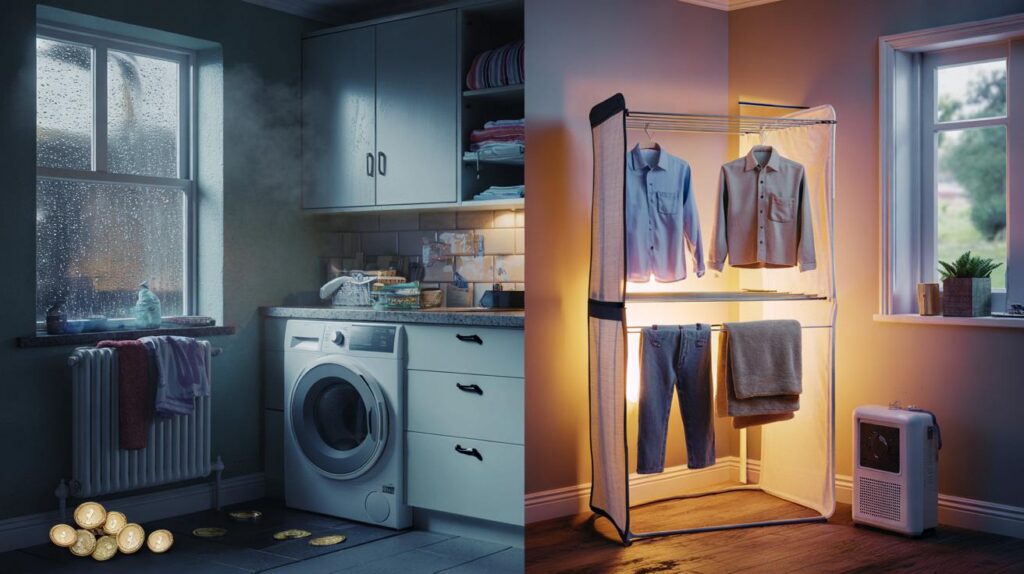
Rain, early nights and a pile of damp school uniforms: across Britain, laundry season returns and patience dries up faster than socks.
With washing lines idle and radiators already spoken for, families are hunting for cheaper, tidier ways to beat the backlog. A heated clothes airer has surged from niche gadget to wet‑weather staple, and Lakeland’s multi‑tier model is drawing attention for one simple reason: it promises warm, dry laundry without punishing the meter.
Why households are switching
Outdoor drying stalls once temperatures dip and showers linger. Indoors, radiators end up draped in damp denim, rooms feel clammy and the boiler runs longer. Many renters don’t have a tumble dryer. Those who do worry about the cost of each cycle. A heated airer sits between those options, marrying a steady, gentle heat with a compact footprint.
Lakeland states a running cost of around 9p per hour, with capacity for up to 15kg and roughly 21 metres of drying space.
That figure won’t match every tariff, but it offers a clear signal: this is a slow, low‑draw device designed to sip electricity rather than gulp it. Householders also like that it warms the immediate space as it works, taking the edge off cold rooms without firing up the whole heating system.
Costs that actually add up
Numbers decide habits. A typical tumble dryer cycle often costs many times more than an hour on a heated airer. For families doing multiple loads a week, the gap widens fast.
- Run an airer for four hours at 9p per hour and you spend about 36p per load.
- Two loads a week at that rate come in at roughly £2.88 per month.
- A standard condenser dryer might cost around 60p–90p per cycle, while a heat‑pump dryer often sits nearer 30p–45p.
If you run five loads weekly, an airer used for four hours a load could land near £7.20 a month. A conventional tumble dryer doing the same number of loads might double that outlay, depending on the model and tariff.
Inside the Lakeland design
Lakeland’s three‑tier heated airer spreads garments across a tall frame, encouraging airflow and keeping fabrics off cold surfaces. The rails warm clothes evenly, so you can avoid the constant rotation that comes with radiators. Thick items still need more time, but the process stays predictable.
Folded depth sits at about 8cm, so the frame slides neatly behind a door or in a cupboard between laundry days.
The brand offers an optional cover that traps warm air around the textiles and speeds the last stretch of drying. When the load finishes, everything packs away in minutes. That convenience helps prevent the creeping chaos of socks on every chair and jeans on every banister.
Set‑up and placement
Put the airer in a room with some airflow. Crack a window, switch on a trickle vent or run a dehumidifier. Leave a finger’s width between garments so warm air can circulate. Heavier items—like towels and hoodies—dry faster if you turn them once mid‑cycle. Keep the power lead straight, and don’t pile laundry so high that rails bow.
Keep moisture moving: 10 minutes of ventilation during and after drying helps stop condensation and keeps walls mould‑free.
How it compares to other methods
| Method | Typical energy use | Estimated cost | Pros | Cons |
|---|---|---|---|---|
| Lakeland heated airer | Low draw, steady heat | About 9p per hour (tariff dependent) | Lower running cost; gentle on fabrics; warms room; folds flat | Slower than a dryer; needs ventilation; space required while in use |
| Tumble dryer (condenser) | Often 2–3 kWh per cycle | Roughly 60p–90p per cycle | Fast; minimal supervision | Higher cost; heat on textiles; adds humidity unless vented well |
| Tumble dryer (heat‑pump) | Often 1–1.5 kWh per cycle | About 30p–45p per cycle | More efficient than condenser; quicker than an airer | High purchase price; maintenance; space needed |
| Radiators | Boiler‑dependent | Variable; can extend heating run‑time | Uses existing heat; no extra plug‑in device | Slow; rooms stay damp; risks condensation and musty smells |
What shoppers are seeing right now
Retailers know the drill: when September approaches, demand climbs. Lakeland has been promoting heated airers with seasonal discounts—recent offers have sat around the 15%–20% mark on selected models. Stock can move quickly when the first big downpour hits, so timing often matters more than brand loyalty.
Families juggling school kit, sports gear and towels report finishing a mixed load in a few hours, then using the lingering warmth to take the edge off chilly evenings.
Tips for faster, cheaper and safer drying
- Start the spin: choose the highest spin your fabrics allow to shed more water before drying.
- Space items: avoid overlap; thicker layers trap moisture and slow everything down.
- Rotate once: flip towels and hoodies halfway through to expose damp areas.
- Add the cover: trapping warm air can cut time, especially for bulky loads.
- Ventilate: a cracked window or dehumidifier keeps humidity in check and stops condensation on cold walls.
- Mind the lead: keep the cable untangled and away from where feet land.
- Set a timer: switch off when things are dry to avoid wasted energy.
When a heated airer might not fit
Some households need speed above everything else. If you run several loads on the same evening and want everything bone‑dry before bed, a heat‑pump dryer may suit you better despite the purchase price. Studio flats with no opening windows can also struggle with moisture build‑up. In that case, pairing the airer with a compact dehumidifier helps. Households with lively pets or toddlers should think about positioning and supervision, as warm rails can tempt curious hands and paws.
The back‑of‑the‑envelope maths
Run the Lakeland airer for four hours at a stated 9p per hour and you spend about 36p. Do that five times a week across school term and your weekly cost sits near £1.80. Stretch that to a month and you approach £7.20. Swap in a conventional tumble dryer at, say, 75p a cycle and the same five loads land around £15 a month. Every home is different—tariffs vary and loads vary—but the direction of travel is clear.
Pairing with a dehumidifier
A small, efficient dehumidifier can pull moisture out of the airer’s micro‑climate and trim drying times. Many models sip 150–250 watts, which can sit around a few pence per hour on common tariffs. Place it near, not under, the airer to keep air moving across fabric. You get faster drying, fewer steamy windows and less chance of damp corners.
Fabric care and longevity
The gentle heat from warmed rails treats fibres more kindly than the rough tumble of a drum. Towels hold their loft longer, elastics don’t fatigue as quickly and printed logos crack less. Denim softens without scorching. Delicates still belong in mesh bags or on the upper rails. Fasteners—zips and hooks—should be closed to prevent snags as you move items on and off.
What to do next
Measure the space where you plan to use it. Think about airflow and a socket within reach. If your home traps humidity, budget for a basic dehumidifier or set a window routine. If speed matters, plan a split: fast‑dry uniforms on the warmest rails with the cover on, slower‑dry bedding queued next. Keep a simple log of hours used for the first fortnight. You will see patterns, and you can tune your habits to save a few more pounds as the autumn rain settles in.



Honestly this is a game-changer for small flats. Gentle on clothes, and 36p-ish a load beats my old condenser by miles. Just crack a window or run a dehumdifier to dodge the foggy windows. Definitley considering the cover to speed things up.
9p per hour is marketing — what’s the wattage and your unit rate? If thick towels take 6–8 hours, youre near 54–72p, which narrows the gap. Any measured times at 800/1200/1400 rpm spin speeds?