
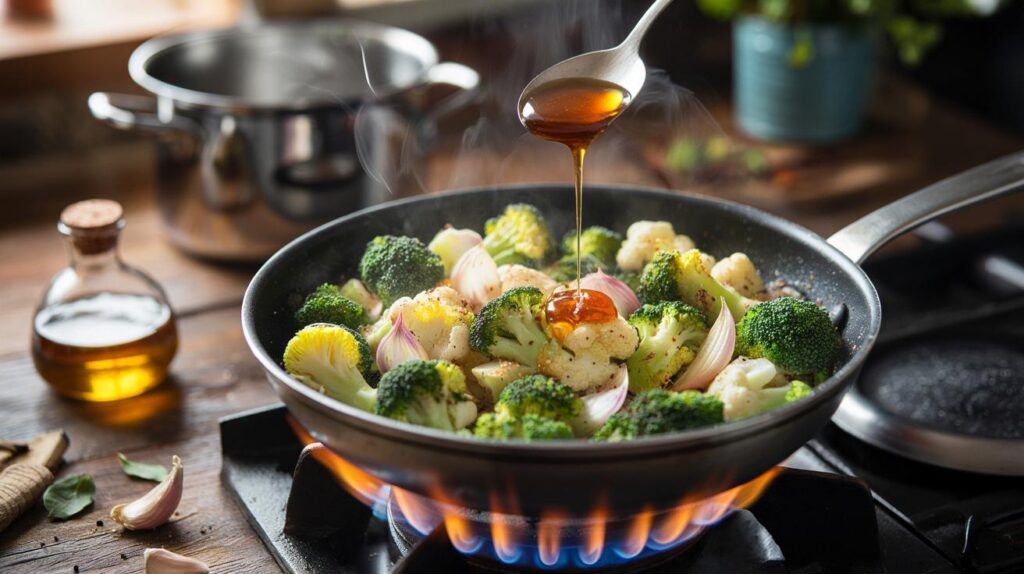
If your Sunday roast greens taste flat, the fault likely lies with the pan and a habit many kitchens never question.
Across thousands of British kitchens, broccoli and cauliflower go limp in boiling water before ever reaching the plate. A simple switch, popularised by Mary Berry, promises faster cooking, brighter flavour and a better bite, with very little washing-up.
Why your greens taste dull
Boiling pushes water into the florets and draws out water-soluble vitamins and natural sugars. That leaves you with a soft texture, a faintly bitter edge and broth that holds much of the goodness you wanted to eat. High-heat pan cooking flips that script by keeping the moisture inside while browning the edges.
Stop boiling away flavour and texture. High heat and a little oil unlock sweetness, nuttiness and crunch in minutes.
Mary Berry’s everyday method keeps things quick and controlled: cut small, cook hot, finish with a glaze. The result feels more like a side you want to reach for, not one you politely endure.
The Mary Berry-style method, made easy
What you need
- About 250g broccoli, small head
- About 350g cauliflower, small head
- 2 banana shallots, finely sliced
- 2 garlic cloves, crushed
- 2 tablespoons runny honey
- Olive oil or rapeseed oil for the pan
- Salt, black pepper and a pinch of chilli flakes (optional)
Five steps, around seven minutes on the hob
Hot pan, short cook, sweet finish: the three moves that turn “soggy side” into “seconds, please”.
What changes when you stop boiling
| Method | Texture | Flavour | Approx time | Nutrient retention |
|---|---|---|---|---|
| Boiling | Soft, waterlogged | Muted, can taste bland or harsh | 8–12 minutes | Lower for water‑soluble vitamins |
| Stir-frying with a brief steam | Crisp-tender, edges lightly charred | Sweet, nutty, savoury | 6–8 minutes | Higher, with less leaching |
Why the pan beats the pot
High heat helps natural sugars brown, producing toasty flavours that boiling never achieves. The brief covered stage softens the core without drenching the florets. Because you use a splash of oil rather than a pan full of water, you also cut down on time to the table and, in many cases, energy used.
Olive oil brings fruitiness; rapeseed oil handles higher heat with a neutral profile. Either works well. If the pan smokes heavily, lower the heat slightly and keep the veg moving so nothing catches.
Make it yours without losing the snap
Flavour swaps that work
- Swap honey for a teaspoon of maple syrup, or a squeeze of lemon with a sprinkle of sugar.
- Add a teaspoon of wholegrain mustard at the end for warmth and tang.
- Toss through toasted almonds, hazelnuts or pumpkin seeds for extra crunch.
- Finish with parmesan shavings or crumbled feta for a salty lift.
- Go Asian-leaning with a dash of soy sauce and sesame oil in place of honey.
Keep the goodness in
Cut pieces small and of similar size so they cook evenly. Don’t overcrowd the pan; use a large frying pan or wok so steam escapes when you want colour. Salt at the end to protect the crisp edge, then taste and adjust.
The numbers that matter at home
Portion guide: aim for roughly 100–125g of cooked vegetables per person, so a 250g head of broccoli and a 350g cauliflower can comfortably serve three to four people as a generous side. Cooking time: you are aiming for 6–8 minutes from first sizzle to plate, including the covered phase. Oil: 2 tablespoons is enough for a wide pan; add a teaspoon more only if the vegetables look dry rather than glossy.
Budget and energy: shorter hob time usually means less gas or electricity than a long boil and drain, particularly if you reduce preheating and keep lids on during the brief steam. Leftovers reheat well in a hot pan for 60–90 seconds; they also make a sturdy base for frittatas, grain bowls or pasta.
What the science says about flavour and nutrition
Broccoli and cauliflower carry natural sugars and a family of sulphur compounds that give their signature aroma. Rapid high heat softens harsher notes and builds caramelised sweetness. Water-soluble vitamins, such as vitamin C and folate, dissolve into boiling water, so cooking methods that use little water help more of those nutrients reach your plate.
You still want them cooked through. A crisp-tender centre keeps texture lively while preserving colour. If you prefer softer veg, extend the covered stage by 1–2 minutes, then uncover and re-crisp so the glaze sticks rather than slides off.
Practical extras the recipe doesn’t tell you
Use every part
Stems are excellent sliced thin and cooked alongside the florets. Young leaves roast or pan-fry beautifully and bring sweetness. This reduces waste and stretches value, especially when buying whole heads.
Air fryer and oven shortcuts
- Air fryer: toss florets with 1 tablespoon oil and a pinch of salt; cook at 200°C for 8–10 minutes, shaking once. Warm honey and garlic in the basket for the final minute, then toss.
- Oven: roast at 220°C for 15–18 minutes with oil and seasoning, then drizzle with honey and finish for 2 minutes under a hot grill.
Allergy and swaps
For low sugar, skip the honey and finish with lemon zest and a little vinegar. For low FODMAP, replace garlic with garlic-infused oil and omit shallots. For heat-sensitive eaters, swap chilli flakes for black pepper and a squeeze of citrus.
When to season, and how to avoid soggy greens
Season at the end to keep moisture in check. If the pan starts to pool liquid after the covered stage, raise the heat and stir until the moisture evaporates. A wide pan lets steam escape so you keep that sought-after crisp edge.
A quick plan for busy nights
Prep florets in the morning and keep them chilled in an airtight box lined with a dry towel. At dinner, you only need oil, heat and seven minutes. Batch-cook extra and store portions for packed lunches; they hold up better than boiled veg, which tends to collapse by midday.



Just cooked the broccoli & cauliflower this way and it legit took 7 minutes. The honey + chilli at the end gives a glossy, slightly sticky finish, and the florets stayed crisp‑tender instead of sad and grey. Used rapeseed oil, high heat, then quick lid-on steam—worked perfectly. Even my picky partner asked for seconds. Definitley repeating.
Isn’t the honey basically just sugar? For anyone cutting sugar, would lemon + a pinch of salt give the same balance, or does the glaze need to caramelise to hide the sulphur notes? Also, won’t the garilc burn if it hits a ripping‑hot pan for 2–3 mins?