
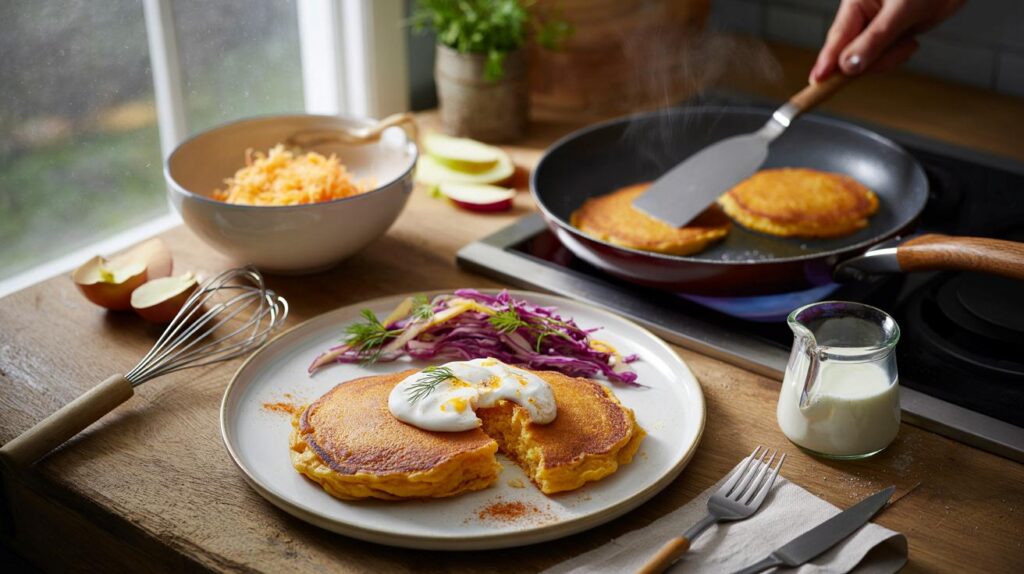
Cold nights push many families to rethink dinner, hunting comfort, speed, and value without giving up flavour or nutrition.
Across kitchen tables, a new weeknight habit is taking shape: soft, savoury pancakes made with grated sweet potato. The batter comes together in minutes, delivers a golden edge, and lands on plates before the conversation dips. The approach trims the food bill, lifts the mood, and turns an ordinary evening into a shared treat.
Why sweet potato pancakes feel so soft
Grated sweet potato changes the structure of the batter. It brings moisture, natural sweetness, and tender fibres. The result is a gentle bite and a springy crumb. Baking powder puffs the mix, while eggs give it structure. A small hit of oil keeps the surface glossy and helps browning.
Swap part of the flour for fine shreds of raw sweet potato. The starches trap water as they heat, so the crumb stays pillowy. The vegetable also adds colour, which promises warmth before the first forkful.
Use 250 g grated sweet potato to 120 g plain flour for a family batch that yields 10–12 small pancakes.
The quick method that fits a weeknight
Set out a large bowl, a whisk, a non-stick pan, and a spatula. Keep the surface heat moderate. Aim for steady sizzle, not smoke.
- Peel and grate sweet potato on the fine side to shorten cooking time.
- Whisk flour, baking powder, salt, pepper, and a pinch of nutmeg in a bowl.
- Crack in two eggs and whisk in 180 ml milk until smooth.
- Fold in the grated sweet potato and 1 tablespoon olive oil. Avoid overmixing after the raising agent goes in.
- Heat a slick of oil in the pan. Drop in heaped tablespoons of batter. Nudge them into rounds.
- Cook for 2–3 minutes until small bubbles dot the surface and the underside turns golden.
- Flip once. Cook another 2–3 minutes until the centre feels set and bouncy.
- Hold cooked pancakes under a clean tea towel to keep them soft.
From first grate to last flip, the process takes about 12–14 minutes for a batch serving three to four people.
The shopping list and smart swaps
Most cupboards hold what you need. Prices vary by region and brand, so treat these as ballpark figures.
| Ingredient | Amount | Typical UK price | Swap or note |
|---|---|---|---|
| Sweet potato | 250 g, grated | £0.30 | Butternut squash works; squeeze if very wet. |
| Plain flour | 120 g | £0.05 | Half buckwheat adds a rustic note. |
| Eggs | 2 medium | £0.30 | Chickpea flour slurry helps if egg-free. |
| Milk | 180 ml | £0.10 | Use oat or soy milk for dairy-free. |
| Olive oil | 1 tbsp | £0.09 | Rapeseed oil browns cleanly. |
| Baking powder | 1 sachet or 2 tsp | £0.10 | Check the date for reliable lift. |
| Salt, pepper, nutmeg | Pinches | £0.02 | Paprika or cumin changes the mood. |
| Cheese (optional) | 60 g grated | £0.60 | Cheddar, Comté, or parmesan add savoury depth. |
| Oil for frying | 1 tbsp | £0.09 | Top up if the pan looks dry. |
Gluten-free and dairy-free adjustments
For gluten-free needs, mix 60 g buckwheat flour and 60 g rice flour. Keep the baking powder labelled gluten-free. For dairy-free, use unsweetened oat milk and 1 teaspoon nutritional yeast for a savoury edge. For egg-free, whisk 2 tablespoons gram flour with 4 tablespoons water per egg and add to the batter.
How to serve yours tonight
These pancakes sit well next to crisp greens, rich toppings, or sharp sauces. Balance soft and crunchy textures. Contrast warm pancakes with cool dressings.
- Top with a poached egg and a dusting of paprika for a 15-minute supper.
- Add a spoon of yoghurt mixed with lemon, garlic, and herbs for tang.
- Serve with smoked salmon and pickled onions for a brunch twist.
- Pair with an apple and cabbage slaw for crunch and freshness.
- Fold in feta cubes or sun-dried tomato pieces for bursts of flavour.
Serve three pancakes per person with a simple salad and you stay near the £3 mark for four diners.
Make-ahead, reheating and freezing
Cooked pancakes sit well in the fridge for up to 48 hours in a sealed tub. Chill them on a rack first to prevent condensation. Reheat in a dry pan over medium heat or in a toaster until hot through. They also freeze flat for two months. Stack with baking paper, then bag and label the date. Reheat from frozen in a 180°C oven for 8–10 minutes.
If the batter rests more than two hours, the leavening weakens. Stir in a pinch of extra baking powder before cooking if the mix looks sluggish. Keep the first pancake as a test to judge heat and timing.
Nutrition and budget notes
Sweet potato brings beta-carotene, which the body converts to vitamin A. The grated form keeps fibre intact and spreads sweetness evenly. A standard batch without cheese carries roughly 1,000–1,100 kcal in total. Split into 12 pancakes, each piece lands near 84–92 kcal. Add cheese and the average rises by 15–25 kcal per pancake. Protein sits around 5–6 g per three-pancake portion, which climbs if you add eggs or yoghurt on the side. The fibre content, driven by the vegetable and flour, supports fullness after a modest plate.
Costs favour home cooking. The basic batter often comes in under £1.20 for a family batch. Toss in a bag of mixed leaves and a lemon dressing and the full plate still hovers around £3–£3.50, depending on shop and brand. The numbers shift with premium cheeses or fish, so match toppings to your budget.
Small risks and quick fixes
- If pancakes brown too fast, lower the heat and allow the centre to set before flipping.
- If the batter feels watery, squeeze the grated sweet potato in a clean cloth or reduce the milk by a splash.
- If the texture seems dense, loosen with a tablespoon of milk and sift in a pinch more baking powder.
- If edges look dry, brush the pan with a little oil; a thin film helps colour and prevents sticking.
- For even rounds, portion with a large spoon or ice-cream scoop.
A sample plan for a £3 family plate
Make the basic batch. Add a lemon and herb yoghurt (150 g yoghurt, lemon zest, dill, salt) for roughly 30 p. Shred half a cabbage apple slaw with vinegar and a teaspoon of mustard for about 60 p. Share 12 pancakes across four plates, spoon over the yoghurt, and add slaw on the side. The meal stays close to £3–£3.50 and lands on the table in under 20 minutes.
Extra context for keen cooks
Heat management decides texture. Medium heat allows starches to gel before the surface scorches. A lid traps steam for the first minute if your pan runs hot. A little rest before serving lets moisture redistribute and keeps the crumb soft. For batch cooking, cool on racks, then freeze in single layers to stop sticking.
This technique adapts to seasons. Swap in grated courgette in summer, but salt and squeeze first to keep the batter balanced. Use parsnip or carrot in winter for a deeper earthiness. Add cumin and coriander for a Middle Eastern note, or thyme and cheddar for a pub-lunch leaning. The method stays the same, so you gain variety without extra effort.



Just made these—done in 12 mins, and they were definitly soft and golden. Swapped half the flour for buckwheat and added paprika; total cost ~£3.20 with a lemon yoghurt. Thanks for the clear steps!