
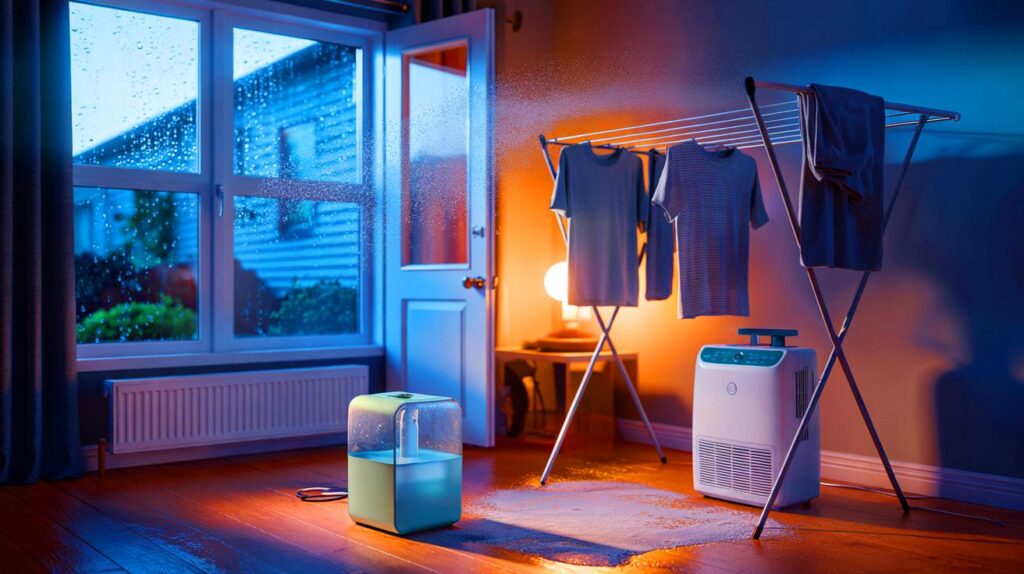
As temperatures drop and washing lines retreat indoors, damp moves in quietly, clinging to windows, wardrobes and laundry piles.
Energy anxiety is back, radiators stay low, and condensation creeps across panes each morning. A small, cheap machine arriving this month promises a drier home, fewer musty corners and quicker laundry days, without cranking up the heating.
Why this £39.99 unit matters this winter
Aldi is releasing a compact dehumidifier priced at £39.99 as part of its Specialbuys, aimed at keeping small rooms drier and fresher in cold, wet months. It carries a 2-litre water tank and is designed for spaces up to 15 square metres, a typical box room, home office, or studio corner. It suits flats and modest homes where space and budget are tight.
Price: £39.99. Launch: 23 October. Capacity: 2-litre tank. Room size guide: up to 15 m².
The pitch is simple: pull water from the air, reduce condensation on cold glass, make rooms feel warmer at the same thermostat setting, and help laundry dry faster indoors.
When and where you can buy it
The dehumidifier lands on 23 October in Aldi’s middle aisle. Like all Specialbuys, stock is limited. Past seasons show winter electricals moving quickly once the first cold snap arrives.
If you want one, act early. Specialbuys rarely hang around once the weather turns and queues start forming.
Key specs and what they mean
What the 2-litre tank tells you
The 2-litre tank signals a compact unit designed for steady, background moisture removal rather than industrial extraction. You empty the tank when full; many small dehumidifiers pause automatically when the tank reaches capacity.
Who should buy it
- Renters tackling bedroom condensation and wardrobe mustiness.
- Parents drying small laundry loads overnight in a spare room.
- Home workers trying to protect computers, books and instruments from damp.
- Students in shared houses where showers and cooking spike humidity.
Will it speed up drying laundry indoors?
Yes, that is the quiet trick. Hang clothes on an airer, place the dehumidifier nearby, and shut the door to create a contained drying zone. The machine lowers relative humidity, so evaporation accelerates. Windows mist less, and poorly ventilated rooms smell fresher.
Pair a dehumidifier with an airer in a small closed room for faster drying and fewer mould risks.
Aldi will also stock a winged heated airer at £34.99 and an upright heated airer at £79.99 from 26 October, giving households a tiered approach to indoor drying.
| Product | Price | On-sale date | Best for |
|---|---|---|---|
| Aldi 2-litre dehumidifier | £39.99 | 23 October | Small rooms up to 15 m², everyday condensation control |
| Winged heated airer | £34.99 | 26 October | Budget laundry drying in a contained space |
| Upright heated airer | £79.99 | 26 October | Larger loads and quicker turnaround indoors |
How it stacks up against bigger units
Premium dehumidifiers cost more because they move more air, extract more water per day, and often add modes for laundry, filters, and smart controls. Aldi’s unit focuses on affordability and simplicity for smaller spaces.
- Meaco Arete Two: praised for quiet operation, ease of use and efficient laundry mode.
- Pro Breeze 30L: high extraction with a dedicated laundry setting for heavy-duty moisture.
- EcoAir DD1 Simple MK3: a desiccant model that handles unheated rooms well in winter.
If you dry large loads daily or have a damp-prone basement, you may outgrow a compact tank quickly. For a spare room, a study or a student bedroom, this small machine should be enough to tip conditions in your favour.
Running costs: a quick example
Exact energy use varies by model, settings and humidity. Here’s a simple illustration to help you think about cost:
- Example: a small unit drawing 50 W run for 8 hours uses 0.4 kWh.
- At 28p per kWh, that’s about 11p for an evening’s drying session.
- Run three evenings a week and you might pay around £1.32 per month at that usage.
Your unit may draw more or less, and run-time depends on how wet the room is. The key point: targeted sessions in a closed room beat leaving it on all day with the door open.
Practical setup tips for better results
Positioning and airflow
- Place it in the dampest room or where you dry clothes.
- Keep a gap around the intake and outlet for airflow.
- Shut doors and crack a window briefly if the room feels stuffy.
Daily habits that cut moisture
- Put pan lids on and use extractor fans when cooking or showering.
- Wring or spin laundry well before air-drying.
- Move wardrobes a few centimetres off cold exterior walls.
- Wipe window sills each morning to prevent mould growth.
The numbers to watch at home
Relative humidity of 40–60% usually feels comfortable and discourages mould. Cold panes create local trouble zones, so watch the corners of windows and the backs of wardrobes. A cheap digital hygrometer can help you target the worst spots and avoid over-drying.
Target 40–60% relative humidity. Treat window corners, wardrobes and bathrooms as early warning zones.
What if you miss out on stock?
Specialbuys often vanish fast. If the shelves are bare, consider a more powerful model with a laundry mode if you dry indoors often, or a desiccant type if you heat your home sporadically. For very tight budgets, a heated airer plus short, timed dehumidifier sessions in a small room is a strong combo.
Extra help for renters and flat-dwellers
Keep photographs of recurring condensation and any mould patches. Report persistent damp to your landlord with dates and room temperatures. A small dehumidifier is a helpful tool, but long-term issues may point to ventilation or insulation gaps that need attention. If you rely on trickle vents, check they aren’t taped over or clogged with dust.
Allergens increase in humid homes, and fabrics absorb odours. Regularly rotate soft furnishings away from exterior walls, lift mattresses to air the underside, and launder curtains seasonally. A low-cost dehumidifier, used tactically, protects both your health and your belongings while energy prices remain high.



Thanks for the heads-up—£39.99 is a steal. For small rooms and laundry days this seems like a no‑brainer, especially if it’s around 50W. That’d be ~11p for an evening, which is definately manageable this winter.
2‑litre tank sounds tiny—how often will I be empting it on a soggy day? Also, is “up to 15 m²” realistic in an older draughty flat with single glazing, or is that marketing optimism?