
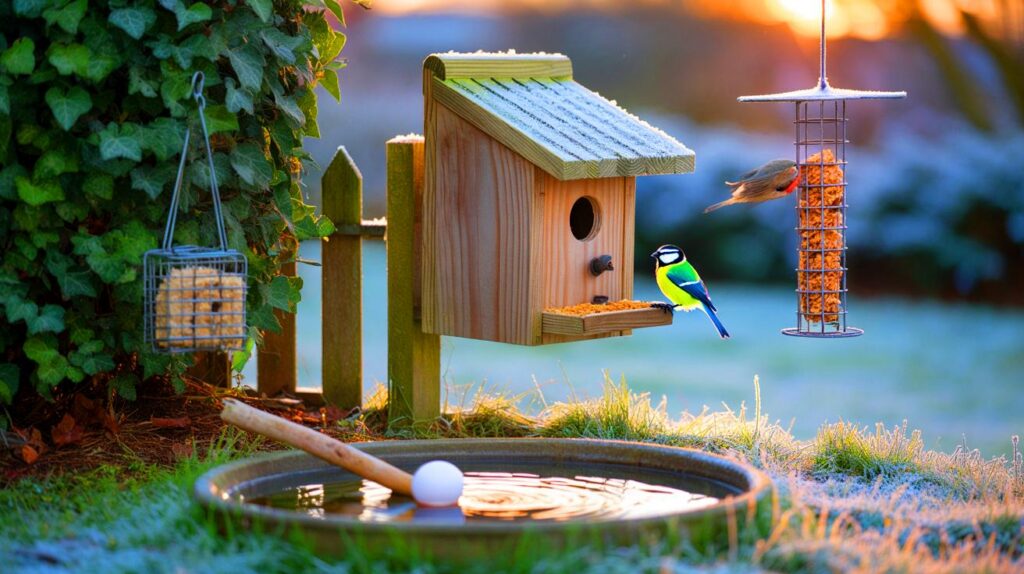
Night frost bites harder than headlines suggest, and the smallest birds pay first. Your next weekend project could change that.
Across Britain, blue tits and great tits cling to hedges and fences as temperatures plunge, burning through fat reserves before dawn. One small fix in your garden can shelter them, feed them, and tilt survival their way.
Why winter hits tits harder than you think
Tits stay put when many birds head south. They face long, dark nights, freezing winds, and a steep drop in insects. They shiver to stay warm and empty their reserves by morning. A missed meal can mean a missed sunrise.
Urban trimming removes cavities. Smooth fences replace old trees. The safe nooks that once existed now vanish behind tidy lines and sealed eaves. Food stays scarce, and predators learn feeder patterns.
Short nights help in summer; long nights drain in winter. Energy saved at 10 pm can decide what happens at 6 am.
The simple fix: give them a dry, snug roost
A small wooden nest box doubles as a winter roost. It blocks wind, traps body heat, and keeps birds out of sleet. Build one or buy one, then mount it right and keep it clean.
Choose or build a box that actually works
- Use untreated, sturdy wood at least 15 mm thick. It insulates and breathes better than plastic or metal.
- Pick the right entrance: 28 mm for blue tit and coal tit, 32 mm for great tit. Smaller holes deter larger rivals.
- A sloping, overhanging roof keeps rain away. Add two or three small drain holes in the base.
- No perch needed. Perches help predators more than birds.
- Hinged roof or side panel makes cleaning simple each autumn.
- Seal with linseed oil if you wish. Skip varnish and solvents.
Placement that saves energy, not face
- Height: about 2–4 metres, away from ledges a cat can jump from.
- Aspect: face south or south-east to dodge the sharpest winds.
- Tilt the box slightly forward so rain runs off, not in.
- Keep at least 3 metres between boxes for the same species to reduce fights.
- Fix firmly. A box that wobbles wastes a bird’s heat and confidence.
The magic numbers rarely change: a 32 mm hole, mounted around 2 metres up, with the opening out of the wind.
Food that keeps a tiny furnace burning
A tit weighs about a £1 coin. It needs dense calories, safe access, and clean hardware. Mixed seed with cheap fillers won’t cut it on icy nights.
Put high-energy feed where it counts
- Sunflower hearts or black sunflower seeds deliver rich oils and fast energy.
- Suet blocks or fat balls without plastic nets provide reliable calories.
- Unsalted peanuts in a mesh feeder support muscle repair and fat build-up.
- Apple slices and rowan berries add variety when insects vanish.
Avoid what harms them
- Skip bread, salted nuts, and sweet biscuits. They fill bellies without proper nutrition.
- Bin mouldy food at once. Rot spreads disease fast.
- Keep nets and long strings away from feeders to prevent tangles.
Site feeders near natural cover, like a dense shrub or ivy, but not right inside it. Birds need a dash to safety and a clear view of hawks. Clean feeders with hot water and a weak, bird-safe disinfectant weekly during cold snaps. Rotate feeding spots to stop droppings building up under perches.
Water matters when ponds freeze
Dehydration hits even in snow. Birds also need water to keep feathers in working order, because clean feathers insulate better.
Make a winter-proof bird bath
- Use a shallow dish 2–5 cm deep with a rough base for grip.
- Refresh water daily. Pour in a little warm (not hot) water on frosty mornings.
- Float a ping-pong ball to slow ice. Never add salt or antifreeze.
- Place a stick across the bath to give a quick exit route.
Your garden gains too
Help a tit survive winter and you help spring gardens. A pair may feed up to 500 caterpillars a day to their chicks at peak demand. Fewer pests means less nibbling on roses, beans, and fruit trees.
| Species | Entrance size | Mounting height | Notes |
|---|---|---|---|
| Blue tit | 28 mm | 2–4 m | Small hole keeps larger birds out |
| Great tit | 32 mm | 2–4 m | Robust bird; watch for competition |
| Coal tit | 25–28 mm | 2–4 m | Tolerates conifers; favours quiet spots |
Five-minute fixes you can do tonight
- Move a feeder 2 metres nearer to shelter to cut exposed flight time.
- Swap mixed seed for sunflower hearts for a quick energy upgrade.
- Rinse a bird bath and top it with fresh, lukewarm water.
- Tape over an old perch on a box to stop magpies using it.
- Set an alert to clean feeders every Sunday morning.
Keep risks low while you help
Cats can undo your work in a minute. Fit a baffle on poles, add prickly clippings under launch points, and place boxes away from fences. Bring children into the project but teach slow movement near feeders. If you spot sick birds—fluffed, lethargic, or with stuck seed—pause feeding for a few days and scrub all kit. Spread-out feeding points reduce contact and limit disease.
Going further without spending much
Leave ivy and seed heads on fences until spring. They hide insects, hold heat, and provide quick cover. A log pile near the back of a border breeds beetles for later in the year. Swap one tidy corner for a dead hedge made of prunings. It costs nothing and acts like a living wall for small birds.
A quick cost guide and a weekend plan
- Nest box: £10–£25, or free from offcuts.
- Sunflower hearts: from about £2 per kilo when bought in bulk.
- Suet blocks: around 50–80p each.
- Mesh peanut feeder: £5–£12.
Saturday morning: mount a box 2–3 metres high, facing south-east. Midday: position feeders with a clear escape line to a shrub. Evening: set water, float a ball, and place a stick across the dish. Sunday: clean last week’s feeders, note regular visitors, and adjust the layout by a metre if birds hesitate.
A small, dry box plus rich food and unfrozen water turns a bleak fence into a lifeline for neighbourhood birds.
For a stronger winter network, coordinate with neighbours on a “corridor”: stagger feeders every few gardens, avoid identical placements, and keep at least one undisturbed corner per plot. Tits learn reliable routes fast. That spreads pressure, cuts squabbles, and keeps energy burn low during the coldest weeks.



Super clear guide—thanks. Built a box from scrap cedar (about 18 mm), drilled a 32 mm entrance, hinged roof, no perch, sealed with linseed. Mounted roughly 2 m up, south-east. Swapped mixed seed for sunflower hearts and suet, and moved the feeder closer to ivy. First frost this week and the roost was used! Appreciate the reminder to clean weekly during cold snaps.
So the recipe is: 32 mm hole, 2 metres high, face it SE, add fat, float a ping-pong ball—et voilà, tiny feathery tenants move in 🙂