
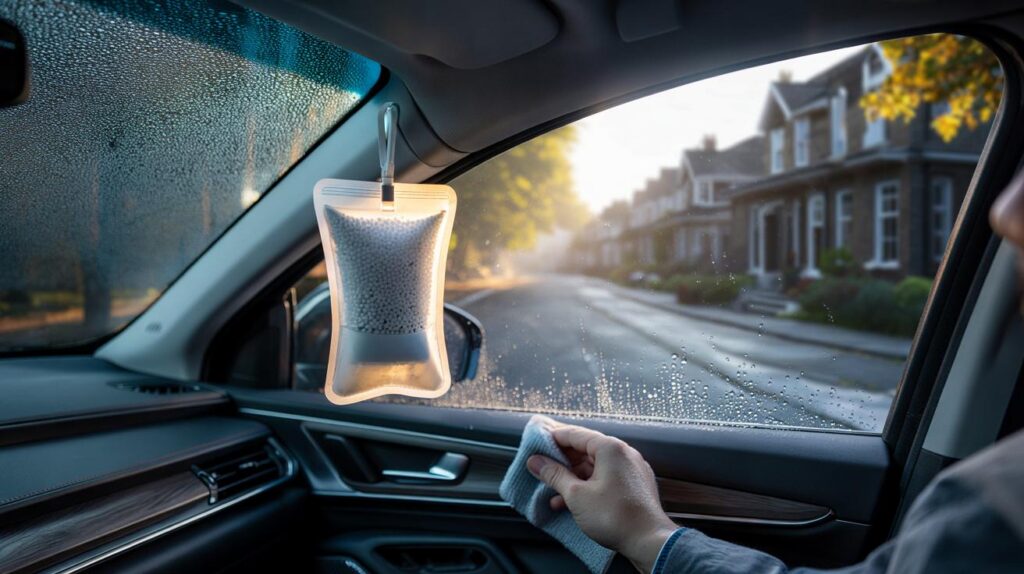
Cold mornings are back and fogged glass returns. A budget trick for drier cabins is winning over thousands of British drivers.
As temperatures dip, motorists face steamed-up windscreens, damp seats, and that tell-tale musty smell. A cheap hanging dehumidifier, sold in multipacks online, is drawing strong ratings and word-of-mouth praise for cutting condensation in cars, bathrooms, cupboards and more.
What drivers are buying
The product is a set of hanging dehumidifier pouches filled with moisture-absorbing crystals. You hang one from a grab handle, a headrest, or a coat hook and leave it to work. As the cabin air sheds moisture, the crystals turn to liquid in a small collection section. When the crystals dissolve, you swap in a fresh pouch.
Up to 60 days of moisture control per pouch, depending on temperature and humidity.
Online rating: 4.6 out of 5 from more than 6,500 reviews.
Key details at a glance
- Price options spotted: three-pack at £6.49; six-pack at £9.98 (about £1.66 per pouch).
- Newer version boasts sturdier materials and a stronger hanger to support the water weight.
- Designed for cars, bathrooms, wardrobes, sheds, and caravans.
- Aims to reduce damp odours and help keep surfaces drier.
How it works
The pouches typically use calcium chloride crystals. These attract water vapour and create a brine that drips into a built-in reservoir. The bag hangs vertically, so gravity pulls liquid down, away from the fabric and your upholstery. That simplicity explains the appeal: there are no batteries, no charging, and no moving parts.
There is a trade-off. The brine is salty. You need to keep the bag upright and avoid squeezing it. The current design promises a more secure hook, which matters once a pouch has absorbed several hundred millilitres of liquid. If the collection section looks full, replace the bag rather than push your luck.
Place the bag where it hangs freely and cannot tip. Keep it clear of electrics, airbags and trim you care about.
Why condensation hits your car
Moisture builds up in cabins for simple reasons. Breath adds water vapour. Wet coats and shoes do the same. Overnight, the car cools. Cold glass drops the air’s dew point, so water condenses on the inside of the windscreen and windows. A dehumidifier pouch reduces the total moisture in the cabin air, so less vapour ends up on the glass.
Ventilation habits play a role. Short trips warm the cabin but do not dry it. Recirculation traps humid air. Blocked scuttle drains, a tired pollen filter, or leaky door and sunroof seals let rain lurk under carpets. Address those causes, and any moisture absorber will work better.
A quick morning routine to clear mist fast
- Start the engine and set the fan to the windscreen.
- Turn on air conditioning; it dries air even in winter.
- Use outside air, not recirculation, for a few minutes.
- Set temperature to warm, not roasting.
- Crack a window slightly for two minutes to purge humid air.
- Keep a clean microfibre cloth for final streaks.
The Highway Code expects fully cleared windows before you move off. Police can issue a £100 on-the-spot fine if you drive with obscured glass.
What buyers report
Feedback highlights a steady drop in morning mist after a few days. Many owners run one pouch in the car and another in a bathroom or wardrobe. Drivers with persistent damp describe softer smells, fewer wet seats, and less mould on rubber door seals. Some only start noticing a difference after day three, which makes sense as the pouch pulls the cabin’s baseline humidity down.
Not every account is glowing. A minority mention leaks once a bag fills. That usually points to an overfull reservoir or a pouch that tipped in transit. Keep the bag away from pets and children, and never place it above electronics or seat heaters. If you spill brine, wipe it up, then dab with a little clean water to remove residue.
Alternatives on the high street
You are not stuck with throwaway pouches. Two reusable options sit near the £10 mark in major chains:
- B&Q: set of 2.1kg reusable car interior dehumidifier bags for £9.95.
- Halfords: Simply reusable car dehumidifier for £9.99.
Reusable bags use desiccant pellets that you can dry out and use again. They suit drivers who prefer to avoid ongoing refills. They weigh more, so place them flat on the dash when parked (if safe), on a parcel shelf out of sun, or under a seat near an air vent. Reactivate them on a radiator or in a warm, dry room.
| Option | Type | Price | Reusability | Typical placement | Indicative lifespan |
|---|---|---|---|---|---|
| Hanging pouches (six-pack) | Calcium chloride | £9.98 | Disposable | Grab handle, headrest, coat hook | Up to 60 days per pouch |
| B&Q 2.1kg set | Reusable desiccant | £9.95 | Rechargeable | Parcel shelf, footwell, under seat | Years with periodic drying |
| Halfords Simply | Reusable desiccant | £9.99 | Rechargeable | Dashboard when parked, glovebox overnight | Years with periodic drying |
Pitfalls and safety notes
- Keep disposable pouches upright; the collected liquid is a saline solution.
- Do not hang above touchscreens, vents, or seat switches.
- Replace before the crystals vanish completely to reduce spill risk.
- Seal used pouches in a bag before binning; check local guidance for disposal.
- With reusables, follow the reactivation method on the label; do not microwave unless stated.
Will a £10 fix suit you?
Pick hanging pouches if you want quick, hands-off moisture control for the damp months and you do not fancy recharging a bag. Go reusable if you prefer a one-off purchase and have a warm place to dry it every week or two. Many drivers run both: a reusable bag for day-to-day drying and a hanging pouch to cope with week-long wet spells.
If you still wake up to heavy condensation after a fortnight, probe deeper. Check for wet carpets and spare-wheel wells. Clear scuttle drains under the windscreen. Inspect door and boot seals for splits. Make sure the cabin filter housing sits correctly. Sunroof drains can clog; a gentle clean can restore flow. Fix those sources and any moisture absorber will perform better.
Small maintenance checks that make a big difference
- Swap an old cabin filter; a fresh one improves airflow and drying.
- Keep recirculation off in winter unless you need a brief blast of warmth.
- Run the air con weekly to keep seals lubricated and the system drying well.
- Clean inside glass with an alcohol-based cleaner; film encourages fog.
- Dry wet mats at home; do not leave them to “air” inside the car.
Under £10 and five minutes to set up beats scraping mist for weeks. The right placement does the heavy lifting.
One last tip: think seasonally. Use absorbent bags through the cold, wet months and store them when spring arrives. Mark a reminder to replace or recharge before the first frost. Your morning commute will start clearer, drier and calmer.
For families, a two-bag approach works well. Keep one pouch near the windscreen and another under the rear bench where wet boots and coats sit. Rotate reusables at the weekend so one dries while the other guards the cabin. Small habits like these push humidity down and keep glass clear for less than the cost of a coffee a week.



I used similar calcium chloride hangers in the wardrobe; never thought to try in the car. The 60-day claim seems fair if you keep it upright and avoid recirc. Will grab the £9.98 six-pack and run one up front, one near the boot. Any tricks to avoid that salty brine spill besides ‘don’t overfill’? Cheers.
4.6 stars from 6,500 reviews sounds great, but how does this compare to a proper rechargeable desiccant unit? I’m wary of leaks on seat heaters and electronics.