
A British crime drama refuses to fade, with fresh streams, fierce devotion and a legacy that keeps sparking new arguments.
Made across four runs and a one-off special, the hit reinvented Conan Doyle’s detective for smartphones, blogs and viral fandom.
What set Sherlock apart
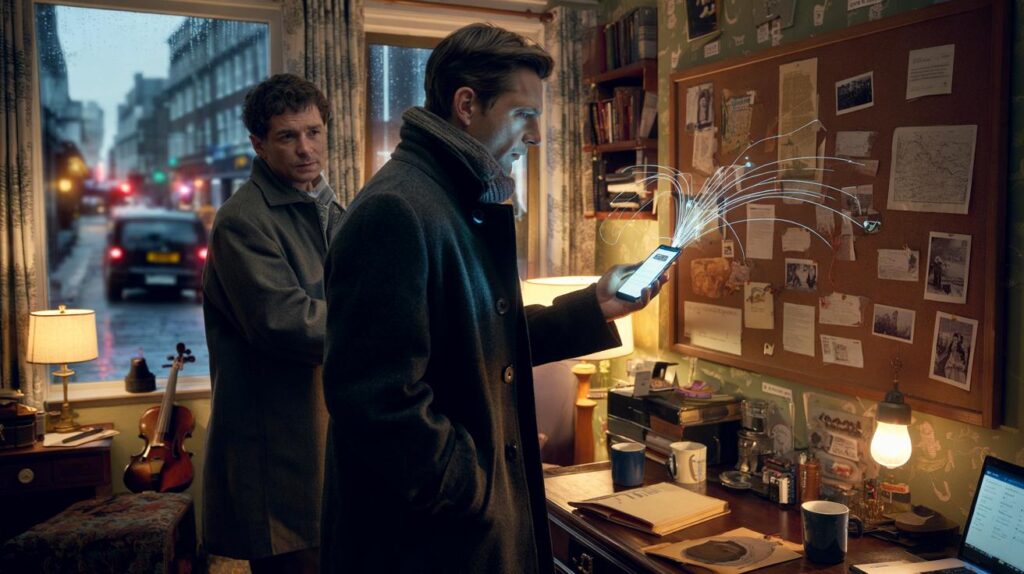
Sherlock reimagined Arthur Conan Doyle’s stories for the present day. Texts appeared on screen. GPS pings nudged clues forward. A war medic wrote a public blog that turned two flatmates into minor celebrities. The cases felt propulsive, witty and bold.
Each episode ran feature length, closer to a film than a standard TV hour. That gave the writers room for twists, character work and quiet beats. Benedict Cumberbatch’s Holmes arrived as a razor-edged observer with little time for niceties. Martin Freeman’s John Watson grounded the chaos with warmth and grit. Their chemistry did the heavy lifting.
Thirteen feature-length cases, four series and a Victorian special are streaming now on BBC iPlayer in the UK.
Andrew Scott’s Jim Moriarty brought a puckish menace that helped define the show’s early arc. Mark Gatiss, as Mycroft, gave a cool counterpoint to Holmes’s impatience. Rupert Graves’s Lestrade and Louise Brealey’s Molly Hooper rounded out a modern, nimble ensemble. The first three series drew near-universal acclaim for pace, structure and performances. The fourth sparked debate yet kept audiences loyal.
From Cardiff to Baker Street
Production anchored itself in Cardiff, a city the BBC knows well. North Gower Street in London doubled for Baker Street’s famous address, while interiors carried the messy comfort of a lived-in detective’s den. The result felt metropolitan but attainable, as if a cab ride could take you to the heart of a case.
The numbers behind the obsession
- 4 series of 3 episodes each, plus 1 Victorian special.
- Approximately 90 minutes per episode, designed as self-contained cases with ongoing threads.
- Broadcast on the BBC in the UK and on PBS as part of Masterpiece in the US.
- Sold to more than 180 territories, with millions watching in Britain.
- Winner of BAFTAs, Emmys and a Peabody Award across its run.
| Series | Year | Episodes | Note |
|---|---|---|---|
| Series 1 | 2010 | 3 | Modern-day debut; the partnership takes shape |
| Series 2 | 2012 | 3 | High-stakes duels and public scrutiny grow |
| Series 3 | 2014 | 3 | Return, relationships and reputations under pressure |
| Special | 2016 | 1 | Victorian-set adventure with a conceptual twist |
| Series 4 | 2017 | 3 | Family ties, reckoning and psychological games |
Fans still call it the greatest television they have seen, and say it remains irresistibly bingeable years later.
Awards and reach
Sherlock travelled further than most British dramas. The show courted the mainstream while staying nimble, and awards bodies responded. BAFTAs and Emmys recognised acting, writing and craft. A Peabody underlined cultural impact beyond ratings. International sales extended the series to more than 180 countries, turning an old literary hero into a digital-age icon.
Why it still matters in 2025
Modern life sits at the centre of Sherlock. Technology pushes and pulls the plot, yet the heart of the drama stays human. Friendship, loyalty and pride steer decisions. The blend of intellect and emotion gives the cases replay value. Jokes land quickly, then the rug moves. A second watch reveals planted evidence and coded glances.
Short orders kept the series lean. With three episodes per run, each story had event status. That scarcity helped the show feel premium and easier to revisit. It also allowed ambition in direction and score, selling scale on a TV budget.
Where and how to watch
All four series and the Victorian special are currently available on BBC iPlayer in the UK. In the US, Sherlock aired on PBS under the Masterpiece banner. Availability outside the UK changes by region, so check your local broadcaster or streaming platforms.
New viewers can follow broadcast order. Returning fans often mix favourites. The first episode introduces the style and partnership. The special offers a playful detour. The final run leans into psychology and family history.
Five reasons people still press play
- Character first: the Holmes–Watson friendship carries real stakes.
- Feature-length pace: each case breathes like a thriller.
- Bold styling: on-screen texts, rapid deduction cuts and sharp humour.
- Villainy with bite: a memorable Moriarty raises the temperature.
- Contained commitment: 13 episodes fit a measured weekend plan.
A no-spoiler weekend plan
Want structure without giving away plot turns? Try this rhythm. Friday night: one episode to set the tone. Saturday: two in the afternoon, one late evening. Sunday: two mid-morning, one after lunch, and the special before bed. That schedule balances intensity with breaks, keeping each reveal crisp.
Tip: keep your phone handy for notes; the show rewards attention and quick recall between episodes.
For readers who love the source material
The series thrives on affectionate nods to Conan Doyle. Titles echo the classics. Clues hide in dialogue. Names shift to fit modern roles. To extend the experience, pair each episode with the related short story or novel chapter. The contrast between Victorian logic and present-day deduction adds texture. Audiobook versions can fill commutes between viewing sessions.
What to expect before pressing play
- Tone: witty and fast, with moments of darkness.
- Content: crime scenes, peril and occasional violence.
- Runtime: plan for ninety minutes per case.
- Continuity: cases stand alone, yet character arcs reward sequential viewing.
- Spoilers: social media still circulates big twists; mute keywords if you are new.
What it means for British TV now
Sherlock showed how to refresh a classic without losing its core. It proved that smart, stylised crime drama could travel globally and still feel British at street level. It also put craft front and centre, from music cues to production design. That template influenced a wave of homegrown hits with tight episode counts and cinematic ambition.
Thirteen episodes. Four series. One special. One partnership that people still talk about.
One last nudge
If you left it on your watchlist, this is an easy win: a complete run, a clear order, and no filler. If you watched it years ago, it holds up. Visual tricks that felt fresh still serve the story. The jokes still crack. The deductions still snap. And the final notes still spark debate.
For long-time fans, try a theme rewatch: focus on cases that test loyalty, or ones where the city becomes a character. For first-timers, keep a simple rule—when a moment feels throwaway, it usually matters later. The show plays fair. The clues are there. The thrill is putting them together before the doorbell rings.



10 million? Challenge accepted.
Greatest ever? Big claim. Does Series 4 actually hold up, or is this just nostaligia talking?