
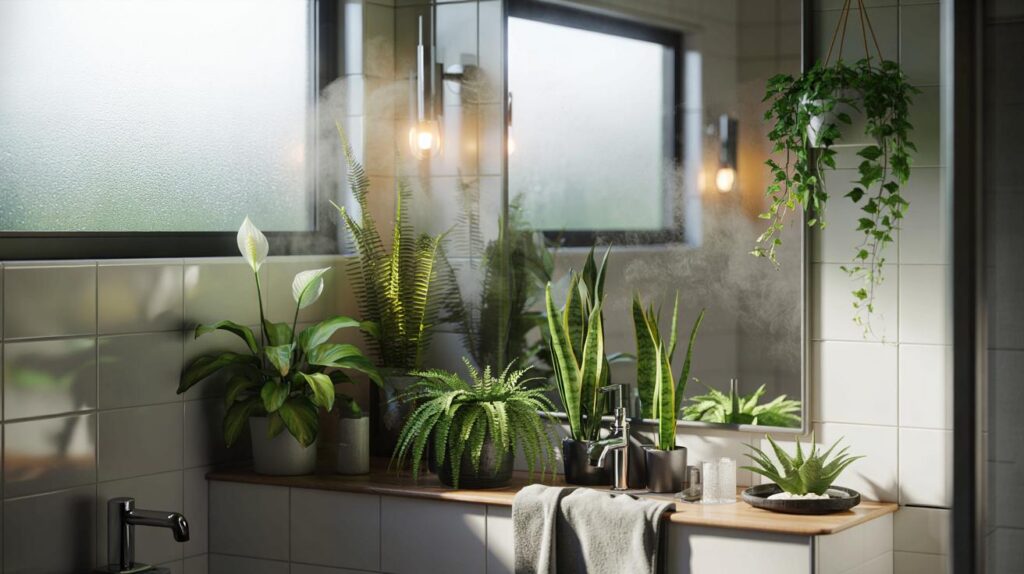
Muggy bathrooms sour your mornings and chew through time. A simple green fix can calm the air and your routine.
Fogged mirrors, slow‑drying towels and stubborn odours feed stress before work. A few hardy plants can steady humidity, tame smells and lift the mood, even in low light. You spend less time wiping, more time getting out the door.
Why your bathroom fogs and smells
Hot showers spike relative humidity to 80–95%. Condensation forms on mirrors and grout. Poor airflow traps steam and volatile compounds from shampoos and cleaners. Damp towels add a musty note. Over time, mould spots appear on silicone and paint.
Plants will not replace an extractor fan. They can, however, buffer spikes, capture odour molecules on leaf surfaces, and keep the space feeling fresher between showers.
Target 50–60% relative humidity in daily use. A cheap hygrometer shows you when the room sits in the safe zone.
Plants that fight steam and odours
Choose species that love moisture, cope with low light and ask little from you. The seven below tick those boxes and bring different strengths.
| Plant | Light | Humidity | Odour help | Typical UK price |
|---|---|---|---|---|
| Peace lily (Spathiphyllum) | Low to medium | High | Good for stale, musty rooms | £6–£12 (12–17 cm pot) |
| Spider plant (Chlorophytum) | Low to bright indirect | Moderate to high | Helps neutralise product smells | £5–£9 (baby plants even cheaper) |
| Boston fern (Nephrolepis) | Medium, no direct sun | High | Softens air, reduces stuffiness | £7–£15 |
| Snake plant (Sansevieria/Dracaena) | Low to medium | Moderate | Steadying presence in windowless rooms | £8–£14 |
| English ivy (Hedera helix) | Medium | High | Liked for musty corners | £5–£10 |
| Aloe vera | Bright indirect | Low to moderate | Stores water, smooth look | £5–£10 |
| ZZ plant (Zamioculcas) | Low to medium | Moderate | Low effort freshness | £10–£18 |
Placement that actually works
Cluster plants rather than dot them around. A group boosts local air movement and condensation uptake around leaves and potting mix. Keep clusters near the shower, on a high shelf, or on a wide window ledge. Avoid cold draughts and radiant heaters.
Group 5–7 small pots within 60 cm of your shower. You create a living “buffer zone” where steam hits greenery, not glass.
Set‑up guide: a 10‑minute bathroom green‑up
- Pick two moisture lovers (peace lily, Boston fern) and one tough anchor (snake plant or ZZ plant).
- Use plastic or glazed pots with drainage holes and saucers. Add 2 cm of clay pebbles at the base.
- Fill with peat‑free indoor mix. Mix in a handful of perlite for airflow.
- Place the cluster shoulder‑height or higher. Hang ivy in a simple hook pot if floor space is tight.
- Water until a trickle reaches the saucer, then empty the saucer after 10 minutes.
- Run the extractor during and 15 minutes after showers. Crack the door open as you leave.
Care with almost no effort
Bathroom air already helps with moisture. Water lightly once a week in winter, twice in summer heat. Let the top 2 cm of compost dry before the next drink. Mist ferns and peace lilies when radiators run. Wipe leaves monthly to keep pores clear. Rotate pots a quarter turn every fortnight for even growth.
Feed a half‑strength houseplant fertiliser once a month from March to September. Skip feeding in the darker months. Repot when roots circle the pot base or watering suddenly dries in a day.
Pet and child safety
Peace lily and English ivy can irritate if chewed. Keep them out of reach. Spider plant, Boston fern and parlour palm are safer choices around pets.
Will plants dehumidify? The honest numbers
A small plant moves only a modest amount of water each day. Think teaspoons to a few tablespoons, not litres. Yet you still gain. Leaves provide surfaces where tiny droplets settle instead of clinging to mirrors. Porous compost acts like a sponge during a steamy burst, then releases moisture more slowly. That smoothing effect reduces sudden fogging and damp smells near your plant cluster.
Pair plants with ventilation. Together they cut peaks, shorten mirror fog time and curb the musty note from wet towels.
Run your own 7‑day test
Buy a £7–£12 hygrometer. Log humidity at three moments: before shower, right after, 15 minutes later. Do this for three days with no plants. Repeat for four days with a cluster added. If you see faster fall‑times back below 65%, you have the right mix and placement. If not, move the cluster closer to the steam source and retest.
Common pitfalls and quick fixes
- Yellowing leaves: you watered too often. Extend gaps between waterings and check for standing water in saucers.
- Brown crisp tips on ferns: air too dry. Mist lightly or move closer to the shower area.
- Fungus gnats: let the top layer dry and add a 1 cm topping of coarse sand.
- Mould on grout: plants help the feel of the air, but scrub and re‑seal grout. Use a squeegee after showers.
Windowless or north‑facing bathrooms
Choose snake plant, peace lily, ZZ plant and spider plant. They handle low light better than succulents. Add a small 9 W LED grow bulb (4000–6500 K) on a timer for eight hours a day if the room stays dim year‑round. Keep bulbs 30–45 cm above leaves to avoid scorch.
Costs, time saved and where to start
A starter cluster costs roughly £25–£35: three small plants at £6–£8 each, two saucers at £1 each, and a bag of peat‑free mix at £4. Setup takes 10 minutes. Day to day, expect two minutes a week for watering and a monthly five‑minute tidy.
Most households notice fewer wipe‑downs and faster mirror clearing, especially when they also run an extractor. If you shower twice daily, trimming five minutes of faff saves more than an hour a fortnight.
Spend £25 once, gain back 60–90 minutes a month and swap chemical sprays for quiet, living filters.
Extra pointers that stretch the benefits
Cycle towels near the plant cluster so they dry faster and avoid that “wet dog” smell. Add a small tray of activated charcoal behind the plants for an extra odour catch. If you air‑dry laundry in the bathroom, crack the window for 20 minutes and push the plant cluster closer to the rack during drying days.
If you track pollen or fragrance sensitivity, start with spider plant and Boston fern. Both suit sensitive noses and ease that heavy, stuffy feel after hot showers. When the routine works, add one peace lily for a bloom and a touch of calm white in winter months.



Not sure about ‘save 20 minutes a day’—even with a fan, my mirror takes ages. Plants moving teaspoons of water sounds… tiny. Is the speed-up mostly from leaves catching droplets near the shower, or is this placebo? Also, how many pots until you notice a real change—3, 5, 10? Genuinely curious, but a bit sceptical.
Followed the 10‑minute set‑up: peace lily + Boston fern + ZZ, shoulder-height shelf, saucers, perlite. £27 all in and a £9 hygrometer. Day 4 and fog clears faster; towels aren’t as whiffy. Cracking the door + extractor made the differnce 🙂