
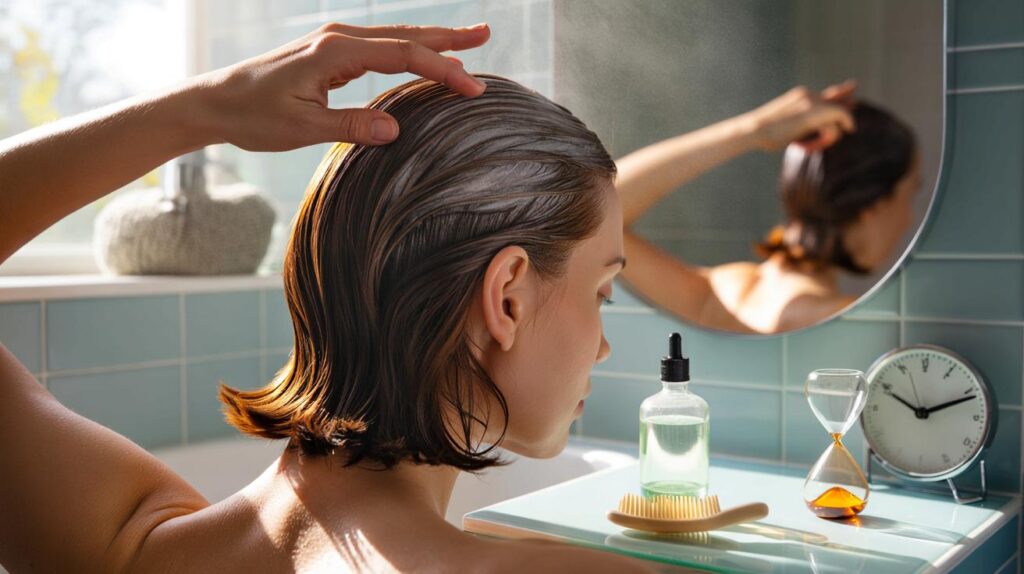
A small, unfussy tweak is sneaking into British bathrooms, promising calmer mornings and softer hair without another pricey bottle.
As the weather turns and hats return, a low-cost ritual is reshaping beauty habits: no shopping haul, no gadget, just your hands and a clock.
Why a simple scalp ritual is suddenly everywhere
Rising prices have made many of us rethink overflowing shower caddies. People want results they can feel, not just promises on a label. Salon menus now carry “scalp therapy” alongside blow-dries, and trichology clinics keep fielding the same question: can a daily scalp massage really change the way hair looks and behaves? The short answer is yes—especially for dullness, flat roots and that end-of-year fatigue the mirror exposes.
Seven minutes a day, zero spend and a 30‑day trial: the new hair fix comes with a clock, not a receipt.
Autumn shedding and tired roots
Seasonal factors push hair to misbehave. Central heating dries the scalp. Beanies flatten roots. Wind roughens the cuticle, stealing light from the fibre. Add stress and skipped lunches, and you get lacklustre lengths and flyaways. A focused massage counters several of these stressors at once by improving scalp comfort, loosening tightness and redistributing natural oils more evenly along the shaft.
What actually happens in those seven minutes
Massage increases blood flow at the skin surface, which delivers oxygen and nutrients to follicles. It also shifts lymphatic fluid, which helps reduce puffiness and that tight, “helmet” feeling by late afternoon. Gentle traction and circular movements trigger mechanoreceptors in the skin, nudging local microcirculation and easing the tiny muscles attached to each follicle. That combination often translates into better root lift, more responsive styling and a cleaner, more reflective cuticle.
Hair growth follows a cycle. Follicles spend months in a growing phase, then rest, then shed. Massage does not reverse genetic baldness, and it will not build hair where follicles have miniaturised. It can, though, support the scalp environment so the hairs you do grow sit better, look glossier and break less. Over 30 days—the time hair typically grows roughly a centimetre—people usually notice faster drying, less snagging and softer roots.
Think of it as a daily warm‑up for your follicles: more comfortable scalp, shinier fibre, easier styling—without changing shampoo.
How to do it so you keep doing it
Commit to a short, repeatable pattern. Aim for consistent, medium pressure with the pads of your fingers, not nails. If you enjoy a light oil, use half a teaspoon; if you prefer clean hands, go dry. The key is regularity.
| Minute | Action | Why it matters |
|---|---|---|
| 0–1 | Warm hands, place palms over crown, take three slow breaths. | Relaxes scalp tension so tissue becomes more responsive. |
| 1–3 | Small circles from hairline to crown with finger pads. | Encourages microcirculation across the densest follicle area. |
| 3–5 | Temple to crown strokes, then behind ears to nape. | Supports lymph flow, reduces tightness and boosts comfort. |
| 5–6 | Gentle, even “lifting” of sections—no yanking, just light traction. | Stimulates mechanoreceptors and can improve root lift. |
| 6–7 | Finish with long sweeps from crown to ends to spread oils. | Smoother cuticle means more light reflection and less frizz. |
- Frequency: daily feels great, but five days a week still pays off.
- Pressure: think “firm enough to move the skin”, not “scrubbing”.
- Oil options: a few drops of light oil such as grapeseed or squalane if your scalp tolerates it; shampoo as usual.
- Tools: rubber-tipped massagers are fine; keep movements slow and controlled.
What people tend to notice by day 30
Shine improves because cuticles lie flatter when natural oils spread evenly. Blow‑dries take less time as hair holds a shape more readily. Breakage at the front hairline declines if you’ve also eased up on tight clips. Short hair benefits too: softer roots make crops look neater for longer between cuts. Many people also report fewer “itchy hat days” and less end‑of‑day scalp fatigue.
£0, seven minutes, 30 days: set those three variables and you can test the ritual without changing anything else.
Who should be cautious
- If you live with psoriasis, active dermatitis or scalp infections, speak to a clinician before starting.
- Post‑transplant patients should follow their surgeon’s aftercare timings rather than this guide.
- Severe tension headaches or migraines can worsen with pressure—keep it feather‑light or skip entirely on bad days.
- If you use topical medicines such as minoxidil, let them dry fully before massaging.
- Stop if you notice redness that lingers, tenderness or increased shedding beyond normal seasonal changes.
The money question and what products still matter
Massage won’t replace every bottle. Conditioner still reduces friction. Heat protection still shields against styling tools. What changes is the volume of extras you feel compelled to buy. Many people find they can cut back on weekly masks and keep one lightweight finishing product instead of three. If you enjoy oils, choose something simple and fragrance‑light; many sit between £5 and £20 and last months because you use drops, not dollops. A decent massager tool costs £8–£15, but your hands work perfectly well.
For thinning tied to hormones or genetics, massage supports comfort and grooming, but proven actives still do the heavy lifting. That may include medical topicals or clinic‑guided treatments. Use this ritual alongside, not instead of, what your doctor recommends.
Small habits that amplify the effect
- Loosen ponytails: keep tension at 4 out of 10, not 8. Swap to soft ties to protect the front hairline.
- Heat rules: keep irons under 185°C and hold dryers at least 15 cm from the hair.
- Pillowcase swap: satin or silk reduces overnight friction and helps preserve that newly smoothed cuticle.
- Protein at breakfast: around 20 g supports hair’s keratin structure; eggs, yoghurt or beans make it easy.
- Brush strategy: a vented brush at the scalp, then a wide‑tooth comb through lengths to limit tugging.
How to track whether it’s working for you
Take two photos each week in the same spot and lighting, hair parted the same way. Note drying time after your usual wash, the number of snags while combing and how quickly roots collapse under a hat. Those practical markers show change better than hunting for perfect shine in different mirrors. After 30 days, decide whether to keep the practice daily or drop to maintenance three times a week.
Curious about pairing the ritual with something new? Try a “wash‑day only” oil session: two minutes of massage before you shampoo, three minutes under warm water to help lift residue, then your normal routine. Many notice cleaner roots without the tight feeling that can follow clarifying products, and that comfortable scalp makes consistency far easier.



I swapped my weekly mask spree for this 7‑minute ritual and, two weeks in, drying time is down and my roots don’t collapse under a beanie. Defintely noticing fewer snags too. Not claiming miracles, but I’m happy to skip the £60 “shine” serums for now and stick with my hands + clock. Thanks for the clear step-by-step—made it easy to actually do daily!
Is there any scientifc evidence beyond anecdotes here? I get that massage can improve comfort and oil distribution, but does it change hair density or just perceived fullness/shine? For androgenetic loss, this reads like supportive care, not treatment—fair enough, just want to temper expectations.