
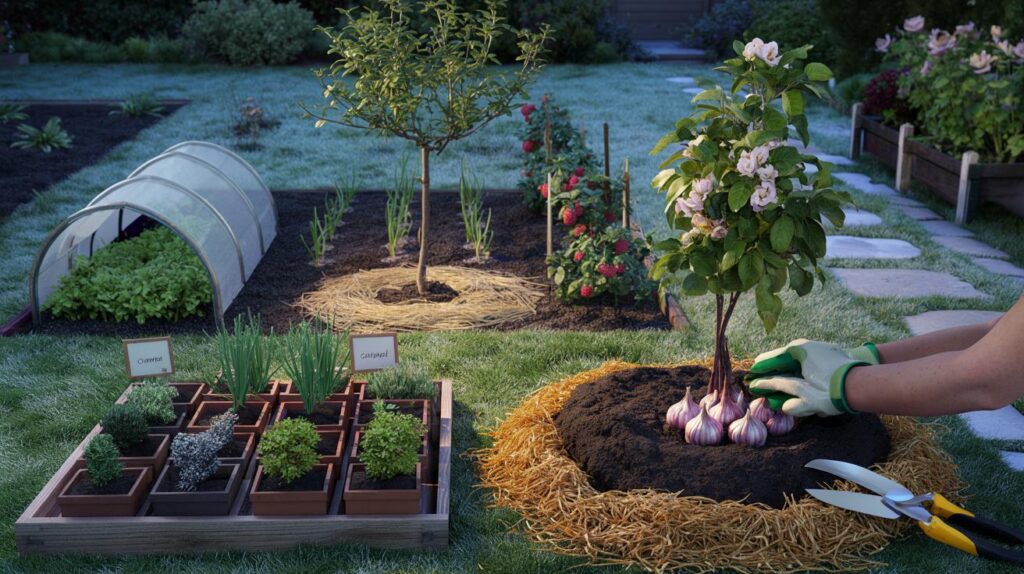
The season cools, leaves drift, and the ground breathes. Your garden still has one last burst of potential before winter bites.
Right now, many gardeners quietly pivot to roots, not shoots. They bank on a short late‑October window to set cuttings, prune wisely, and plant for a stronger spring. The descending moon period offers a practical frame, and the next fortnight could reshape your beds, borders and fruit trees for months.
Why a descending moon stirs roots in late october
What gardeners mean by a descending moon
The descending moon is not the same as a waning moon. It refers to the moon’s lower daily arc on the horizon over roughly two weeks. In 2025 across western Europe, that pattern runs from 12 to 26 October. Gardeners use this stretch to focus on soil work, root growth and transplants. Sap movement shifts downwards, so new plants root faster and established ones settle quietly.
This approach sits in practical tradition. You time root‑first jobs when the plant directs energy below ground. You don’t need to follow every lunar nuance to gain the benefit. You simply anchor crucial tasks within this date band.
Real gains you can bank on in 14 days
When you plant or take cuttings during this window, you aim for better establishment before frost. Roots explore, soil stays workable, and transplants face less stress. Many growers report higher take‑rates for hardwood cuttings and fewer losses after the first cold snap. Fruit trees planted now often break bud cleanly in spring and carry stronger growth by June.
12–26 October 2025: set roots, shape wood, and plant what must face winter. Let the crown rest while the roots get busy.
Cuttings, pruning and planting: the late October playbook
Cut better cuttings, faster
Hardwood and semi‑ripe cuttings root well while temperatures stay cool and moisture remains even. Choose disease‑free material, cut below a node, and use clean tools. Insert each cutting into a free‑draining, moist mix. Firm gently to remove air gaps, then label and shelter from harsh wind.
- Fruit shrubs: blackcurrant, redcurrant, gooseberry
- Herbs: rosemary, sage, lavender
- Ornamentals: pelargonium cuttings kept frost‑free, rose heel cuttings in a cold frame
Give each cutting its own space. Crowding invites rot. Keep the medium damp, not wet. You should feel slight resistance within four to six weeks as roots form.
Prune to shape and protect
Work on structure rather than heavy reduction. Shape apples and pears. Tidy summer‑fruiting raspberries by removing spent canes at ground level. Thin congested growth on old shrub roses. For kiwi and stone fruit, limit to light corrective cuts and remove dead or crossing wood. Avoid big wounds before deep winter.
Cut just above an outward‑facing bud to open the plant. Use sharp, disinfected tools to prevent disease spread. Step back after each cut and check light and air flow through the canopy.
Make clean cuts above an outward bud, keep blades sterile, and stop before you over‑thin. The tree must still feed itself.
Plant what will pay you back by spring
Soil still holds warmth in late October. Roots take advantage. Bare‑root trees and shrubs settle quickly when you plant during this cooler spell. Garlic, shallots and overwintering onions thrive after a firm start. Strawberries set in now throw sturdy runners next summer. Winter salads and hardy brassicas hold better after a solid watering‑in and a good mulch.
| Task | Best timing (12–26 Oct) | Key tip | Sign of success |
|---|---|---|---|
| Hardwood cuttings | Day 2–10 of the window | Use pencil‑thick, current‑season wood | Firm tug meets resistance by week 4–6 |
| Fruit tree planting | After rain when soil is friable | Plant to the nursery line, stake on the windward side | No wobble after watering‑in and firming |
| Garlic and shallots | Cool, dry day | Set cloves 2–3 cm deep, tips up | Emergence in 10–21 days, depending on temp |
| Rose pruning tidy | Calm afternoon | Remove weak, inward growth first | Open, goblet shape that lets air pass |
Set‑up that turns good into great
Soil prep and timing that stack the odds
Loosen the top 15 cm without flipping the profile. Add a spadeful of mature compost where each plant will sit. Water the hole before planting if the soil feels dry below the surface. Plant early morning or late afternoon to dodge midday swings. Space correctly so air and light can reach each plant as days shorten.
Target the week of 20–26 October if you can. You often beat the first ground frosts while still catching residual soil warmth. That balance helps roots run and wounds close.
Watering, mulching and aftercare
Water generously at planting, even if drizzle lingers. You settle soil, remove hidden air pockets, and wrap roots in contact. Apply a mulch of shredded leaves, woodchip or straw. Keep mulch off stems to prevent rot. Check moisture weekly. In a dry spell, water early in the day so foliage dries before night.
Water in well, then mulch. You are buying stable soil temperature, fewer weeds and steady moisture with one tidy layer.
Guard young plants from slugs with traps or collars. In wet regions, lift lower leaves for airflow and avoid burying crowns. In windy spots, stake new trees and inspect ties monthly.
Weather curveballs and smart fixes
Rain, mild spells or early frost: how to react
Let waterlogged ground drain before you plant. Squeeze a handful of soil. If it oozes, wait. If it crumbles, go ahead. When a sudden cold snap hits, throw fleece over beds at dusk. Use cloches for salads and cuttings. In a mild, soggy run, raise containers on feet and thin covers to prevent mould. For bare‑root trees arriving during a storm, heel them into a temporary trench until the soil turns workable.
Common mistakes you can skip
- Over‑tight planting that starves roots of air
- Excess fertiliser that burns fresh roots
- Dirty blades that spread canker and dieback
- Heavy pruning of stone fruit before winter
- Mulch piled against stems or graft unions
Does it really work? What gardeners see
Across allotments and small orchards, many growers notice stronger root systems when they time work within this late‑October slot. New strawberries produce earlier runners. Blackcurrant cuttings anchor firmly. Bare‑root apples send out clean feeder roots and hold their stakes. The method costs nothing and slots neatly into a normal autumn routine.
Less interference, more establishment. Set the plant well, then step back and let roots write the next chapter.
The difference between descending and waning moons
People often mix these up. The waning moon refers to decreasing illumination after the full moon. The descending moon describes a lower, southward daily path across the sky over several days. Many gardening calendars track both, but the root‑focused practice here follows the descending phase. You can pair the two if you like, yet you don’t need to. A simple date band and good horticulture will serve you well.
Plan your next window
Mark 12–26 October 2025 on your calendar. List three jobs: one set of cuttings, one pruning task, and one planting. Prepare materials now: clean secateurs, fresh compost, fleece, stakes, and labels. Check a local forecast and pick two calm, dry days. If the weather turns, pivot to potting and heeling‑in, then move to final positions when soil conditions improve.
Consider a small trial to build your own evidence. Split a batch of blackcurrant cuttings: half set during the descending moon, half a fortnight later. Track take‑rates, growth and spring budbreak. You gain data for your soil, your microclimate and your routine. That knowledge compounds every season.
One last note on biosecurity. When you swap cuttings, check for pests such as vine weevil and for viral symptoms in soft fruit. Quarantine new plants for a fortnight. You protect your beds now and save serious effort next year.



This is the first lunar-gardening piece that actually feels practical. The task list + date band are gold—especially staking on the windward side. I’ll definately try garlic at 2–3 cm and a light prune on roses. Thanks for the no‑nonsense tone.
Do you have peer‑reviewed sources showing the descending moon changes sap movement, or is this mainly observational tradition? I’m open to it, but would love numbers on take‑rates vs a control week.