
Frosty mornings are back and budgets are tight, pushing households to rethink warmth, comfort and energy use at home.
One £10 aisle find is suddenly everywhere, promising cosy cores without firing up the boiler. It nods to Martin Lewis’ mantra: heat the person, not the property.
A £10 core-warmer inspired by Martin Lewis
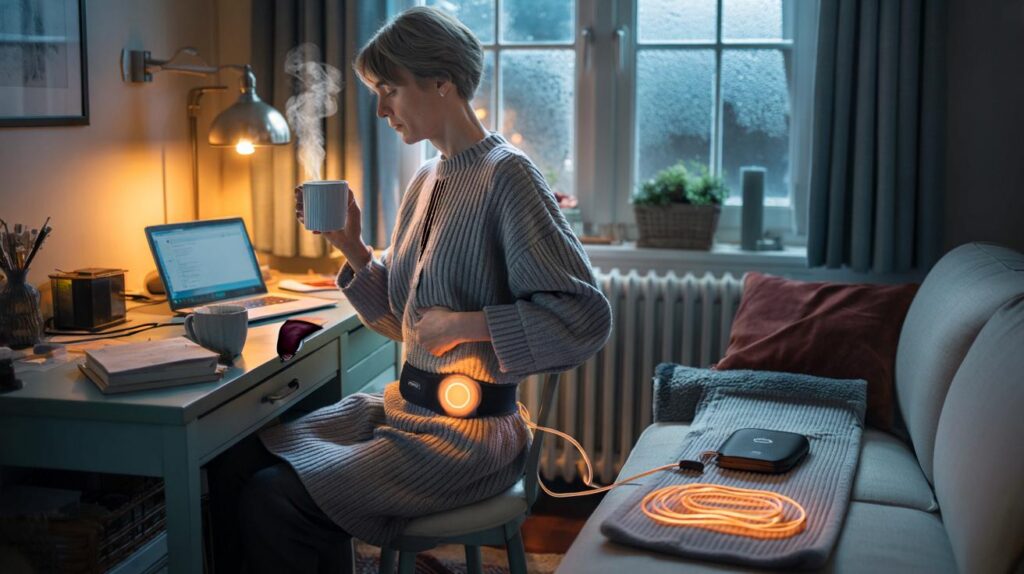
The B&M heated waist wrap targets your midsection, where warming the core helps the rest of the body feel comfortable. It fastens with Velcro for a snug fit and slips discreetly under a jumper. You power it by USB, so you can plug it into a wall adaptor or a power bank and stay mobile. A small front pocket can house the power bank and doubles as a hand-warmer.
The wrap offers three heat settings, signalled by coloured lights on the button, letting you switch between a gentle glow and a stronger blast as your day changes. Shoppers using it while working from home say they can delay switching on radiators for hours.
“Heat the human, not the home” isn’t just a slogan; a targeted wrap can keep you comfy for pennies a week.
How it works
- Adjustable belt focuses warmth on your core for efficient comfort.
- USB power means you can run it from a plug, laptop port or power bank.
- Three settings let you fine-tune heat as the temperature shifts.
- Front pocket holds a power bank and gives your hands a warm perch.
What it costs to run
Most USB heated wraps draw around 8–10W. That’s 0.008–0.01kWh per hour. On a typical electricity tariff of 28p per kWh (check your exact unit rate), the running cost sits near 0.22–0.28p per hour.
Four hours a day on a 10W setting costs roughly 1.1p. Five evenings a week comes in around 5.5p.
Even if your unit rate is higher, you’re dealing in pennies rather than pounds. A decent 10,000mAh power bank (about 50Wh) can power a 10W wrap for roughly five hours between charges.
A £6 alternative with no cable
If you’d rather skip leads altogether, an adjustable hot-water-bottle belt from Greater Manchester-based Online Home Shop offers a similar “warm the core” approach for about £6. The soft, ribbed fleece pouch sits against your abdomen or lower back, easing cramps or twinges while keeping you toasty on the sofa.
Fill with hot—not boiling—water, burp the air, screw the stopper firmly and slide it into the belt. It warms immediately, costs nothing to run beyond your kettle boil, and stays effective for hours depending on room temperature and insulation.
Safety notes for heat-on-body products
- Avoid boiling water in hot water bottles; use hot tap or cooled kettle water. Check for the BS 1970 mark.
- Inspect stoppers and seams; replace bottles every two to three years or at the first sign of wear.
- Do not fall asleep while wearing electric wraps on high heat. Keep cords untangled and dry.
- If you have reduced heat sensitivity, neuropathy, circulatory issues or are pregnant, seek medical advice first.
- Never use over broken skin or with topical heat rubs.
How it stacks up against heating the room
Room heating warms large volumes of air and surfaces. Personal heating targets you. The difference shows up starkly on a bill.
| Option | Typical power | Unit cost used | Cost per hour | What it warms |
|---|---|---|---|---|
| USB waist wrap | 10W | 28p/kWh electricity | ≈0.28p | Your core |
| Heated throw | 100W | 28p/kWh electricity | ≈2.8p | Person on the sofa |
| Fan heater | 2000W | 28p/kWh electricity | ≈56p | Small room |
| Gas central heating (boiler firing) | ~10kW | 7p/kWh gas | ≈70p | Whole home zones |
Figures are illustrative and vary by model, tariff and insulation. The pattern remains: the closer the heat sits to you, the less you spend for comfort.
Who benefits—and who should take care
Students in draughty flats, remote workers, older readers who feel the cold and anyone returning from a chilly commute will notice the impact fastest. People with backache or period pain often prefer focused warmth because it soothes while avoiding stuffy rooms.
Anyone with medical devices, reduced sensation or specific conditions should speak to a clinician first, especially before using high settings for long periods.
Smart ways to use personal heating
- Pair the wrap with a thin base layer and a warm jumper; layers trap air and boost heat from the belt.
- Use a heated throw on the sofa, but drop the setting once you feel comfortable to save more.
- Time your central heating for short bursts at wake-up and evening; rely on personal heat in between.
- Shut doors, draw curtains at dusk, and block draughts; these keep “you heat” working longer.
- Keep a warm drink nearby; hydration plus core heat feels cosier at lower room temperatures.
What to check before you buy
- Safety marks: look for UKCA/CE on electric units, BS 1970 on hot water bottles.
- Controls and protection: overheat cut-out and clear, simple temperature steps.
- Cable and pocket: a long, flexible lead and a pocket sized for common power banks.
- Washability: removable, washable cover helps with daily use.
- Battery maths: a 10,000mAh power bank stores about 50Wh; at 10W expect roughly five hours of warmth.
Quick cost calculator
Running cost (£) = (wattage × hours ÷ 1000) × unit rate.
Example: 10W × 4h ÷ 1000 × £0.28 = £0.0112 (about 1.1p).
A £10 wrap plus a modest power bank can turn a freezing study into a workable space for less than 10p a week.
Where the £6 belt fits in
The hot-water-bottle belt shines during power cuts, camping, or when you want gentle heat with zero cables. It stays warm for a TV marathon and adds pressure relief to sore spots. Swap in warm water at half-time and you’re set for the evening. Keep it stored away from sunlight and replace if the rubber smells strongly or turns brittle.
What this means for your winter bills
If you usually run a 2kW heater for three hours a day at 56p per hour, that’s about £11.76 a week. Swap most of those hours for a personal wrap at around 2p a day and reserve room heat for short stints, and you could cut weekly costs by several pounds, depending on your home and tariff.
The wider trick sits in mixing methods: heat yourself, tweak timings, insulate little gaps and use room heat only when the whole household benefits. The £10 B&M wrap—and the £6 belt—slot neatly into that plan, stretching comfort while keeping a lid on spend.



I grabbed this for £10 and it’s definitley kept the radiators off most mornings. Running off a 10,000mAh power bank, I get ~5 hours on medium. Decent buy.
How safe is wearing an electric wrap for hours at a time? Does the B&M version have an overheat cut-out, and has anyone noticed the USB cable getting warm or fraying?