
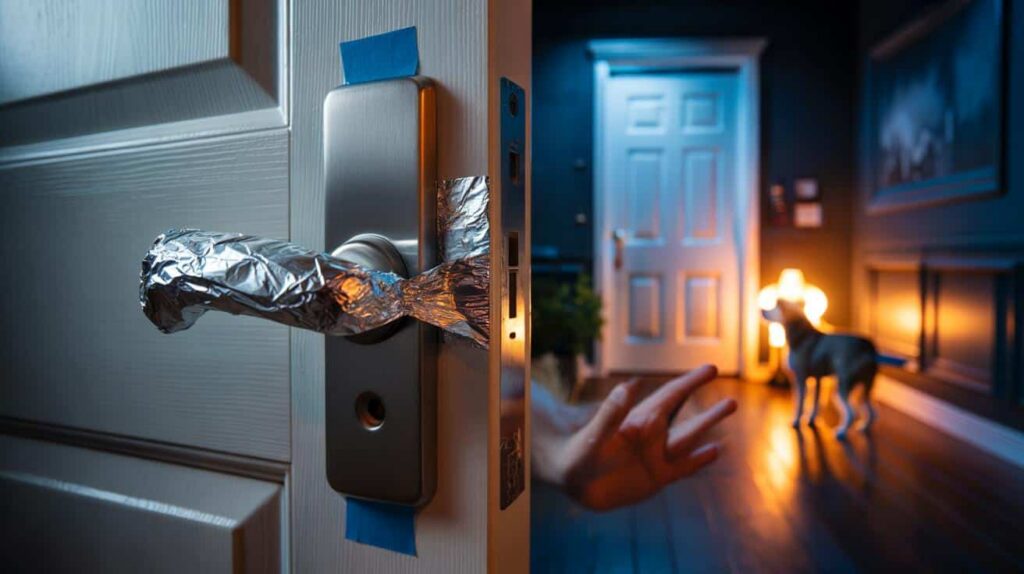
The latest head‑turner moves a kitchen staple to the front door. A simple sheet of aluminum foil now doubles as a nighttime alert, and it’s sparking debate in group chats and neighborhood forums.
What’s behind the foil‑on‑handle trend
People want something simple, cheap, and reversible. They want a heads‑up before a door fully opens. Foil checks those boxes. The metal finish blends with many handles, especially chrome or brushed nickel. The setup takes a minute, works without Wi‑Fi, and you can remove it by morning without tools.
Foil does not stop a break‑in. It turns your handle into a quick, noisy cue you can hear from the next room.
How the trick actually works
Foil acts like a thin, camouflaged sleeve. When a hand touches or twists the handle, the metal crinkles. The sound is sharp and irregular. At night, in a quiet hallway, that’s often enough to wake a light sleeper or set off a barking dog. The foil also leaves a telltale clue. If you get home and it’s torn, flattened, or shifted, someone likely tested the handle.
Noise buys time. A sudden crinkle can make an intruder hesitate and gives you a moment to react.
Step‑by‑step: set it up so it actually helps
- Use a fresh sheet about the size of a notebook. Double it if your foil is very thin.
- Wrap the handle loosely. Small air pockets make louder crinkles than a tight wrap.
- Secure the back with two small strips of painter’s tape. Avoid strong adhesives on plated brass or lacquered finishes.
- Keep the latch edge clear so the door closes normally.
- For extra noise, leave a short “tail” hanging; movement amplifies the sound.
- Remove it in the morning to reduce smudges on polished metal.
Where it helps, and where it doesn’t
This hack makes sense for bedrooms, rental apartments, dorm rooms, guest rooms, vacation cabins, and hotel doors when you’re inside. It’s a temporary alert, not a lock. It won’t resist force. Don’t put foil on shared doors in a building hallway or anywhere it could confuse neighbors or block emergency access. Avoid covering keyholes, fingerprint readers, or keypads.
| Method | Approx. cost | Alert type | Setup time | Best use |
|---|---|---|---|---|
| Foil on handle | Very low | Crinkle sound | 1–2 min | Night alert, tamper check |
| Magnetic door chime | Low–medium | Beep on open | 5–10 min | Day and night entry alert |
| Reinforced strike plate | Low | None | 20–30 min | Slows forced entry |
| Video doorbell | Medium–high | Push alerts, video | 20–40 min | Porch activity records |
Practical caveats and safety notes
Foil can mark soft finishes if you press hard or use strong tape. Test on a small area first. Keep loose foil away from kids and pets. Don’t use it on heated or energized hardware. If you rely on a caregiver, make sure they know it’s there to prevent confusion at the door. Fire safety matters: exits should stay quick to open from the inside.
Make the noise work in your space
Sound depends on your home. Hardwood floors and quiet hallways carry noise better than thick carpets and city traffic. Do a quick night test. Stand in your bedroom, shut the door, and ask a friend to touch the handle. If you can’t hear it, loosen the wrap, add a hanging tail, or pair with a small door chime.
Why the wrap blends in at a glance
Most handles use silver‑tone finishes: stainless, chrome, nickel. Foil mirrors this color. In dim entryways or shared corridors, the wrap looks like part of the hardware. That brief camo creates friction and sound before a visitor realizes what they touched. It’s subtle, which is part of its appeal.
Beyond security: useful foil tricks that actually save time
The roll isn’t just for the oven. It’s a versatile helper in cleanup and quick fixes. A scrunched foil ball works as a light abrasive for grill grates or oven racks. It can lift baked‑on grease without harsh pads. Avoid nonstick coatings and delicate pans. For painting doors, wrap knobs and hinges to catch splatter. In planters, thin strips that flutter in the breeze may discourage some birds and insects; results vary by species and light.
- Shape a small foil cup to shield a door latch while painting the frame.
- Line a drip tray under leaky pipes for a short, temporary fix while you wait for repairs.
- Wrap battery ends in foil only in true emergencies, and never as a permanent spacer; heat risk is real.
Use foil with intent. It’s a smart layer, not the whole plan. Pair it with lighting, solid hardware, and good routines.
If you want to act tonight without spending much
Check the strike plate on your door. Replace short screws with 7–8 cm wood screws that bite into the stud. The upgrade costs little and strengthens the frame. Verify the deadbolt throws fully. Add a wedge or door‑stop when you’re inside and awake. Set a smart speaker near the entry to trigger a loud chime if it hears a knock after a set hour.
Quick home test to see if foil is worth it for you
Wrap the handle at dusk. Sit in your usual evening spot with the TV at normal volume. Ask someone to twist the handle gently, then firmly. If you hear the crinkle each time, you’ve got a useful signal. If not, adjust the looseness, add the hanging tail, or choose a different alert from the table above.
What to pair with the foil for a balanced plan
Lighting deters casual snooping. A warm porch light on a timer looks lived‑in. Window alarms and contact sensors provide clear, consistent alerts. A peephole or small camera records context without constant monitoring. Keep hedges trimmed so sightlines stay open from the street. Share your travel dates with a trusted neighbor so they can watch for moved foil, packages, or gates left ajar.
One last detail: finishes vary. Brass and bronze age differently from chrome. If you care about the look, place a thin layer of painter’s tape under the foil so metal never touches metal. It adds grip, keeps crinkles loud, and leaves no residue when you take it off in the morning.


