
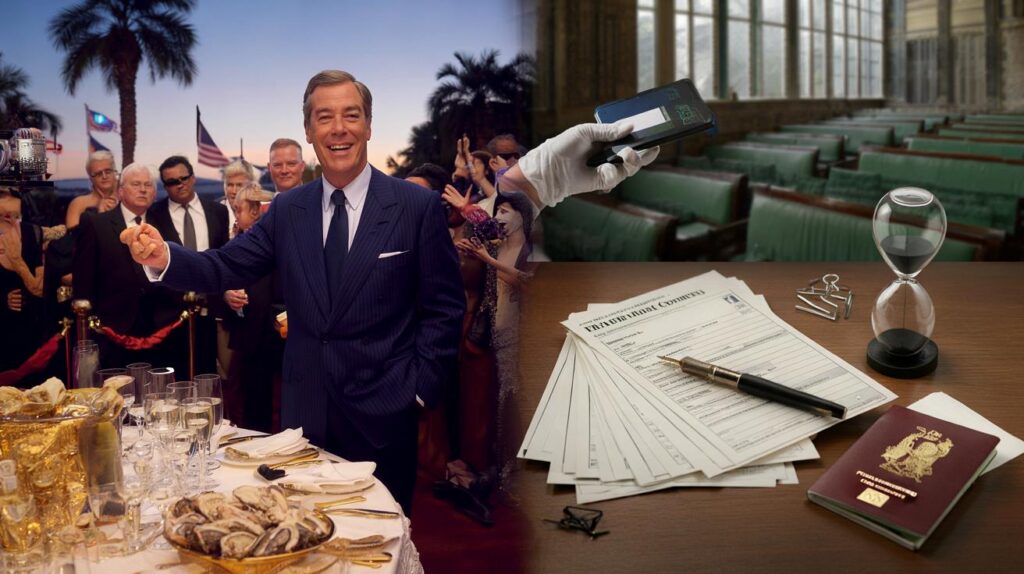
A high-priced dinner in Florida, missing Commons time and a paperwork mess now swirl around Nigel Farage this week again.
Nigel Farage has acknowledged breaching Commons rules after failing to register a March trip to Tallahassee, where he headlined a Republican fundraising dinner featuring $500 seats and $25,000 VIP photos. He blamed an office error, promised to correct the register and apologised to the authorities. He said the speaking engagement was remunerated in three instalments and that he paid for his travel, but he did not name who funded the event payments.
What Farage admits
The Reform UK leader and Clacton MP says he emailed details of the US visit to staff, yet the entry never reached the Register of Members’ Financial Interests within the required window. The Commons code demands that MPs log qualifying foreign trips and declare fees within 28 days.
Farage accepts a breach of the 28-day rule and promises to amend the record and apologise to the registrar.
He states he covered his travel costs. He also says he received remuneration in three parts over two months. He has not identified the payer.
The Florida fundraiser, in numbers
- $500 per head dinner in Tallahassee on 20 March.
- $25,000 (£18,445) VIP option, including a photograph with Farage.
- 28 days: the Commons deadline to register qualifying trips and fees.
- £300: the threshold for reporting overseas visits not wholly self-funded or state-funded.
- He missed prime minister’s questions the day before the dinner.
What the rules say
The parliamentary code is unambiguous about transparency. The register exists to show who pays MPs and why. It covers gifts, visits, donations and employment income, including speaking fees and payments in kind.
- Declare overseas visits costing more than £300 if not wholly paid by the MP or public funds.
- Record any fee received for an appearance, speech or service, and any non-cash benefits.
- File within 28 days of receiving the benefit or undertaking the trip.
- Name the source, the value, and the date.
Transparency requires the payer, the amount and the timing. Voters should not be left guessing who picked up the bill.
Late declarations can trigger scrutiny from the parliamentary standards commissioner. Sanctions range from a formal apology to more serious penalties in cases showing repeated or serious disregard.
The money trail still unclear
Farage’s account raises questions that remain unanswered. He says he received payments in three instalments, but he has not said who paid them. He adds that he funded his travel. Without the missing names and amounts on the public register, the scale and source of the remuneration stay out of view.
Outside earnings by MPs are permitted under UK rules, yet public confidence depends on timely and complete disclosure. Fees from overseas political organisations can be lawful when declared, but opacity breeds suspicion about influence and access.
| Date | Event | Declared within 28 days? |
|---|---|---|
| 19 March | Farage absent from prime minister’s questions | Not applicable |
| 20 March | Speaks at $500-a-head Republican dinner in Tallahassee; $25,000 VIP photo offer | No — admission of late registration |
| March–May | Remuneration arrives in three instalments | Not entered at the time |
| Sunday | Public statement acknowledging breach; blames office error | Correction promised |
Political fallout
Lib Dem pressure
Liberal Democrat deputy leader Daisy Cooper accuses Farage of letting voters down by using overseas platforms to criticise Britain while failing to meet Commons transparency standards. She wants full disclosure of who covered the speaking fees, warning that hidden backers near Donald Trump risk meddling in UK politics.
Labour lines of attack
Labour’s party chair, Anna Turley, points to a pattern, alleging opaque funding for the US trip, evasiveness over tax and confusion about Farage’s main residence. She also argues that his travel schedule clashes with his duty to represent Clacton in Westminster, echoing concern about missed parliamentary work.
Opposition parties say the issue is not a clerical slip but a transparency test: who paid, how much, and why?
Separate questions over property and tax
Farage also faces scrutiny over a property purchase in Clacton, Essex. He initially indicated he had bought a house himself, then said the buyer was his long-term partner, Laure Ferrari. Because he already owns other properties, a purchase in his name would likely attract a higher stamp duty land tax rate; the arrangement could have avoided roughly £44,000.
His lawyers say a senior barrister’s written opinion finds the SDLT was correctly calculated and that there is no basis for claiming improper avoidance or evasion. That legal assurance may address the tax line of attack, yet it does not remove the political question about judgement and transparency during a contested election year.
What happens next
Farage says he will file an updated register entry and apologise. That filing should include the identity of whoever paid the fees, the amounts and the dates. The parliamentary standards commissioner may review the circumstances and decide whether a formal investigation is needed. If the paperwork lands promptly and is comprehensive, the case might end with a written apology and late entry. If gaps persist, pressure will rise for a deeper probe.
Constituents in Clacton will weigh two strands: the failure to declare on time, and the priority given to a partisan US event over parliamentary business. MPs miss sessions for many reasons, yet the optics of a $25,000 VIP photo offer sit awkwardly beside a promise of reformist politics at home.
How MPs can avoid late declarations
- Log every invitation, benefit and fee on the day it is received.
- Set calendar reminders at 7, 14 and 21 days for the 28-day deadline.
- Designate a staffer to cross-check bank entries against the public register weekly.
- Always include the payer’s name, the amount, the purpose and any travel or hospitality provided.
- Publish a simple breakdown on the MP’s website to mirror the official register.
A late entry can be costlier than a fee: investigations, headlines and lost trust linger longer than a speech cheque.
Why the 28-day rule matters to you
Register entries let voters see who pays for access to their elected representatives. Fast disclosure helps reveal potential conflicts before they shape policy. If you live in a constituency where your MP earns outside income or accepts paid speaking engagements, check their latest filing dates against events. A missed deadline does not prove wrongdoing, but it signals a control problem that needs fixing.
For anyone tracking political money, consider building a simple timeline: event date, payment date, declaration date and parliamentary calendar clashes. That view shows whether transparency keeps pace with reality. It also helps spot patterns — repeated late entries, rising fee sizes, or overseas sponsorships tied to policy positions — that deserve scrutiny at the ballot box.



So… who paid, and why?