
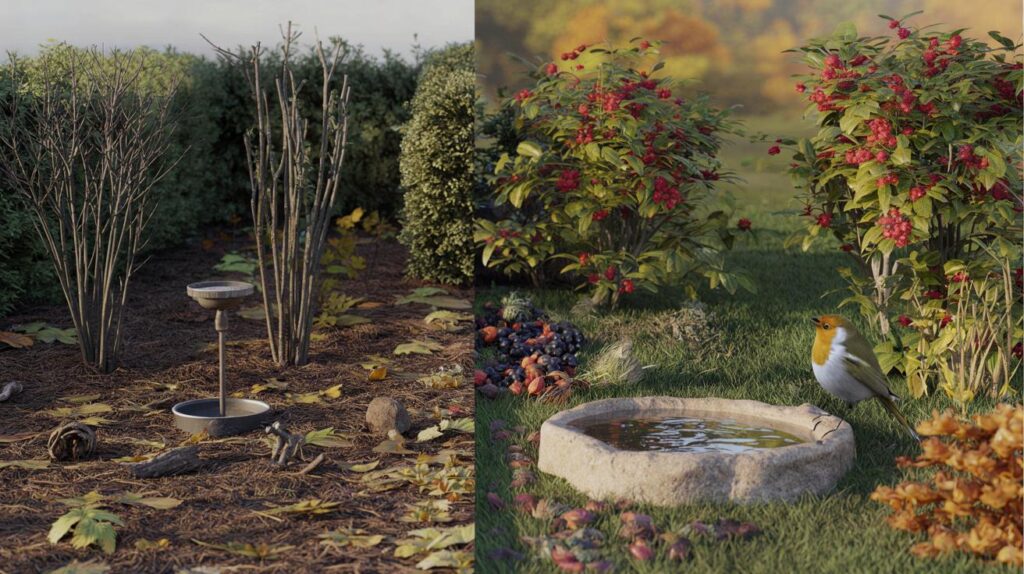
Autumn slips in, the beds fall quiet, and many gardeners ask where the flutter and chatter have gone.
The hush rarely arrives by chance. Borders shift from summer abundance to a leaner palette, and small birds move on. You can turn that around with a few timely choices, starting in October, that put food, shelter and water back where the wind and frosts make them count most.
Why birds vanish from your borders in late autumn
October’s food gap catches many gardens out
By October, soft fruit has finished and insects thin out. Many borders then offer little fuel just when robins, blue tits and blackbirds need high-energy meals. Neat cutting, spent stems removed and seedheads gone leave birds with empty shelves. They head to richer pickings, often a few streets away.
Miss one detail in October—food that lasts—and you swap lively borders for silence by mid‑autumn.
Cold winds shift priorities from song to survival
As daylight shortens and nights bite, small birds look for dense cover, reliable calories and fresh water. Hips and haws, fat-rich seeds and a shallow bath keep them local. Without those basics, they rove. With them, they stick, patrol the same hedges and keep your borders busy.
The tidy‑garden trap you can fix this week
Leave mess that matters: leaves, stems, seedheads
Rake less, watch more. Leaves shelter beetles and worms. Hollow stems hold overwintering insects. Seedheads feed finches. A border that keeps a little roughness carries life into winter and feeds birds when frost seals the soil.
- Rake paths, not beds: keep leaf litter under shrubs and perennials.
- Leave hollow stems at 30–40 cm until spring for insects and spiders.
- Keep seedheads on teasel, coneflower and grasses until March.
- Stack a knee‑high pile of twigs in a corner for wrens and beetles.
- Skip autumn spraying: avoid insecticides and herbicides that strip food chains.
A 10‑minute tidy that favours structure over bare soil feeds more birds than an hour with a blower.
Plant 3–5 berry workhorses before the first frost
October suits planting. Cool soil and regular rain help roots settle. Put berry‑heavy natives at the edge of borders or as informal screens. Aim for staggered fruiting so something ripens from September to March.
| Plant | Fruiting window | What it offers | Suggested spacing |
|---|---|---|---|
| Black elder (Sambucus nigra) | September–October | Energy‑rich berries for thrushes and blackbirds | 2–3 metres |
| Hawthorn (Crataegus monogyna) | October–January | Haws that hold through cold snaps | 1.5–2.5 metres |
| Guelder rose (Viburnum opulus) | October–December | Clusters that brighten and sustain | 1.5–3 metres |
| Blackthorn (Prunus spinosa) | October–November | Late sloes for hungry migrants | 1.5–2 metres |
| Spindle (Euonymus europaeus) | October–November | Pink‑orange arils loved by robins | 1.5–2 metres |
| Dog rose (Rosa canina) | September–February | Long‑lasting hips for finches | 1.5–2 metres |
| Hazel (Corylus avellana) | September–October | Nuts and dense shelter | 3–4 metres |
Planting made simple
- Site: sun to light shade; shelter from harsh northerlies where possible.
- Hole: twice the width of the pot; keep the root collar level with the soil.
- Water: soak thoroughly once at planting, then 5 litres weekly in dry spells.
- Mulch: 5–7 cm of leaves or chipped branches; keep clear of stems.
- Pruning: avoid hard cuts; favour loose, natural shapes to protect berries.
Hedges that host birds all winter
Mix natives for a rolling menu and safe cover
Blend hawthorn with blackthorn, field maple, dog rose and hazel. The mix breaks wind, powers insect life and serves berries in sequence. It beats a single‑species hedge for both shelter and food, and you can weave it along a fence without losing space.
Feeders and baths: when, where, how much
Make small additions that pay back daily
- Baths: shallow bowl, 2–3 cm deep; refresh every two days; scrub weekly.
- Feeders: place 1–2 metres from dense cover to reduce hawk strikes, yet far enough to foil cat ambushes.
- Food: offer sunflower hearts, suet and seed mixes; avoid salty scraps.
- Hygiene: rotate feeder spots every month to keep the ground clean.
- Night frost: break ice in the morning; never add antifreeze or salt.
Clean water plus one dependable feeder can hold a roaming flock that would otherwise skip your street.
Try the 60‑second garden test today
Count what birds count
Stand by your borders for one minute. Count visible berries, seedheads and sheltered nooks. If you score under five in total, add at least two of the fixes above—one plant, one habitat tweak. Repeat the test after two weeks. Most gardens jump from sparse to serviceable with 3–5 changes.
Spot the returnees and read the signs
Who shows up when you get it right
Robins perch low in hawthorn and hop under mulch. Blue tits work seedheads and nip at suet. Blackbirds patrol leaf litter and guelder rose. Dunnocks slip along the twig pile. Finches cling to teasel and dog rose. If you hear contact calls at dawn and see quick dashes between cover, your borders now feed and protect.
Risks, trade‑offs and quick wins you can bank
Balance access with safety
- Cats: add prickly plants under feeders; keep baths 1 metre from thick shrubs to block pounce routes.
- Windows: place decals on large panes near feeders; angle glass slightly or shift feeders either under 1 metre or beyond 9 metres from windows.
- Rodents: use feeders with trays; clear spillage; store seed in metal bins.
- Neighbour norms: keep leaf piles neat at the edges; use log rolls to contain mulch if you share boundaries.
What you gain beyond birds
More winter insects mean fewer spring aphids and less need for sprays. Mulch locks in moisture and builds soil life. Hedges filter wind, so borders suffer less scorch and dry‑out. Berry shrubs lift structure and colour when perennials die back, so the garden still reads well from the kitchen window.
Extra ideas for a richer autumn garden
Small experiments that teach you fast
- Micro‑hedge: plant three whips—hawthorn, spindle, dog rose—30 cm apart in a metre‑long strip; watch which fruits vanish first.
- Patch mulching: compare a mulched border to a bare one; track where blackbirds forage.
- Night camera: set a wildlife camera on a twig pile for a week; note visitors you rarely see by day.
If you crave a quick start, choose one bath, one feeder and three shrubs. Put the bath near a border, hang the feeder where you can watch it, and plant the shrubs in a loose triangle 2 metres apart. Add a tidy leaf berm under them, knee‑high and 50 cm wide. That mix offers calories, cover and water—the trilogy that keeps birds in your beds when the clocks go back.



Loved the 60‑second test—scored 4, oops. I’m going to leave the teasel and coneflower heads, stack a twig pile, and plant hawthorn + guelder rose this weekend. Also moving my feeder about 2 m from cover. Thanks for the clear, practical tips—definately bookmarking this. 🙂