
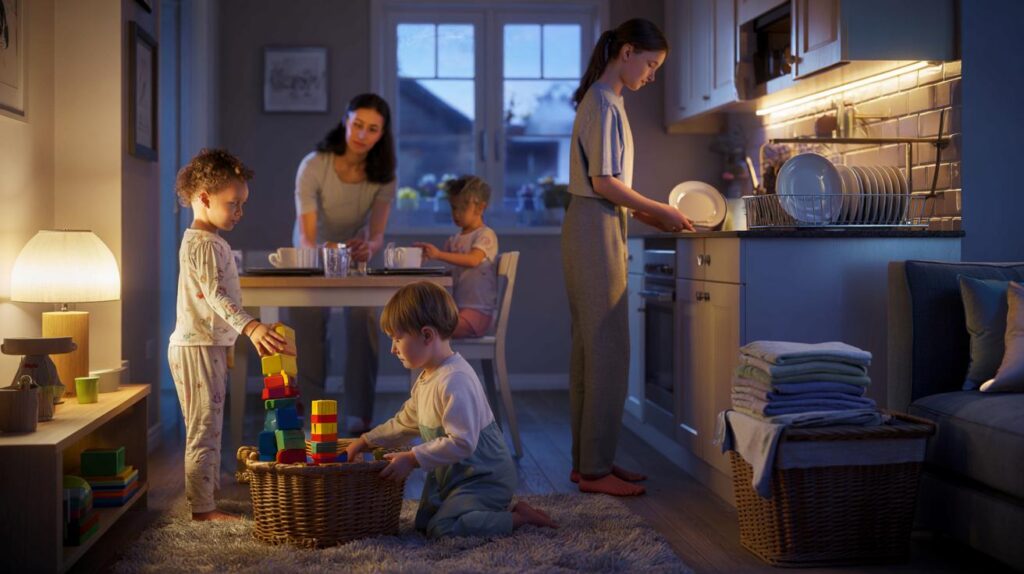
Messy rooms, sighs and screen-time battles feel familiar. A small change tonight could reset your week and theirs without tears.
Across the UK, families are reframing chores as short, teachable moments that build confidence and calm. The aim is routine, not perfection, and the gains are bigger than a tidy hallway.
Why starting early works
Young children love to copy. Offer small, clear jobs and they rise to it. A two-year-old can hand you spoons, wipe a low table, or drop blocks into a basket. By school age, many children can feed pets, carry light shopping, or pack their own book bag. Older ones can plate their breakfast, load the dishwasher, and sort clean clothes. Teenagers can plan a simple supper and run their laundry.
It’s the habit, not the perfect fold, that turns chores into life skills and reduces daily friction at home.
Short jobs, repeated often, become automatic. You get fewer arguments, and children feel trusted and useful.
What children can do by age
Ages 2 to 3
- Pop toys into a box and stack board books on a shelf
- Carry post indoors and put paper in the recycling
- Place socks together and fold small cloths
- Wipe low surfaces and mop up small spills
- Fetch nappies and wipes; hand you safe cutlery
4 to 5 years
- Straighten the duvet and place a pillow neatly
- Set the table with cutlery and cups
- Water houseplants with a small jug
- Use a hand-held vacuum on crumbs
- Clear plates to the counter and sort groceries by cupboard
- Wipe door handles with a child-safe spray
6 to 7 years
- Prepare simple snacks such as fruit and toast
- Fold towels and wash easy items at the sink
- Wheel out the rubbish and recycling on collection day
- Weed a patch of the garden with gloves
- Peel carrots or potatoes with a peeler
- Replace loo rolls and stack spare ones
- Carry in kindling or small logs
8 to 9 years
- Load and unload the dishwasher carefully
- Change a lightbulb with guidance and the power off
- Hang or fold clean laundry and put it away
- Scramble eggs and help with baking
- Walk the dog with an adult nearby
- Keep their room clean to a simple checklist
10 to 12 years
- Deep-clean the bathroom with gloves and safe products
- Cook a basic meal from a written recipe
- Mow a flat area of lawn after a demo
- Wash the car or bike and dry it properly
- Mop floors and return the bucket tidy
- Split kindling under supervision until confident
Teens (13+)
- Plan, shop for and cook one family meal a week
- Manage their laundry from basket to cupboard
- Babysit a younger sibling for short stretches
- Budget a small household shop using unit prices
- Take full responsibility for a pet’s routine
Match the task to the child, not just the birthday. Confidence, safety and interest matter more than strict age bands.
How much time to aim for
Consistency beats marathons. These ranges keep jobs short and sustainable alongside school and play.
| Age | Daily time | Weekly anchor |
|---|---|---|
| 2–3 | 5–10 minutes | One “help with you” task after tea |
| 4–5 | 10–15 minutes | Set table and quick evening tidy |
| 6–7 | 15–20 minutes | Bin day + one kitchen job |
| 8–9 | 20 minutes | Bedroom reset on Sunday |
| 10–12 | 20–30 minutes | Cook once, bathroom once |
| 13+ | 30 minutes | Own laundry day |
What the research says
Medical and education teams keep finding the same pattern. Children who pitch in at home report steadier moods and stronger friendships. In US work led by paediatrician Rebecca Scharf, regular chores were linked with caring behaviour, like cheering up a classmate. Australian research from La Trobe University highlights hands-on tasks such as cooking and gardening. Those jobs appear to sharpen memory and focus, likely because they combine planning, sequencing and real-world feedback.
Other studies connect household responsibility with better problem-solving and greater independence, including in health routines for older children. None of this suggests a spotless house. It points to small, repeated practice that transfers to schoolwork and relationships.
Chores act like low-stakes training: plan a task, do it, see the result. Brains love that loop.
When they say no
Refusal happens. The trick is to lower the friction and keep the boundary.
- Swap yes/no questions for clear instructions with a timer: “You have two minutes, then toys go in the box.”
- Offer two choices: “Blocks or crayons first?” Choice gives control without changing the task.
- Use “first–then”: “First hang your coat, then snack.” Pair it with a visible cue.
- Stay calm during a wobble. Support, then return to the job once they’re regulated.
- Praise the specific effort: “You lined the books up. That helped us finish fast.”
- Resist redoing the job. Redoing teaches them their work doesn’t count.
- Post a simple list where the job happens: bathroom jobs in the bathroom, not in a drawer.
Safety and fairness
Match tools to hands. Use blunt peelers and child-safe cleaners. Keep blades and hot pans for older children after teaching and close supervision. Switch off power at the wall before any bulb change. Heavy rubbish and powered mowers suit bigger bodies.
Share the load across the week. Rotate dull tasks, let children bid for preferred jobs, and add one rest day. Avoid turning chores into punishments. The message is teamwork, not payback.
From chores to life skills
Household jobs can carry tiny lessons that last. When a child measures rice, they practise ratios. When they compare price per 100g, they meet basic economics. When they plan a Tuesday pasta night, they learn timing and responsibility. Tie the job to a skill, and it feels meaningful.
Quick ways to make it stick
- Habit stack: link a job to a routine cue. “After shoes off, coats on pegs.”
- Five-minute blast: set a kitchen timer and all tidy one room together.
- Visible chart: use pictures for under-7s and tick boxes for older kids.
- Commission, not bribes: pocket money for extras above the family baseline.
- Swap weeks: one cooks, one clears, one rests; rotate every Sunday.
- Adjust on exam weeks: reduce tasks, keep one anchor job to maintain rhythm.
Extra help for different needs
For children with ADHD or autism, break jobs into single steps and keep tools in reach at the point of use. Use colour-coded baskets and laminated cue cards. Agree a start signal, like a song or timer vibration. Keep praise immediate and specific. Build in movement breaks before seated tasks.
If you start tonight
Pick one tiny job that genuinely helps, teach it once, and stick with it for a week. Keep instructions short. Model the first step, then step back. Celebrate the effort. The goal is a smoother home and a child who sees themselves as capable.
Next week, add a second job or raise the difficulty slightly. Over a term, that becomes real independence: a child who packs their kit, cooks on a Wednesday, and feels part of the team. That’s a quiet win that carries far beyond the washing-up bowl.



Fantastic breakdown. The age bands are helpful without being rigid, and the reminder that it’s the habit, not the perfect fold, really lands. We started with a five‑minute blast before storytime and the bedtime mood changed overnight. Also appreciate the research links—Scharf and La Trobe—feels evidence‑based, not just vibes.
Question: is changing a lightbulb at 8–9 really advisable? Even with power off, some fixtures are fiddly. I’d bump that to 10+ unless it’s a simple lamp. Safety first.