
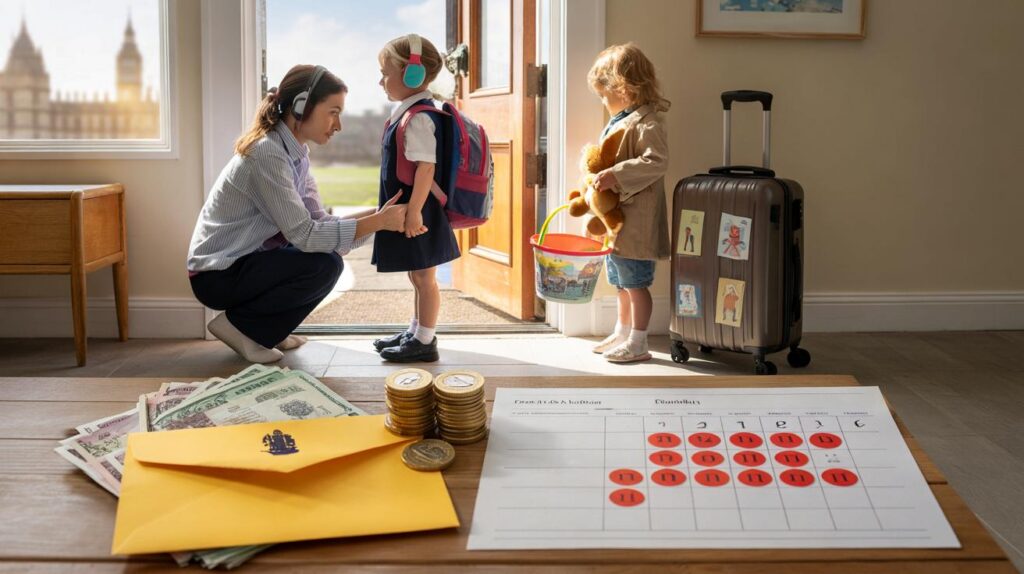
Family budgets, crowded calendars and strict attendance rules collide this autumn, leaving many parents anxious about their next break plans.
This afternoon, Westminster turns to a question that has simmered since the pandemic: how to balance attendance targets with real life.
What MPs will argue today
MPs gather in Westminster Hall at 4.30pm to debate whether families in England should be allowed up to 10 fine‑free term‑time days each year. The trigger is a public petition, signed by 181,597 people, started by Derbyshire parent Natalie Elliott and championed by SEND advocacy groups. Robbie Moore MP opens the session. The ask is blunt: create a clear allowance so parents can plan limited absence without facing financial penalties.
Under current rules, headteachers decide if an absence is exceptional. If not, local authorities can issue a penalty notice. The new national framework sets fines at £80 per parent, per child if paid within 21 days, rising to £160 after that. Campaigners say the regime is punishing ordinary families, especially those juggling atypical shifts, care responsibilities and special educational needs and disabilities (SEND).
181,597 signatures, one simple ask: 10 fine‑free term‑time days for each child, every school year.
The petition at a glance
- Request: permit up to 10 term‑time days a year without a penalty notice.
- Who: parents across England, including many with SEND children and complex care needs.
- Why: travel in peak holidays is costly, flexible leave is scarce, rules feel inconsistent.
- Counterpoint: schools and councils link regular attendance to attainment and safeguarding.
Why families say the rules are broken
Parents argue the system no longer matches modern working life. Many households rely on variable rotas, weekend shifts and zero‑hours contracts. Coordinating leave for two carers is hard. Booking during school holidays often costs far more. For some neurodiverse pupils, quieter off‑peak travel is less stressful than crowded, noisy peak dates. Families also report confusion around codes, with occasional claims of sickness recorded as unauthorised and pre‑compulsory‑school‑age children referred for legal action.
Campaigners say the policy creates conflict rather than partnership. They argue support, early intervention and flexible planning would lift attendance more effectively than escalating fines.
Fines start at £80 per parent, per child. One family trip can trigger several notices from a single absence.
How penalties stack up for a typical family
Penalty notices are issued per parent and per child for an unauthorised holiday. That multiplies costs quickly.
| Family scenario | Notices issued | Paid within 21 days | Paid within 28 days |
|---|---|---|---|
| One child, one parent | 1 | £80 | £160 |
| Two children, two parents | 4 | £320 | £640 |
| Three children, two parents | 6 | £480 | £960 |
Non‑payment can lead to prosecution under the Education Act 1996. Councils say revenue funds attendance support and administration, with any excess returned centrally.
What schools and councils say
Heads and local authorities link strong attendance to better results, safer routines and earlier identification of problems. They point to post‑pandemic habits and a rise in persistent absence as major risks. Staff also highlight fairness: when one pupil misses lessons for a cheaper trip, classmates sit the same content on time.
Leaders accept that some families face genuine barriers. The challenge is drawing a line that is consistent, lawful and workable in thousands of schools. They also warn that blanket allowances could normalise absence and widen gaps for disadvantaged pupils.
Attendance has become a frontline issue since Covid. MPs are weighing consistency against compassion.
What could change next
Today’s debate does not rewrite the law. It gives MPs a platform to test ideas and push ministers. Officials could be pressed on clearer guidance for “exceptional circumstances”, national appeal routes, standardised coding of absence and targeted support where fines have not shifted behaviour. A time‑limited pilot for fine‑free days, with strict reporting, may be floated. Ministers may instead double down on attendance plans already in place.
Possible policy options under discussion
- Define a limited annual allowance for educational or family reasons, capped and tracked.
- Publish a national list of examples for “exceptional circumstances” to curb postcode variation.
- Offer one warning notice per year before a fine, tied to a support plan.
- Require councils to evidence prior support for SEND pupils before issuing a penalty.
- Improve data sharing so families do not receive duplicate notices across siblings and schools.
How fines work now in England
- Heads decide if absence is authorised; family holidays rarely meet the test.
- Unauthorised holiday is coded and referred to the local authority for a penalty notice.
- The fine is £80 per parent, per child if paid within 21 days; £160 up to 28 days.
- Non‑payment can trigger court action, leading to higher fines and a criminal record.
- Repeat absences can result in more notices or prosecution, depending on local policy.
What you can do if you need time off
Ask early and put everything in writing. Explain the reason, the dates and how you will support catch‑up. If your child has an education, health and care plan, show how travel or timing relates to their needs. Attach evidence for major events, medical treatment or bereavement. Keep attendance strong before and after any request. Good patterns help your case.
Plan for the cost if leave is refused. Use the table above to estimate potential exposure. Two parents and two children could face £320 if paid promptly, or £640 if late. Factor that into any savings from travelling off‑peak. Check travel insurance small print in case plans change due to school decisions.
Key moments to watch today
- 4.30pm, Westminster Hall: Robbie Moore MP opens for the Petitions Committee.
- Backbench contributions: look for cross‑party support or pushback on a blanket allowance.
- Ministerial response: signals on trials, guidance, or stricter enforcement will be telling.
- Next steps: the Committee may press for a review of how fines affect SEND families.
Numbers that matter for families
The petition seeks a hard cap of 10 fine‑free days. Current fines start at £80 and rise to £160 if paid late. Notices apply per parent and per child. That multiplication explains why ordinary trips quickly turn into large bills. Parents want predictability. Schools want attendance. MPs now have to decide how far policy should bend towards either goal.
Ten days of certainty versus the risk of normalising absence: Parliament weighs the trade‑off this afternoon.
Extra context parents ask about
Exceptional circumstances is not defined in statute. Examples often include bereavement, service personnel returning from deployment, and major religious observance. Cheaper flights or accommodation rarely qualify. Each headteacher still decides. That discretion drives postcode differences that frustrate families.
Think through a simple scenario. A parent with two children books a four‑day off‑peak break. If refused, the family could face four penalty notices. Paying within 21 days costs £320. Booking in August might avoid the fine but add hundreds to the holiday bill. The debate asks whether a small, transparent allowance could reduce such perverse choices while keeping most pupils in class most days.



181,597 signatures is huge, but will a Westminister Hall debate at 4.30pm actually shift policy or just generate soundbites? Show evidence fines improve attendance, not vibes.
My wallet just got a detention: £80 for me, £80 for my partner, times two kids… that’s £320 before we even pack a suitcase. A maths lesson I didn’t ask for 🙂