
New research has jolted the school-gate chat, revealing families are rethinking what counts as “ready” for Reception in 2025.
A fresh look at school readiness has sparked debate among parents and teachers. A government-commissioned poll of 2,000 parents of under‑fives suggests many families prioritise confidence and calm over checklists of early skills.
The numbers behind the new parent trend
The Department for Education survey points to a shift in expectations before Reception. Many parents no longer view classic milestones as must-haves on day one.
| Skill or habit | Parents saying it isn’t essential before school |
|---|---|
| Potty/toilet training | 6 in 10 |
| Using a knife and fork | 70% |
| Concentrating for around 10 minutes | Nearly two-thirds |
| Speaking in full sentences | Around half |
| Recognising letters or numbers | About 60% |
Most surveyed parents downplayed potty training as a pre‑term necessity, signalling a cultural shift around early independence.
These findings land at a sensitive moment for Reception teams. Teachers report children arriving with wider differences in self‑care, attention and communication, which can stretch the start of the year.
What teachers say
Headteachers and early years leads warn that more classroom time now goes on basic care and settling. The National Association of Head Teachers has raised concerns that staff juggle teaching with roles once supported by health and social services. Many Reception teachers describe supporting pupils who struggle to manage the toilet, put on a coat, or join a small‑group activity without one‑to‑one help.
Time spent on toileting and self‑care reduces time for phonics, story talk and play that accelerates early learning.
No one expects identical readiness. Children vary. The concern is scale. If many pupils need foundational help at once, routines stall, and the class slows while staff respond.
The government’s move
Ministers have launched the Best Start in Life guide, a free NHS‑backed resource signposting practical advice on sleep, feeding, toilet training, speech and language, and childcare options. The aim is simple: cut through noise and give families clear, trusted steps to build daily habits that help Reception feel familiar.
Education Secretary Bridget Phillipson framed the guide as a shortcut to reliable know‑how for parents who face a swirl of opinions online. The message: you do not need perfect children or expensive kits, just steady routines and simple practice.
What this means for you
Readiness is not a test. It is a bundle of small skills that reduce stress for your child and free staff to teach. The research shows many parents now put less weight on early academics and more on comfort and confidence. That aligns with what early years specialists recommend.
Readiness is more than letters and numbers
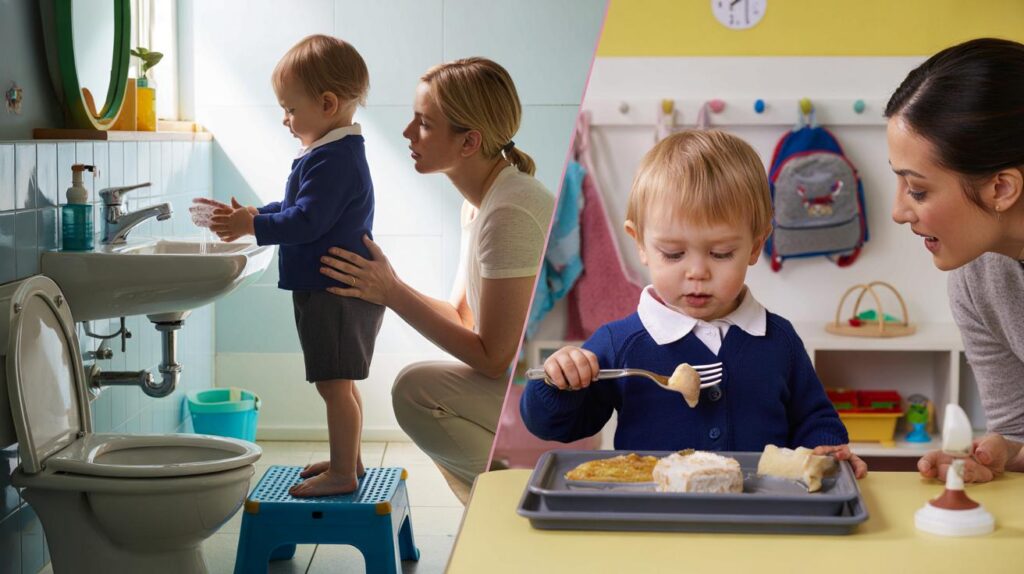
Teachers value children who can listen briefly, follow a simple instruction, communicate a need, and try again after a wobble. Independence matters because it gives children control of their day. Toilet training sits within that wider picture, alongside handwashing, dressing, mealtime routines and speaking clearly.
Daily routines build independence; independence boosts confidence; confidence unlocks learning.
- Practise toilet trips at set times, including handwashing and drying hands without prompts.
- Use mealtimes to teach cutlery use, napkin habits and clearing a plate.
- Play short “listening games” to stretch attention for five to ten minutes.
- Encourage full sentences by modelling: “I would like milk, please.”
- Build dressing skills with zips, buttons and turning sleeves the right way out.
- Label feelings and needs: “I feel cross because I’m tired.”
Inside the bathroom debate
Potty training can be fraught. Children develop bladder awareness at different ages, and setbacks are common during change. Starting school is a big change. Many parents fear power struggles or painful constipation if they push before a child is ready.
That is why the debate matters. If a child arrives still in nappies or prone to accidents, staff must step in with care, privacy and time. Most schools can manage occasional accidents. Persistent support needs a plan. Parents and schools should agree practical steps: spare clothes in the bag, a clear signal for the toilet, and a calm clean‑up routine.
Training under pressure often backfires; training with routine and praise tends to stick.
Look for readiness cues: longer dry spells, interest in the toilet, discomfort with wet nappies, and the ability to follow a two‑step instruction. Start with daytime, add pants for short spells at home, and keep plenty of easy‑on trousers. Night‑time dryness can come much later and is not a Reception expectation.
What to expect in Reception
Schools do not require early reading or sums on day one. Staff look for simple, practical behaviours that make the day flow. These are typical, not rigid rules, and teachers will support children to get there.
| Everyday classroom routine | What helps at home |
|---|---|
| Circle time for 5–10 minutes | Short story time on the sofa without screens |
| Snack and lunch with peers | Family meals with cups, forks and simple table talk |
| Toilet breaks between sessions | Regular bathroom trips and handwashing practice |
| Putting on coats and shoes | Five‑minute “get ready” race with praise for effort |
| Sharing toys and taking turns | Board games with a timer and clear, kind language |
A simple morning rehearsal
Run a mini “school morning” twice a week. Wake, wash face, use the toilet, get dressed, eat breakfast at the table, put on shoes, grab the bag, and walk to the door by a set time. Keep it light. Celebrate small wins. Routine reduces first‑day nerves.
The guide in practice
The Best Start in Life guide groups advice by age and theme. Parents can dip into toilet training steps, ways to build speech and language, sleep routines that make mornings easier, and routes to local childcare. The approach favours quick wins: small, repeated actions that fit busy lives.
Teachers hope a shared reference point will reduce mixed messages and narrow gaps. When families and schools use the same language for praise, rules and hygiene, children settle faster. That means more time for phonics, play‑based maths and the conversations that power vocabulary growth.
Questions parents are asking
Will my child be punished for accidents?
No. Schools handle accidents discreetly and kindly. Staff aim to protect dignity and keep learning on track. Share any medical issues and agree a plan.
What if my child won’t use school toilets?
Many children worry about unfamiliar loos. Visit during transition sessions if offered. Practise flushing at home. Teach a phrase your child can use to ask for help.
Do I need to teach reading first?
No. Recognising letters helps some children, but spoken language, listening, and a love of stories matter more at this stage. Read together daily. Talk about pictures. Enjoy rhymes.
Extra context to help you plan
Toilet training often takes weeks, with setbacks during illness or growth spurts. Build in contingency: pack spare underwear, socks and a small bag for wet clothes. Choose easy‑wash fabrics. Tell your child accidents happen and can be fixed.
Cutlery practice can be playful. Serve soft foods that load easily on a fork, then add trickier textures. Use child‑sized utensils, keep portions small, and praise the grip rather than the clean plate. For attention, start with a sand timer on two minutes and stretch slowly to ten with quiet, absorbing tasks like threading, jigsaws or sorting games.
Small, repeatable habits at home do more for school readiness than any workbook or app.
If you face medical or developmental questions, speak to your health visitor or GP. Ask your school about their toileting policy, where spare clothes are kept, and how children signal they need the toilet during lessons. Clear plans reduce worry for everyone.



Honestly, this makes so much sense. Confidence, calm, and simple routines beat a checklist any day. We put less pressure on reading early and focused on toilet trips and dressing practice; our daughter walked in smiling. I definately appreciate the reminder that readiness isn’t a test, it’s everyday habits parents can build without fancy apps or kits.
Genuine question: if 6 in 10 kids aren’t reliably potty trained, do schools actually have the staff and facilities to cope? How much phonics time disappears while teachers do basic care?