
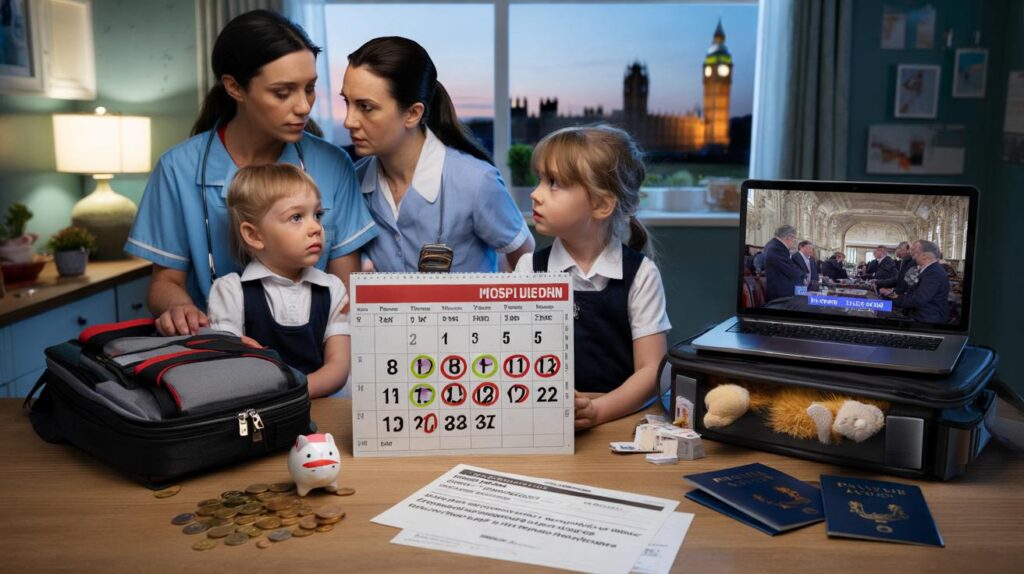
Parents juggling tight budgets, shift work and school calendars face a pivotal moment as Westminster reopens the row over term-time penalties.
As MPs convene in Westminster Hall, a petition signed by more than 180,000 people forces Parliament to confront how absence rules hit real families. The session will probe whether fines deter poor attendance or simply punish parents navigating complex needs, limited leave and sky‑high holiday prices.
What MPs are debating today
A cross‑party debate begins at 4.30pm in Westminster Hall, triggered by a public petition led by Derbyshire mother of two, Natalie Elliott. The petition asks ministers to let parents take up to 10 days a year of term‑time absence without a fine. Under the Petitions Committee system, reaching 100,000 signatures prompts a parliamentary debate; this one has cleared 181,000 and counting.
Robbie Moore MP will open the discussion. MPs can press ministers, share case studies from constituents and challenge current guidance. The session does not change the law on the spot, but it can steer policy and signal where consensus might form.
181,597 signatures put the 10‑day fine‑free proposal on the parliamentary agenda — a rare show of public pressure on school absence rules.
Why the 10‑day ask struck a nerve
Campaigners argue that the present system treats every family the same, even when circumstances differ dramatically. Parents working shifts or zero‑hours contracts often cannot align leave with set school breaks. Holiday prices jump in peak weeks, pushing trips out of reach. Families of children with special educational needs and disabilities (SEND) describe sensory overload and anxiety during crowded peak seasons.
Supporters of the petition say penalties are rising while support remains patchy. In England, unauthorised term‑time absence can trigger fixed penalty notices starting at £80 per parent, per child, increasing to £160 if paid later. In households with two parents and two children, a single week away can generate four separate fines.
Current fines start at £80 per parent, per child, for unauthorised absences — costs can multiply quickly in larger families.
Local authorities say the money raised helps cover attendance support and administration, with any surplus returned centrally. Critics counter that the approach fosters conflict rather than collaboration between families and schools.
What parents say they need
- Clearer guidance on “exceptional circumstances” and how decisions are made.
- Accurate register coding, especially for younger children not yet of compulsory school age.
- Consistent treatment across schools and councils, so families aren’t caught out by postcode differences.
- Support offers before sanctions, particularly where SEND or medical needs are involved.
How fines currently work
Schools can request a penalty notice from the local authority when a pupil’s absence is unauthorised — including most holidays taken during term time. Notices are issued to each responsible adult for each child. If paid promptly, the fine is at the lower rate; if not, the amount increases. Continued non‑payment can lead to prosecution.
| Category | Current rule | Petition proposal | Typical cost/impact |
|---|---|---|---|
| Absence allowed | No blanket allowance; headteachers can authorise in exceptional cases | Up to 10 days per school year without fines | Greater flexibility for families with atypical work or SEND needs |
| Fine amount | £80 rising to £160 per parent, per child | No fine for first 10 days; current fines apply beyond that | Reduced financial exposure for planned short absences |
| Use of funds | Local authority administration and attendance support | Unchanged | Resources remain available for attendance teams |
Cost example: two parents take two children out of school for five days. If notices are issued and paid at the lower rate, that’s four fines at £80 each, totalling £320. Paid late, it could reach £640. The petition’s backers say a limited allowance would spare families from such costs while keeping the rest of the year protected.
Attendance pressures after the pandemic
Ministers argue that consistent attendance underpins attainment, wellbeing and safeguarding. Official statements point to higher absence since the pandemic, with illnesses, anxiety and disengagement all part of the picture. Schools report pressure to recover lost learning time and maintain routines.
Headteachers warn that blanket concessions could create new fairness issues: some children would miss lessons while others sit tests, group work or vital interventions. Teachers also highlight administrative workload from processing requests and tracking thresholds.
The policy dilemma: keep attendance high and learning stable while recognising the realities of modern work, costs and additional needs.
SEND families and atypical work patterns
Parents of SEND pupils say peaks can be unmanageable — queues, noise and unfamiliar routines can trigger meltdowns. Travel during quieter periods reduces distress and keeps families functioning. Meanwhile, care workers, NHS staff and hospitality employees often cannot secure leave during the same fixed weeks as schools, making off‑peak windows the only option.
What could happen next
Today’s debate can prompt ministers to revisit guidance, expand pilots or adjust thresholds. Options range from clarifying “exceptional circumstances” to trialling a capped number of fine‑free days with conditions, such as minimum attendance and prior agreement with the school. Another route would tighten consistency so families are not treated differently across local boundaries.
- Refined guidance for headteachers on when to authorise absences.
- Standardised thresholds and coding to reduce inconsistencies.
- Targeted support for persistent absence before any sanction.
- Possible pilots testing a limited fine‑free allowance under strict criteria.
None of these changes happen automatically. The government would need to update regulations or statutory guidance, and consult with schools, councils and parent groups.
Practical steps for parents right now
Speak to the school as early as possible if you think you may need time away. Provide evidence for any medical, caring or SEND‑related needs, and ask how the absence will be recorded. Request catch‑up work in advance so learning routines continue. If a fine is issued, check details carefully — dates, names and coding — and pay within the stated window if you choose not to challenge.
Families planning holidays can look at shoulder‑season dates inside school breaks, shorter trips, or flexible day‑by‑day options that avoid full weeks. Setting aside a small monthly sum toward peak‑time prices can also soften the blow of school‑holiday premiums.
Where to watch
The debate is being broadcast via Parliament’s usual online channels and can be followed live or on demand later. Schools, councils and parent groups will study the exchanges for clues on future policy.
How rules differ across the UK
Education law and attendance enforcement are devolved. England’s framework uses fixed penalty notices for unauthorised absence. Wales, Scotland and Northern Ireland take their own approaches to attendance and enforcement, with different thresholds and processes. Parents moving between nations should check local guidance from their council and school before making plans.
What a 10‑day allowance might look like in practice
Supporters suggest conditions to prevent misuse: a minimum prior attendance rate, headteacher sign‑off, no key exam periods, and learning packs for pupils. That approach aims to preserve classroom routines while giving families a realistic safety valve. Critics caution that demand could surge, concentrating absences in the same weeks and adding pressure to lesson planning.
One workable compromise floated by campaigners is a rolling, use‑it‑or‑lose‑it allowance with strict caps and clear exclusions for exam years. Another is a compassionate allowance targeted at SEND and medical cases, backed by consistent national criteria so decisions feel fair and transparent.



Do fines actually improve attendance, or just punish parents who can’t afford peak‑season prices?