
Cloudy lines between tiles make clean rooms look tired. Households are wasting cash, time and fresh air on harsh sprays.
Your grout can look lighter and last longer without a whiff of chlorine. A cheap kitchen staple shifts soil, lifts stains and protects the tiny cement pores that hold your tiled walls and floors together.
Why bleach gives you bright grout today and headache tomorrow
Chlorine bleach lightens marks by oxidising colour on the surface. It does not dig grime out of porous grout. That is why stains often return within days. Sodium hypochlorite also raises grout’s pH sharply. Repeated use breaks down the latex polymers that bind cementitious grout, which leads to crumbling and pinholes. Those gaps invite moisture, mould and further staining.
Bleach can also yellow light grout over time, especially where residue dries in warm bathrooms. Fumes irritate lungs in small rooms. Mixing bleach with acidic products such as limescale removers or vinegar releases chlorine gas, which is hazardous even at low concentrations.
Bleach masks soil on grout rather than removing it, and regular use weakens the very material you want to protect.
The one natural item that lifts dirt and restores colour
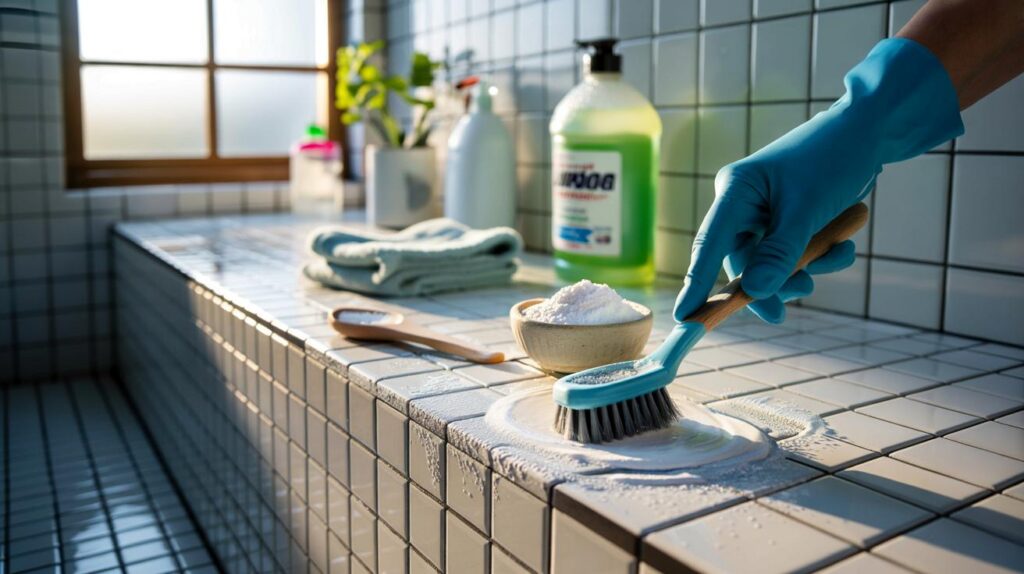
Bicarbonate of soda — sodium bicarbonate, the humble baking ingredient — is mildly alkaline and slightly abrasive. It loosens oily residue, soap scum and everyday grime without stripping the grout matrix. The fine particles scrub, the alkali softens soils, and the paste stays in the lines where you need it.
It is inexpensive, fragrance-free and safe for most glazed ceramic and porcelain surfaces. It pairs well with washing-up liquid, which cuts grease, and warm water, which helps the paste flow into pores.
Mix ratios, tools and a 7-minute routine
Make a paste that clings and does not drip. Keep the grain to add a gentle scrub without scratching tiles.
- Add 3 tablespoons bicarbonate of soda to a small bowl.
- Stir in 1 teaspoon washing-up liquid.
- Add 2 tablespoons warm water until spreadable.
- Apply with an old toothbrush along the grout lines.
- Leave for 3 minutes to soften residue.
- Scrub in short strokes. Rinse with warm water and wipe dry.
This routine covers about one square metre in around seven minutes. Work in sections of two to three rows so the paste does not dry out. Drying tiles with a microfibre cloth prevents new marks forming as water evaporates.
The winning formula: bicarbonate of soda + a drop of washing-up liquid + warm water, scrubbed with a soft brush.
When to add white vinegar, and when to avoid it
White vinegar helps between deep cleans because it dissolves limescale haze and soap film. Use it as a light spritz on fully rinsed and dry grout on glazed ceramic or porcelain. Allow one minute, then wipe. Never spray vinegar on marble, limestone, travertine or other calcium-based stones. Acid etches those surfaces and dulls the finish. Do not apply vinegar at the same time as your bicarbonate paste. The acid neutralises the alkali, which reduces cleaning power and creates harmless fizz but little benefit.
Keep vinegar away from recently sealed grout for the first week. The acid can shorten a fresh sealer’s curing period.
Steam for deeper cleans without chemicals
Steam loosens embedded grime inside grout pores. A handheld steamer with a small nylon brush reaches corners and along shower cubicles. Aim for short bursts and keep the nozzle moving. Temperatures around 100–120°C soften residues and kill many bathroom microbes. Avoid forcing steam into loose or cracked grout, as pressure can drive moisture behind tiles. Always dry and ventilate after steaming to prevent condensation.
Keep grout cleaner for longer
Routine care extends the time between scrubs. Wipe fresh splash zones after showers. Run an extractor fan or open a window for 15 minutes to reduce humidity. Address drips and pooling water around sinks. Dirt sticks to damp surfaces, so drying makes a visible difference.
Sealants, grout pens and re-grouting: costs and choices
Most cementitious grout benefits from a penetrating sealer. Apply 24 hours after a deep clean and allow to cure as directed. Reapply every 12 to 18 months in busy bathrooms. Clear sealers repel liquids, reduce staining and make next cleans faster. Grout pens recolour lines that have permanent dye transfer, yet they are cosmetic and can wear on floors. If grout is cracked or hollow, cut out the loose sections and re-grout. A DIY re-grout kit for a shower wall costs roughly £15–£30. A professional refresh for a family bathroom can run £150–£350 depending on area and access.
Common mistakes to avoid
- Scrubbing with metal brushes that scratch glaze and gouge grout.
- Leaving strong products to dry on the lines, which locks in residue.
- Using vinegar on natural stone or newly sealed grout.
- Mixing chemicals. Never combine bleach with acids or ammonia-based sprays.
- Skipping the dry-down. Water left sitting encourages mould growth.
Quick comparison of methods
| Method | Best for | Time per m² | Typical cost | Risks |
|---|---|---|---|---|
| Bicarbonate paste | Everyday grime and soap scum | 7–10 mins | £0.10–£0.20 | Light abrasion on delicate stone if over-scrubbed |
| White vinegar spray | Limescale haze on glazed tiles | 2–3 mins | £0.05 | Etching on marble and limestone |
| Steam cleaner | Embedded dirt in pores | 8–12 mins | £40–£80 one-off device cost | Driving moisture behind loose grout |
| Oxygen bleach (sodium percarbonate) | Deep stains on white grout | 15–20 mins dwell then scrub | £0.30–£0.60 | May lighten coloured grout; test first |
Health, safety and surface checks
Wear gloves when scrubbing to protect skin. Ventilate small bathrooms by opening windows or running fans. Test any new product on a discreet corner. Use only soft nylon brushes on polished or high-gloss finishes. Avoid wire wool and sharp tools that open grout pores and invite future staining.
A worked example: how the savings stack up
Households that switch from chlorine sprays and one-off “whitener pens” to bicarbonate-based cleaning often cut product spend. A typical basket might include a bleach bathroom gel at £2.50 a month (£30 a year), a mould spray at £4 every other month (£24 a year) and one grout pen at £8 once a year. That totals £62. A 1 kg bag of bicarbonate costs about £1.30 and lasts months. Add vinegar for 70p and the running cost stays under £5. Factor in longer intervals before re-sealing or repairing and a £68 saving per year looks realistic for a busy household.
When grout isn’t responding
If stains remain after two bicarbonate sessions and a steam pass, the pigment may have migrated deep into the cement. Try an oxygen bleach solution on white grout, following the packet ratio and a 10–15 minute dwell time before a gentle scrub. Rinse well. For coloured grout, test on a hidden line to avoid lightening. If grout feels sandy or flakes away, plan a targeted re-grout. New grout lines transform the look of a shower for a modest spend and make maintenance faster.
Final practical pointers you can use today
- Schedule grout care with other quick tasks: mirrors, taps, and a 15-minute fan run.
- Keep a labelled tub of bicarbonate paste and a toothbrush under the sink for fast touch-ups.
- Dry the last rinse with a squeegee and microfibre to stop water marks in hard-water areas.
Swap chlorine for bicarbonate and a brush. Your grout stays brighter, your air stays fresher, and your tiles keep their crisp edges.



Just tried the 3 tbsp bicarb + a drop of washing-up liquid—my shower lines look brand new in one section. Took around 7 mins per m² as you said. Breathes better than bleach, and no headache. I’ll seal after 24 hours this time (I usually forget!). Definately keeping a little tub + old toothbrush under the sink. Thank you! 🙂