
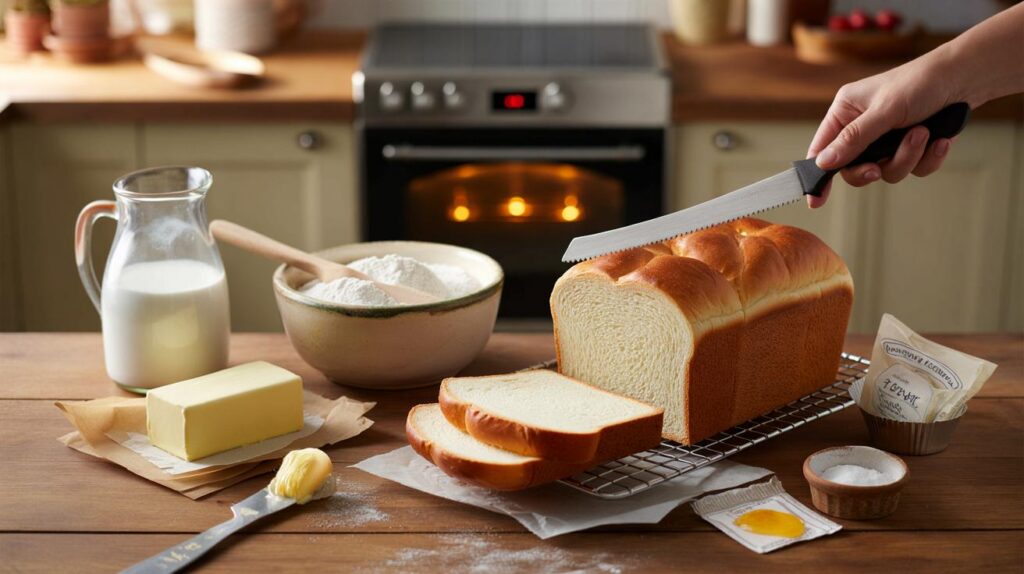
Cold mornings tempt many back to the stove, where warm milk and butter scents promise calm, thrift and small wins.
Across Britain, more households are weighing the cost of a supermarket loaf against a homemade sandwich bread that needs no machine. The method is simple, the texture tender, and the ingredients are already in most kitchens.
Why people are reaching for the mixing bowl
Factory loaves feel convenient. Yet prices shift, labels lengthen, and slices often dry fast. A soft homemade loaf offers control, comfort and a short ingredient list. You stir, knead for ten minutes, and bake once the dough has risen. No bread maker. No specialist kit.
500 g flour, 250 ml whole milk, 50 g butter, one sachet of yeast, 25–30 minutes at 180 °C: that’s the backbone of a soft sandwich loaf.
What you need
- 500 g strong white flour (T45/T55 equivalents work)
- 1 sachet fast-action dried yeast
- 250 ml whole milk, warmed to lukewarm
- 50 g soft unsalted butter
- 30 g caster sugar
- 8 g fine salt
- 1 egg for glazing (optional)
How the method works
Mix and knead
Tip the flour into a large bowl. Add sugar and salt to one side. Sprinkle yeast on the other so it does not touch the salt. Rub in the butter. Pour in the warm milk gradually. Mix to a shaggy dough. Knead by hand for about ten minutes until the dough turns elastic and smooth.
Stop kneading when the dough stretches thin without tearing. Aim for a soft, bouncy ball that does not stick.
Let it rise
Place the dough in a lightly oiled bowl and cover. Leave somewhere warm for about one hour until doubled. Cooler kitchens need an extra 10–15 minutes. Warmth and time build the gentle air bubbles that make a soft crumb.
Shape and bake
Knock the air out of the dough. Roll it into a tight log. Butter a loaf tin and drop the log in seam-side down. Cover and let it rise for another 30–40 minutes. Brush with beaten egg for shine, if you like. Bake at 180 °C for 25–30 minutes until the top turns a light amber and sounds hollow when tapped.
Grease the tin well. A clean release protects the crust and keeps slices neat for sandwiches.
Costs, time and energy: does it stack up?
Home baking carries both ingredient and energy costs. The figures below are estimates and vary by shop, brand and tariff. They give a sense of today’s trade-offs.
| Item | Typical quantity | Estimated cost |
| Flour | 500 g | £0.35–£0.60 |
| Whole milk | 250 ml | £0.25–£0.35 |
| Butter | 50 g | £0.35–£0.50 |
| Yeast + sugar + salt | 1 sachet + 30 g + 8 g | £0.15–£0.25 |
| Egg glaze (optional) | 1 | £0.10–£0.20 |
| Electric oven energy | 25–30 min at 180 °C | ~£0.28–£0.42 (1.0–1.5 kWh) |
| Total per loaf | — | ~£1.48–£2.32 |
Many basic supermarket loaves sit around £1.20–£1.50. Branded sliced bread often tops £1.90. Homemade can beat the top-end prices, especially if you bake two loaves back-to-back while the oven is hot. It may not always undercut the very cheapest loaf, but the ingredient list and softness make a different case.
Texture, flavour and control
Whole milk, a little sugar and butter produce a tender crumb. Hand kneading gives feedback your fingers can read. Add minutes for proofing in a cool room, and your loaf stays light. Egg wash delivers a gentle sheen. Skip it for a matte finish.
- For a softer crumb, keep the dough on the wetter side and knead until elastic.
- For a thinner crust, tent the tin with foil for the final ten minutes.
- For a higher loaf, shape tightly and fill the tin two-thirds full after the first rise.
Serving ideas and simple twists
Breakfast prefers sweetness. Stir in a handful of chocolate chips or raisins before shaping. Lunch leans savoury. Fold in sunflower seeds, pumpkin seeds or a spoon of chopped herbs. Each addition changes the bite and boosts aroma without complicating the process.
Toast responds well to this loaf. The crumb browns evenly and stays moist. Butter and jam suit thicker slices. For sandwiches, slice thin and even once the loaf cools.
Keeping it fresh
Cool the loaf completely on a rack. Wrap in a clean cloth or tuck into an airtight tin. The crumb stays soft for up to three days. For longer storage, slice and freeze. A quick pop in the toaster revives the texture on busy mornings.
Batch baking helps families plan. Mix a double dough, bake two tins in one session and freeze one loaf. You pay for heat once and shave minutes off weekday breakfasts.
A practical timetable you can follow
- 00:00–00:15: Mix and start kneading.
- 00:15–00:25: Finish kneading. Dough turns elastic.
- 00:25–01:25: First rise, covered, somewhere warm.
- 01:25–01:35: Knock back and shape into a log.
- 01:35–02:10: Second rise in the tin.
- 02:10–02:40: Bake at 180 °C. Cool before slicing.
Health notes and ingredient swaps
Dairy-free bakers can swap whole milk for oat or soya drink and use plant butter. The crumb stays soft, though flavour changes. If you avoid eggs, brush with milk instead of a glaze. Those tracking sugar can cut it to 15 g; the loaf remains tender.
For a finer, pillowy texture, consider a small roux paste known as tangzhong. Cook 25 g flour with 125 ml water to a thick slurry, cool, then mix into the dough while reducing milk slightly. It locks in moisture and slows staling.
What to watch if your kitchen is cold
Cold rooms slow yeast. Warm the milk to body temperature. Pre-warm the bowl with hot water, then dry it. Use the oven light as a gentle proof box, leaving the oven off. If the dough stalls, give it another 15 minutes. Volume matters more than the clock.
If you care about labels
This loaf contains flour, milk, butter, sugar, salt and yeast. That’s it. You choose the flour strength, the fat level and the sweetness. You also decide the slice thickness, which helps with lunchbox portioning and waste.
Where savings can grow
Costs fall when you buy larger bags of flour, bake two loaves at once, or use a countertop oven with lower wattage. Families who bake weekly can shave pence per slice and enjoy steadier quality. The small rituals—kneading by hand, testing the rise, brushing the glaze—turn a simple bake into a reliable household habit.



With energy at ~£0.40 a bake, this still won’t beat a £1.35 basics loaf unless you run two tins or use a smaller oven. Is the pitch here more about texture/ingredients than price? Honest question.
Followed your timings and got a tender crumb and neat slices 🙂 The ‘stop when it stretches thin’ cue finally clicked for me. I’ll double the batch next time and freeze—costs drop, breakfasts sorted.