
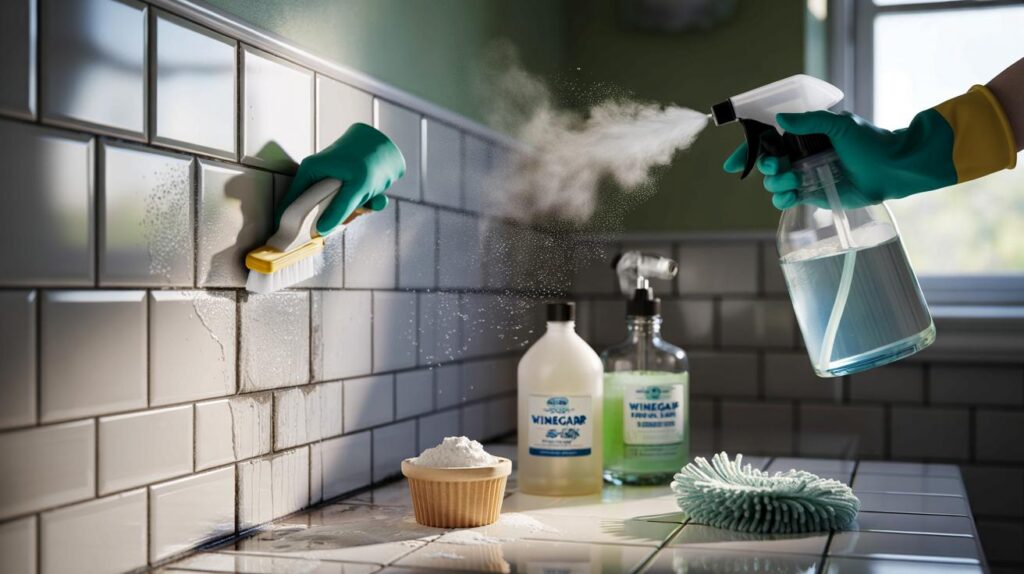
Those shadowy lines between tiles can make an immaculate room look grubby. Many households reach for bleach. That choice often backfires.
Grout looks simple, yet it sets the tone for a bathroom or kitchen. When it darkens, the whole space dulls. A harsh chemical may mask the problem for a week. A common cupboard staple can solve it for longer, and for pennies.
Why bleach backfires on grout
Bleach lightens stains on the surface, but it does not lift out the grime embedded in porous grout. Grout is a cement-based material with tiny pores. Those pores trap soap scum, oils and biofilm. A whitening agent cannot remove that load.
Bleach can brighten the top layer while weakening the joints beneath, leaving you with crumbling edges and yellow tinges.
There is another risk. Repeated exposure to strong oxidisers dries out the binder in cementitious grout. Joints crack sooner. Discoloured patches return faster as the surface roughens and traps more dirt. The fumes also linger. In a small bathroom, that means stinging eyes and headaches.
Bleach also reacts badly with acid residues or ammonia-based sprays. Mixes can release dangerous gases. If you cleaned with anything else recently, you may not notice the risk until it is too late.
The natural staple that actually brightens grout
White vinegar stands out as the single, simple swap that shifts dullness without wrecking grout. It cuts through soap film, limescale haze and body oils. Used properly, it refreshes colour and restores the clean line between tiles.
One bottle of white vinegar, diluted and used with a soft brush, can leave grout lines visibly lighter within minutes.
How to use white vinegar safely
- Mix a 1:1 solution of white vinegar and warm water in a spray bottle.
- Spritz a small section of grout. Let it sit for 3 to 5 minutes. Do not let it dry.
- Agitate with an old soft toothbrush in short strokes. Work along the lines, not across them.
- Rinse with clean water. Wipe dry with a microfibre cloth to stop minerals settling.
- Ventilate the room and keep pets out until dry.
Always test a hidden corner first. Never use vinegar on natural stone such as marble, travertine or limestone. Acid etches stone in seconds. For stone, use a pH-neutral cleaner and a very soft brush.
When grime digs in, add a gentle paste
For stubborn sections, combine mild abrasion and degreasing. A paste of bicarbonate of soda and washing-up liquid shifts buildup without harsh chemicals.
- Stir 3 tablespoons of bicarbonate of soda with 1 tablespoon of washing-up liquid and a splash of water to form a spreadable paste.
- Apply along the grout line with a finger or spatula. Leave for 10 minutes.
- Scrub with a toothbrush. Rinse well. Pat dry.
- Freshen between deep cleans with a light vinegar spritz as above.
This method uses alkalinity and a fine, soft grit to lift soil. It protects the grout matrix better than repeated bleaching sessions.
Steam for a deeper, chemical-free clean
A handheld steam cleaner can dislodge dirt from pores and kill odour-causing microbes. Use a narrow brush head with a microfibre bonnet.
- Keep the nozzle moving to avoid overheating one spot.
- Limit contact to a few seconds per section.
- Wipe away loosened grime immediately. Dry the joints to finish.
Do not steam freshly installed grout. Wait at least seven days for full cure, or follow the product label. Avoid unsealed natural stone.
Maintenance that keeps lines bright
Good habits reduce deep-clean time and prolong grout life. Small changes pay off fast in busy homes.
- Squeegee shower walls after use. Moisture carries soap and minerals into grout pores.
- Run the extractor fan for 20 minutes after bathing. Keep relative humidity below 60% to deter mould.
- Wipe splashbacks weekly with a damp microfibre cloth and a baking-soda paste on darkened patches.
- Apply a penetrating grout sealant every 6 to 12 months in wet zones. It reduces staining and speeds up cleaning.
- Deal with drips and toothpaste spots the same day. Fresh soils lift quickly.
| Method | Typical cost per session | Risks and notes |
|---|---|---|
| Bleach spray | £0.30–£0.60 | Surface lightening only; weakens grout; harsh fumes; never mix with acids or ammonia. |
| White vinegar 1:1 | £0.20–£0.50 | Cuts film and scale; avoid on natural stone; short dwell time; rinse well. |
| Bicarbonate paste | £0.10–£0.30 | Mild abrasion; safe on ceramic/porcelain; rinse to prevent residue. |
| Steam cleaning | One-off device cost; pennies per use | Heat risk on new grout; keep moving; wipe as you go. |
| Grout sealant | £8–£15 per bottle | Apply on dry, clean grout; improves stain resistance; reapply on schedule. |
What experts have been telling viewers
Television cleaning figure Lynsey Crombie has warned against bleach on grout for years. Her approach mirrors what many tilers advise on site. Lightening is not cleaning. Gentler chemistry does the lifting. A soft brush and common cupboard items bring the shade back without shredding the joint. The result lasts longer and smells far better.
Costs, timings and a quick plan for busy households
Set aside 15 minutes on a Sunday evening. Work one wall or one splashback each week. Use vinegar spray for most areas and the bicarbonate paste only where the line looks shadowed. You will cycle through the whole room in a month with minimal effort.
- Week 1: Shower wall A — vinegar, brush, rinse, dry.
- Week 2: Shower wall B — repeat, spot-treat stubborn joints with paste.
- Week 3: Splashback and hob surround — paste first, then a quick vinegar pass.
- Week 4: Floor grout lines near the door — steam or paste as needed.
A 750ml bottle of white vinegar and a small box of bicarbonate can cover two months of light maintenance. A decent toothbrush beats stiff grout brushes, which can erode edges. Replace the brush when the bristles splay.
When to regrout or use a grout pen
If the grout has cracked, pulled away from tile edges, or stays dark after cleaning, it may be time to refresh it. Grout pens can lift the look in an afternoon. They do not fix structural issues, but they hide old stains until you schedule a proper regrout. For small bathrooms, a straightforward regrout can take a day. Expect a few hundred pounds for labour and materials, depending on tile size and access.
Common pitfalls to avoid
- Do not mix products. Never follow bleach with vinegar or vice versa.
- Do not soak grout for long periods. Long dwell times can soften joints.
- Do not forget to dry. A quick towel-off keeps minerals from settling back in.
- Do not use wire brushes. They gouge the surface and trap dirt later.
For families with sensitive lungs, steer clear of strong fumes entirely. A vinegar spritz, a gentle paste and a basic steam tool deliver clean lines with far less irritation. If you live in a hard water area, consider a water softener or a simple rinse with filtered water after showers. Both steps reduce limescale haze, so the grout stays brighter for longer.
Finally, think ahead. Keep a small caddy: spray bottle with diluted vinegar, a lidded jar of bicarbonate paste, a toothbrush and a microfibre cloth. A one-minute swipe after brushing your teeth or wiping the hob adds up. The joints stay sharp, the tiles gleam and you avoid the cycle of harsh chemicals and short-lived results.



Just tested the 1:1 white vinegar on our rental’s shower grout and wow—brighter in under 5 minutes. Agitated with a soft toothbrush, rinsed, towel-dried, job done. The bathroom doesn’t reek of bleach either. I was about to buy a harsh grout cleaner—glad I read this first. Will seal after it dries tonight. Thx!
Quick Q: vinegar is acidic—won’t repeated use slowly dissolve cementitious grout or degrade a penetrating sealer? I’ve seen tilers warn against acids on sanded grout. Would a pH‑neutral cleaner be safer for weekly maintenance, keeping vinegar for monthly only?