
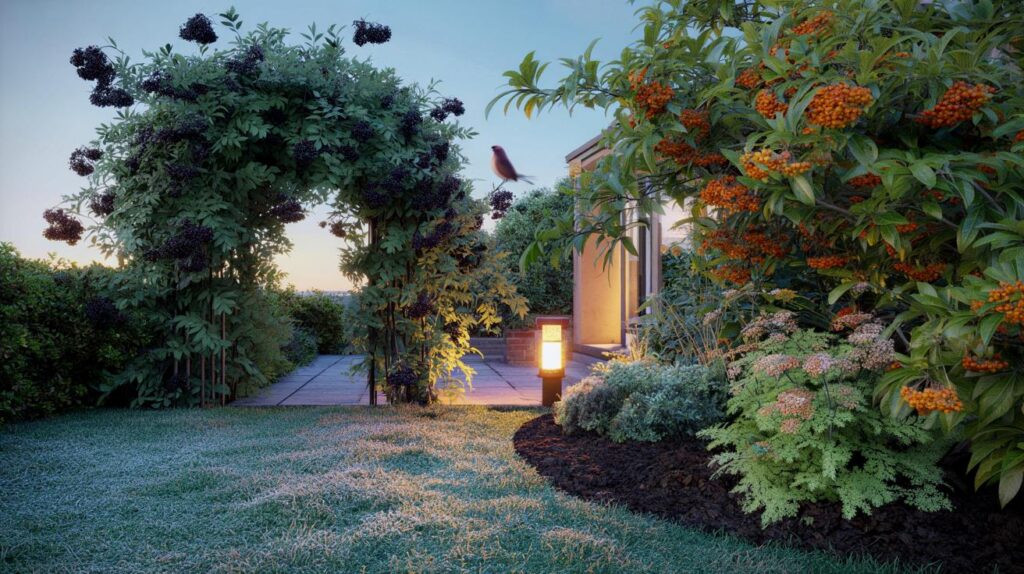
When dusk arrives early and the lawn silvers with dew, small choices change everything. Colour, shape and scent can lift the longest nights.
By late October, the right plants deliver light-catching berries, frosted seedheads and a gentle hum of wildlife. A trio placed with care can reshape borders, invite birds to the table, and make your patio feel like a front-row seat again.
Why October planting changes your evenings
Autumn strips borders of flowers and leaves you with gaps, bare stems and tired edges. The answer sits in structure, berries and long-held seedheads that catch the glow of a porch light or the final rays at 4pm. Plants that like cool soil establish fast, ask for little water, and still perform when most of the garden clocks off.
Plant for structure, winter colour and wildlife value in one move, and your garden keeps working after sunset.
Plant one: black elder that carries colour and birds
Black elder (Sambucus nigra) brings deep clusters of late berries and filigree foliage that reads as silhouette against a pale sky. It suits sun or light shade and takes wind, rain and short cold snaps in its stride.
Where and how to plant
Choose a bright spot with soil that stays moist but never boggy. Space at 1.5 to 2 metres, giving room for arching stems to frame a path or patio edge. October is ideal while the ground is workable and still warm at the surface.
Care and benefits
Cut one or two oldest stems to the base each winter to keep fresh growth and a balanced shape. Lay a 5 cm mulch in late autumn to lock in moisture and reduce weeding. Berries draw blackbirds, thrushes and starlings when food runs low, and the shrub anchors a border that otherwise looks flat in winter light.
Annual renewal pruning and a simple mulch keep Sambucus tight, productive and dramatic for years.
Note: raw elder berries are not for children or pets. If you harvest for the kitchen later, only use ripe, cooked fruit.
Plant two: yarrow that threads movement through frost
Yarrow (Achillea millefolium) produces flat flower plates and ferny foliage that look sculptural in cold air. It loves poor to average soil, stays calm in drought once rooted, and needs little feeding.
Partners and placement
Drift yarrow along the front or middle of a border and pair it with fine grasses, a few late asters or neat mounds of lavender. The soft whites, blush pinks and buttery yellows carry into early winter. Leave the seedheads standing; a dusting of rime turns them into tiny lanterns.
Cut and feed
Do not tidy too early. Cut back to the base in late winter as new growth shows. A light handful of garden compost at planting is enough. Water only in the first dry spells; after that, it asks for very little yet pays back in texture and long seasons of interest.
Resist the tidy instinct until February; frost-kissed seedheads add drama and shelter tiny invertebrates.
Plant three: bright-berried shrubs for the shortest days
When the day fades at tea-time, berry shrubs punch through the grey. Cotoneaster, holly and pyracantha push red, orange or yellow fruit that stay visible in fog, frost and even light snow.
Pick the right shrub
- Cotoneaster: great for walls or low hedges; masses of berries and gentle habit.
- Holly (Ilex aquifolium): shade-tolerant, long-lived, glossy leaves; choose a self-fertile female for reliable berries.
- Pyracantha: heavy crops, excellent for screening; sharp thorns help deter unwanted visits.
Where they shine
Put them near the front door, along a drive, or beside the terrace for easy viewing from indoors. Shape lightly after fruiting if needed, but keep most of the berries for birds during cold snaps. A staggered mix builds depth and gives you colour from November to February.
Berry-rich shrubs feed robins, blackbirds and tits while turning the garden into a living winter display.
At-a-glance guide: spacing, light and care
| Plant | Height/spread | Light | Soil | Key care | Wildlife value |
|---|---|---|---|---|---|
| Black elder (Sambucus nigra) | 2–4 m / 2–3 m | Sun to partial shade | Moist, not waterlogged | Prune oldest stems in winter; mulch 5 cm | Berries for thrushes; cover for nesting |
| Yarrow (Achillea millefolium) | 0.4–0.7 m / 0.4–0.6 m | Full sun | Poor to average, free-draining | Cut back late winter; low feed | Seeds for finches; nectar for late insects |
| Cotoneaster/holly/pyracantha | 1–3 m / 1–3 m (varies) | Sun to partial shade | Any decent garden soil | Light trim post-berry; watch thorns | Heavy winter food; dense shelter |
A 90-minute October plan for instant impact
- Mark a loose triangle: elder at the rear, berry shrub to one side, yarrow in the foreground for depth.
- Check drainage: fill a 30 cm hole with water; if it drains within an hour, you are set.
- Dig holes twice as wide as each pot; set crowns level with the soil surface.
- Water in with 5–7 litres per plant; firm gently with your boot.
- Mulch 5 cm deep with leaves or chipped prunings; keep 2–3 cm clear of stems.
- Add a perch or small nest box near berry shrubs to tempt birds quickly.
- Set a solar lantern at knee height to catch seedheads and berries after dusk.
Costs, risks and quick wins
Budget guide: yarrow in a 2‑litre pot often sits around £6–£9, black elder £15–£25, and pyracantha or cotoneaster £12–£20 depending on size. A bag of mulch or a barrow of autumn leaves is usually free if you collect your own. One triangle can be in the ground for less than £50 and pays back in winter colour and visiting birds.
Safety notes: pyracantha has serious thorns; wear gloves and keep it away from play areas. Holly spines can pierce thin clothing. Keep children and pets from raw elder berries and pyracantha berries. Some people get mild skin irritation from yarrow; use gloves when cutting back.
Make the design work harder
Add a second drift of yarrow three metres away to pull the eye through small spaces. Slot in an evergreen grass such as Deschampsia cespitosa between elder and berry shrub for texture. If wind funnels down your garden, stake the elder for its first winter and remove the tie next June.
Cold protection: in exposed sites and on very young plants, throw a fleece over yarrow and new elders if a plunge below −5°C is forecast. In heavy clay, raise plants by 5–8 cm and rake grit into the top 20 cm to keep roots drier.
What you gain beyond colour
Structure means you keep privacy when leaves fall elsewhere. Seedheads house spiders and beetles that help with aphids next spring. Birds picking at berries drop seeds and add gentle movement on quiet nights. The trio softens hard edges, reflects porch light, and turns a quick cup of tea outdoors into a small ritual.
If you want to push further, trial a second berry layer with a compact skimmia near the door for scent, or run a micro‑meadow strip of spring bulbs through the yarrow line. A simple soil pH kit guides you on whether to add leaf mould or a touch of garden lime next year, keeping growth steady without overfeeding.



Just tried your 90‑minute triangle after work: elder at the back, yarrow threading the front, and a pyracantha by the gate. It already looks like I moved the horizon closer. The porch light catches those seedheads exactly as you said, and the blackbirds showed up before I’d finished mulching. Defintely underestimated October planting—cool soil + quick wins is my new mantra. Any favourite yarrow cultivars for soft whites that don’t flop in wind?