
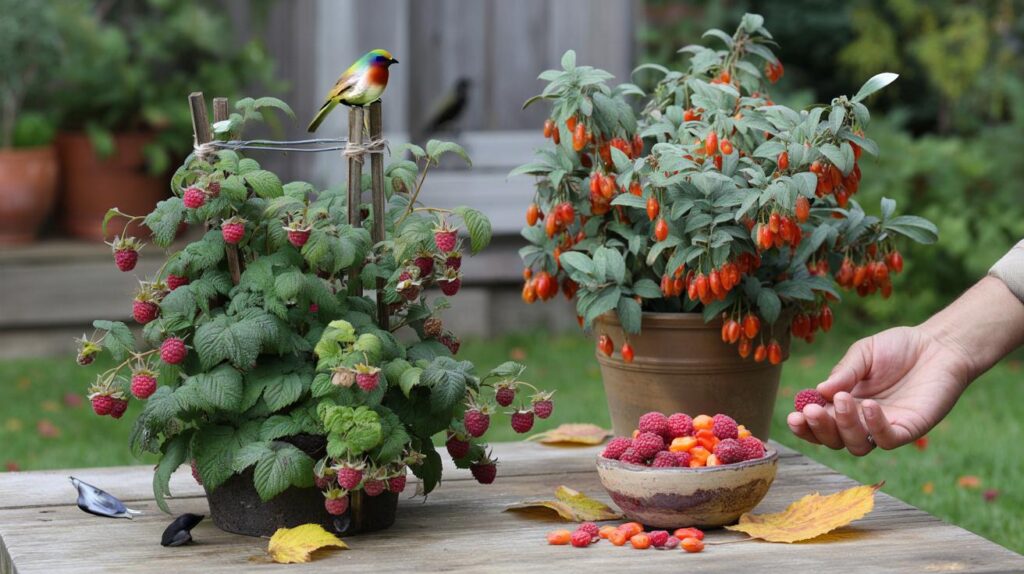
As borders fade and evenings draw in, your plot can still stage a late show of colour, flavour and life.
Across patios and small gardens, compact fruiting shrubs are turning October into a second season. They root fast in warm soils, shrug off short days, and load branches with bright berries that tempt both people and wildlife. With a modest spend and a square metre or two, you can start this month and pick within months.
Autumn’s quiet overachievers
Raspberries and goji berries step out of summer’s shadow
Autumn-fruiting raspberries and the goji berry are not the loudest names at the garden centre. Yet they deliver late, generous crops when most fruit has finished. Modern primocane raspberries fruit on first-year canes, so they push a second wave of berries well into October. Goji (Lycium barbarum), grown for its tangy orange-red berries, thrives in full sun and poor soil, and it keeps ripening clusters into early winter in mild districts.
Plant once, then pick for years: a pair of shrubs can provide bowls of fruit from autumn into early winter.
Both suit small spaces. Raspberries take a narrow strip or a long trough. Goji forms an airy shrub that clips neatly to 1.5 to 2 metres. Their blossom draws pollinators, and the berries feed robins, blackbirds and thrushes when natural food runs low.
Why October skews the odds in your favour
Warm soil, cool air, faster roots
October still offers soil warmth, steady moisture and low weed pressure. That trio drives root growth. Plants spend energy below ground now, not on leaves. You gain strong establishment without the heat stress of summer or the check of spring winds.
October planting gives a 4–6 week head start below ground, which often means fruit in the first full season.
Rain helps settle the soil around new roots. Cool nights slow transpiration, so watering goes further. Fewer pests are active, and you can prepare beds without racing against drought.
How to plant now in six simple moves
Set yourself up for a first-year crop
- Choose light: full sun for goji; sun to light shade for raspberries. Aim for 6 hours of direct light.
- Prepare soil: loosen the top 20–30 cm. Mix in 5–7 litres of compost per planting hole.
- Drain well: raise rows or add grit on heavy clay. Raspberries hate waterlogging.
- Position and plant: set raspberries 50–60 cm apart in rows; place goji 1.0–1.5 m from neighbours.
- Water in: give 5–10 litres per plant at planting, then keep evenly moist for four weeks.
- Mulch: 5 cm of leafmould, straw or chipped bark to lock in warmth and suppress weeds.
A trellis or two taut wires at 60 cm and 120 cm keeps raspberry canes upright, airy and easy to pick.
Low fuss, high reward
Maintenance that fits busy weeks
These shrubs ask little. Feed with a light sprinkle of balanced fertiliser in March. Top up mulch to keep roots cool. Water in dry spells, especially in containers. Thin congested stems for airflow. That’s it.
Pruning is straightforward. Cut autumn-fruiting raspberries to ground level in late winter. New canes will carry the next crop. For goji, remove weak, crossing and inward-facing shoots in February, then shorten long whips by a third to shape.
Balcony or border: where they fit
Container-friendly choices that still crop
Both crops perform in pots, which helps renters and balcony growers. Use a sturdy container with drainage and a free-draining mix. Add a stake or mini-trellis for raspberries. Goji manages as a light, open shrub with one central stake in year one.
| Feature | Autumn raspberries | Goji berry |
|---|---|---|
| Typical height | 1.2–1.8 m | 1.5–2.5 m |
| Spacing | 50–60 cm in rows | 1.0–1.5 m |
| Yield when established | 0.8–1.5 kg per plant | 1–2 kg per shrub |
| Sunlight | Sun to light shade | Full sun |
| Soil pH | 5.5–6.5 | 6.5–8.0 |
| Container size | 30–40 litres, 40 cm deep | 35–50 litres, 40–45 cm deep |
| Wildlife value | Bees on blossom, birds on fruit | Bees on blossom, birds on fruit |
Wildlife wins without losing your bowl
Share fairly, keep enough for breakfast
Birds cherish berries in lean months. You can feed them and still harvest. Net only a section, leaving a “wild” corner for visiting thrushes. Time your picks every two or three days, as ripe fruit attracts fewer pecks when it does not hang long. Grow a spare raspberry cane as a decoy near a hedge. That simple tweak reduces pressure on your main plants.
Pick little and often in October. Frequent harvesting increases total yield and cuts bird damage.
Smart variety choices for fast results
Names that perform in cool, short days
Choose primocane raspberries that ripen in lower light. ‘Autumn Bliss’, ‘Polka’ and ‘Joan J’ are reliable and flavourful. They crop from late August to the first hard frost. For goji, look for vigorous selections labelled Lycium barbarum or Lycium chinense from reputable nurseries. Check that plants are graft-free and pot-grown for easier establishment now.
Common pitfalls and how to avoid them
Keep plants healthy and fruiting hard
- Avoid soggy roots: plant on a slight ridge on heavy soil and mulch, not smother, the crowns.
- Manage suckers: raspberries spread; lift and replant unwanted shoots in winter or sever with a spade.
- Watch wind: add two wires or bamboo canes to stop rocking, which stresses new roots.
- Prevent mildew: space plants, water at the base, and remove shaded, weak shoots.
- Skip rich manure for goji: too much nitrogen drives leaves at the expense of flowers and fruit.
Costs, timings and what you’ll actually pick
Numbers that help you plan
Budget £7–£15 per raspberry plant and £10–£20 per goji. Two raspberries and one goji can fill a 2 m border. Planted in October, raspberries often produce a light crop next summer and a heavier flush from late August. Goji builds through year one and can start fruiting by late summer in year two. Expect 2–4 family-sized bowls per week at peak for the trio, weather permitting.
Three shrubs, one square metre, up to 3 kg of fruit in a good year — and a busier garden soundtrack.
Extra know-how that pays back next season
Pruning types and a health note worth knowing
Not all raspberries behave the same. Autumn-fruiting (primocane) types fruit on new canes; cut them all to ground level in late winter. Summer-fruiting (floricane) types fruit on two-year canes; after harvest, remove the old fruited canes and tie in new ones. If you inherit plants, check cane colour and fruiting time before cutting.
Goji hedges can become twiggy. Thin to an open goblet each winter. Keep four to six strong framework branches, and shorten lateral shoots to 3–5 buds to promote flowering spurs. Wear gloves; stems can be lightly thorny.
People taking warfarin or similar anticoagulants should seek medical advice before eating goji berries. Some reports link goji to altered drug metabolism. If in doubt, use raspberries for your autumn bowl and offer goji to the birds.
For a quick soil check, test pH with an inexpensive kit. If your soil sits above 7.0, goji will be happy; plant raspberries in a bed improved with leafmould and pine needle mulch to nudge pH down. In containers, a peat-free, slightly acidic mix with added grit keeps roots both moist and airy.



Fantastic timing. My small patio bed is empty after tomatoes, and I’ve been hunting for late colour and snacks. The primocane raspberries + goji combo sounds doable, especially the wire-at-60/120cm tip and cutting raspberries to ground in late winter. One thing I’m unsure about: if I’m planting this weekend, do I still add 5–7L compost per hole in already fertile soil, or is that overkill? Also, any UK sources for graft-free goji you’ve actually tried?
3 kg sounds… generous. Not calling it hype, but in Zone 8b coastal conditions I barely hit 1 kg from two autumn raspberries last year. Maybe my container mix was too rich (you mention goji hates excess nitrogen—do raspberries also drop yield with high N)? Would love to see a week-by-week harvest log.