
There’s a moment in every busy kitchen when the chopping board is crammed, the pan is calling, and the jar you need is always three steps away. A kitchen trolley, humble and on wheels, turns that scramble into a steady flow. It’s a movable worktop, a stash for tools, a quiet extra pair of hands. More space where you need it, when you need it. Less fuss between you and dinner.
On a Tuesday night in a narrow London galley, steam hung in the window and the radio hummed. I was dancing that awkward two-step between fridge and hob, pinballing around open cupboards, rice on the boil and mushrooms ready to hit the heat. My neighbour’s trolley, borrowed on a whim, sat by my hip with the knife rack clipped to its side and a bowl of stock perched on top. I slid, chopped, stirred, rolled, as if the room had doubled in size without moving a wall. It felt like cheating.
Why a kitchen trolley changes everything
Great cooking isn’t only about ingredients. It’s about flow. A trolley lets you move your prep station to wherever the action is, rather than shuttling your ingredients across the kitchen. Park it by the sink while you rinse herbs, then drift it to the hob for the sauté. Your hands stay in the game; your tools arrive on cue. Suddenly, the kitchen triangle feels less like an obstacle course and more like a runway.
Ask Nadia in Bristol about her Sunday roast. She used to juggle a carving board on a crowded counter while three trays begged for space. Then she rolled out a plain wooden trolley and kept knives, seasoning, gravy jug, and foil on its shelves. The roast came out, rested on top, carved cleanly, and slid onto plates without a single detour. She didn’t clock the steps she saved, but she felt the calm. The trolley made the rhythm visible.
Ergonomics is really just kindness to your body. Cut the reach and you cut the strain, which reduces those micro-pauses where your brain searches for a whisk or a lid. With a trolley, mise en place becomes mobile: ingredients grouped, tasks sequenced, clutter contained. I stopped losing the peeler under tea towels, and the onion skins went straight into a bin clipped to the frame. You lessen decision fatigue by seeing what you need at a glance. The wheels aren’t a gimmick; they’re a plan you can push.
How to use a kitchen trolley in clever ways
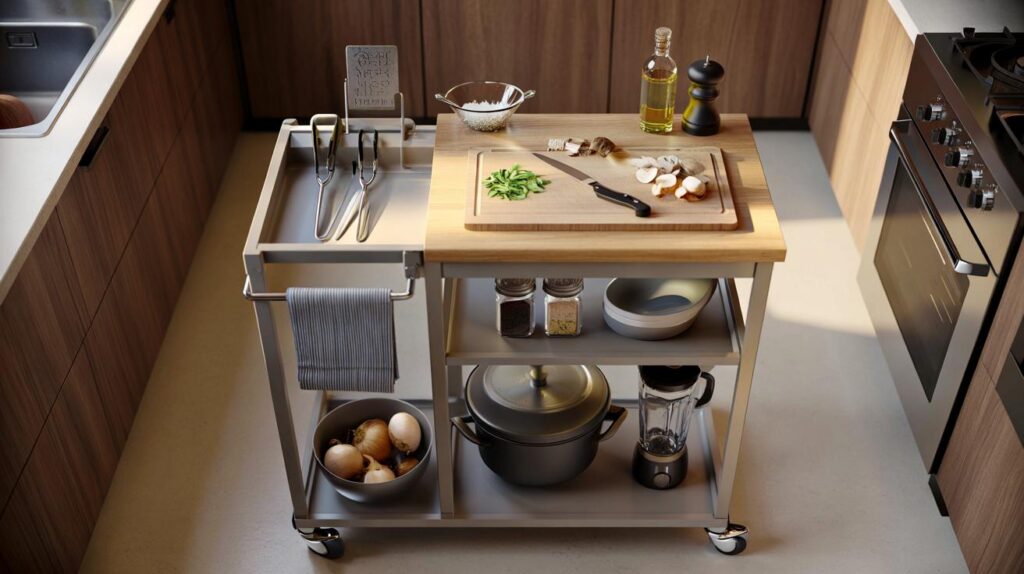
Think in zones. Use the top as a clean, flat staging area with a board and your “always” trio: salt, oil, pepper. Hang a towel and tongs from the side, and clip on a small bin for trimmings. Middle shelf for dry goods or bowls you’ll reach for. Bottom shelf for heavy kit like a Dutch oven or blender jug. Roll it to work with you: between sink and hob for stir-fries, beside the oven for baking days, at the table when you’re plating.
Don’t overload the top with everything you own. Keep it lean and swap items by dish. If there’s a lip on the edge, even better — nothing slides off when you nudge it. Lock the casters before you chop. Wheels squeaky or misbehaving? A drop of oil and a quick wipe makes a difference. Let’s be honest: nobody does that every day. But when you do, you’ll feel it roll like new. Be mindful of height too; your wrists and back will tell you what’s right instantly.
One more thing: treat the trolley as an ally, not a spare shelf that collects guilt. Give it a purpose each time you cook and watch how the chaos softens.
“It’s like a sous-chef that never complains,” says Anna, who runs a tiny supper club in Leeds. “I keep my hot pans moving safely because the landing spot moves with me.”
- Clip-on rails or S-hooks multiply storage without bulk.
- Line one shelf with jars for spices you use in a single recipe, then rake them back when you’re done.
- Use a silicone mat on top for grip and easy clean-up.
- Turn it into a pasta station: flour bin, rolling pin, drying rack, all in one place.
The small freedom on four wheels
We’ve all had that moment when dinner feels like a test and the kitchen keeps moving the goalposts. A trolley lowers the stakes. It gives you a place to pause, to regroup, to carry a whole scene across the tiles in one push. You start to design your cooking around presence rather than panic. Invite people into that space too — wheel it out as a drinks cart, then swing it back in for dessert prep. The line between cooking and hosting stops feeling like a rush. Share your own tricks, nick a few from friends, and keep rolling. Cooking gets kinder when the tools move for you.
| Key points | Details | Interest for reader |
|---|---|---|
| Mobility creates flow | Move worktop and tools to where the task happens | Fewer steps, less stress, smoother cooking |
| Zone your trolley | Top for prep, middle for go-to items, bottom for heavy kit | Quick access and tidy surfaces |
| Use it beyond prep | Carving station, baking dock, drinks cart, plating helper | More value from one affordable piece |
FAQ :
- How tall should a kitchen trolley be?Roughly counter height works best, so your wrists stay neutral while you chop. If you’re taller or shorter, pick an adjustable model or add a grippy mat to fine-tune.
- What should I store on each shelf?Keep the top clear for active prep, middle for frequently used ingredients or bowls, and bottom for heavy pots or appliances. Put the weight low for stability.
- How do I keep it from rolling while I work?Choose a trolley with locking casters and click them on before chopping or stirring. If the floor is uneven, place a slim rubber wedge under one wheel.
- Is a trolley a good alternative to a kitchen island?In tight spaces, yes. It brings many of the same benefits — extra surface, storage, and zoning — without a permanent footprint.
- How do I clean and maintain it?Wipe surfaces after each session, clean spills the same day, and give the wheels a quick brush and tiny oil drop monthly. Light care keeps it rolling smoothly for years.



Loved the “zones” idea—top for the always trio, middle for grab-bowls, bottom for heavy kit. I’ve been resisting a trolly in my tiny flat, but this definitly sold me. Any recs for models with a lip and quiet wheels?