
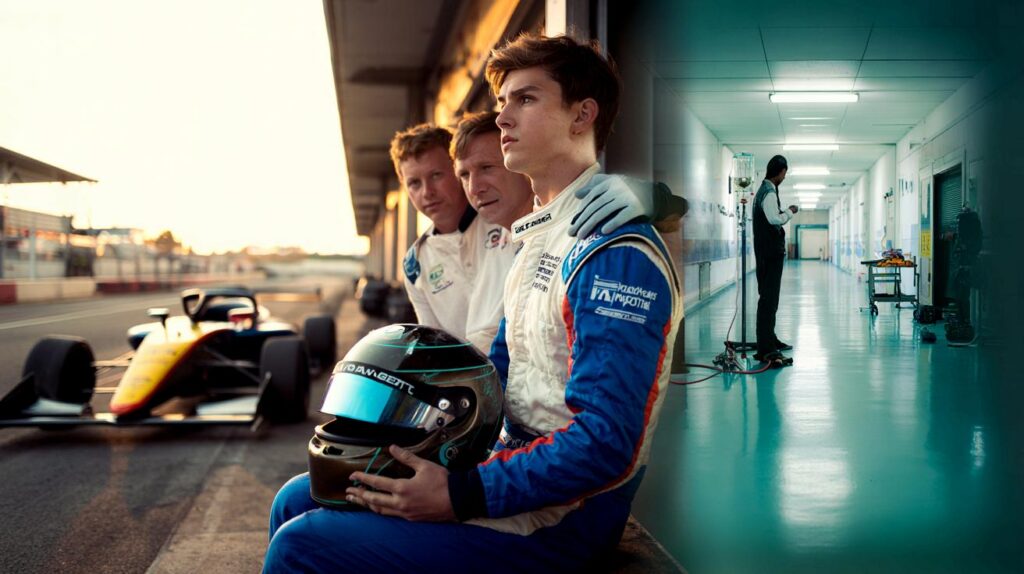
Fans woke to a stark message from a teenage GB3 contender, raising questions about dreams, health, and how quickly life swerves.
Will Macintyre, 18, has told supporters he is pausing his racing career after doctors diagnosed cancers affecting his brain and lungs. He shared the news on social media, thanked staff at Milton Keynes Hospital, and promised he will return when fit.
A rising career interrupted
Macintyre has built momentum at speed. He stepped into GB3 as a teenager and adapted quickly to the demands of high-downforce machinery. Last season he finished fifth overall, collecting three wins and six podiums against a deep, international field.
This campaign began with similar intent. After six races he sits fifth again, only 11 points behind fellow Brit Deagen Fairclough in the Drivers’ standings. Australian racer Alex Ninovic leads the table, having already stacked up six victories.
At 18, with three GB3 wins and six podiums already banked, Macintyre was 11 points off a key rival when illness forced a stop.
Key facts at a glance
- Age: 18
- Series: GB3 Championship with Elite Motorsport
- 2024 result: fifth overall, three wins, six podiums
- 2025 to date: fifth after six races
- Points situation: 11 behind Deagen Fairclough
- Championship leader: Alex Ninovic (six wins)
- Status: stepping away from racing while receiving treatment at Milton Keynes Hospital
The paddock rallies around a teenager
Messages poured in from across junior single-seaters. F1 feeder-series hopefuls including Jak Crawford, John Bennett and Sebastian Montoya added public support under his post. The tone was simple and sincere. Rivalries paused. People mattered more.
His GB3 outfit, Elite Motorsport, underlined that support in a team statement. They highlighted his grit on and off the track, confirmed that a treatment plan is under way, and made clear he remains part of the team’s fabric.
Elite Motorsport say the fight is under way and that Macintyre will be back behind the wheel the moment doctors give the green light.
What a mid-season pause means
In practical terms, stepping away removes a consistent points-scorer from GB3’s sharp end. Teams in this position can draft a substitute to keep cars on the grid, although contracts and driver development plans shape those decisions. Elite Motorsport’s priority sits elsewhere: wellbeing first, racing later.
For Macintyre, the championship picture stops mattering. He had positioned himself within striking range early, but health timelines do not bend to calendars. GB3 continues, and his rivals race on. Yet his story now speaks to something bigger than standings.
How you can show support without overstepping
- Send messages through official channels rather than direct contact.
- Respect privacy; rely on family or team updates when they choose to share news.
- Back reputable cancer charities and hospital foundations that aid patients and families.
- Keep his seat warm in spirit: turn up trackside, support junior categories, and amplify driver safety initiatives.
Understanding a dual diagnosis in young athletes
Macintyre has said he is facing cancers in the brain and lungs. No clinical details have been shared, which is his right. In oncology, doctors assess whether such findings represent separate primary tumours or a related disease process. That distinction guides treatment planning and expectations.
Care teams typically move fast. They coordinate imaging, biopsies, genetic profiling where appropriate, and symptom control. Young patients often tolerate intensive therapy well, but schedules are personal and can change as the medical picture evolves. Throughout, clinicians weigh treatment response against quality of life and long-term goals.
No timeline has been placed on a return. The priority is treatment, recovery, and the chance to choose when and how to resume life at full throttle.
Why this hits home in junior motorsport
Junior single-seaters place heavy loads on body and mind. Travel compresses rest. Intense training aims to protect neck, core and reaction times, while nutrition plans keep weight stable and energy up. Athletes sometimes ignore early symptoms because seats, sponsors and results feel urgent.
Macintyre’s news reminds the paddock to listen to warning signs. Motorsport UK medical checks set a baseline, but teams also lean on sports physicians and performance coaches to spot changes in sleep, mood, stamina or reaction time. Early conversations can prompt testing sooner.
What is GB3 and why it matters
GB3 is Britain’s leading domestic single-seater series at the step below FIA Formula 3. It sits in the development ladder that feeds into F1. The cars are quick, the grids are competitive, and the circuits are unforgiving. Drivers learn racecraft, tyre management and car control that translate to global championships.
Performing in GB3 builds a CV. Wins and podiums draw attention from academies and sponsors. Macintyre’s record at 18 already told talent scouts that he was capable under pressure and adaptable across conditions.
What could come next for driver and team
Elite Motorsport will manage the operational side. They may reshuffle test plans, redistribute engineering resources and, if needed, run a stand-in to protect team objectives. None of that alters their public stance: they stand with their driver and his family.
For Macintyre, rehabilitation can be a project in itself. Sports medics often phase activity back in, starting with mobility and light conditioning before any cockpit work. Governing bodies generally require renewed medical clearance for competition, including neurological assessments and fitness testing. When that day arrives depends on treatment and recovery, not the diary.
Helpful context if you or someone you know is worried
Doctors often highlight general red flags that warrant attention, especially if they persist or evolve. These are not a diagnosis, just prompts for a check-up:
- New or worsening headaches, persistent cough, unexplained breathlessness.
- Unintentional weight loss, enduring fatigue, changes in vision or coordination.
- Pain that does not settle, or symptoms that interrupt sleep and daily tasks.
Families navigating treatment sometimes find structure helps. Simple routines around rest, hydration, meals and journalling symptoms can steady the week. Friends can reduce noise by coordinating messages and visits, so goodwill remains supportive rather than overwhelming. Teams often assign a liaison so updates reach the right people at the right time.



Heartbreaking news, but also inspiring resolve. Thanks for sharing this with such honesty. Racing can wait—your health and recovery come first. Wishing you strength through treatment, calm on the tough days, and a swift return when you’re ready. The paddock and fans will be here when you take the green light again.
We’ll keep the seat warm and the tires scrubbed for you, mate 🙂 Come back when the doctors wave the real green flag—until then, full support from the grandstands and the sofa pits!