
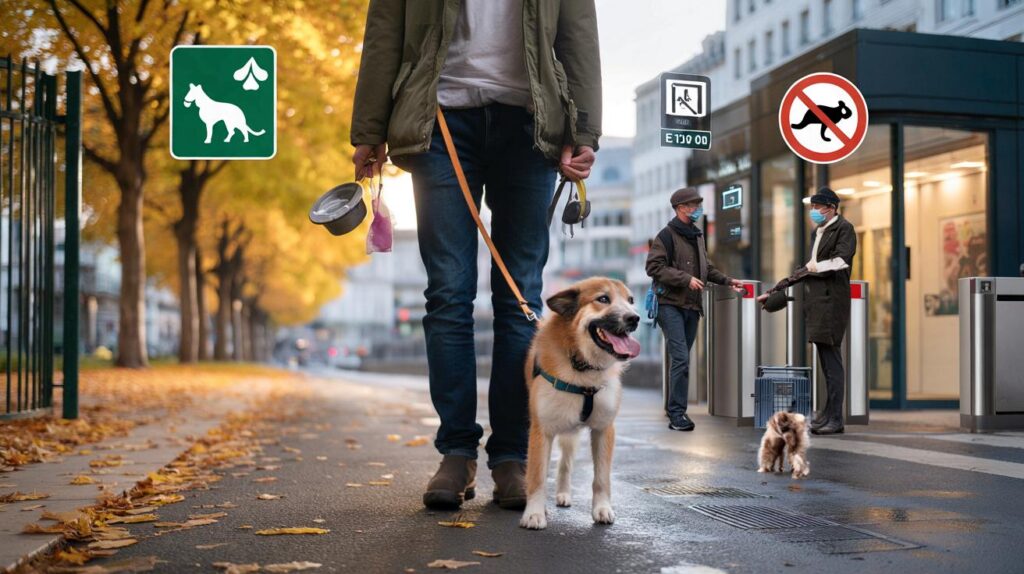
Golden leaves, cold pavements, a wagging tail. Autumn outings look idyllic — until a sign, a rule, or a stare stops you.
Across France in 2025, dog owners face a patchwork of permissions and prohibitions that can turn errands or commutes into a tactical exercise. We set out what you can expect on streets, in shops, on public transport and during long trips, and how to avoid the fines and awkward refusals that dampen a good walk.
Where the lead stops: who lets your dog in 2025, and who shuts the door
Urban walks and parks: calm strolls or strict conditions
On pavements, a dog on a lead remains the baseline rule. Municipal by-laws then set the tone. Many towns allow leads on streets but restrict dogs inside parks, unless signs say otherwise. Major cities, including Paris, permit dogs in a limited number of green spaces, usually on a short lead and under close control. Dedicated “canine zones” exist but remain patchy and small.
Leads and clean-up are non-negotiable. Expect spot checks and a standard €68 penalty for fouling in many cities.
Seasonal factors add friction. Leaf fall hides hazards, so wardens look more closely at off-lead behaviour and mess. Carry bags, water and a torch for early nightfall. If your dog reacts to scooters or joggers, stick to wider paths and avoid narrow park gates at peak times.
Shops and malls: policy shifts by size and sector
Large supermarkets, hypermarkets and many shopping centres bar dogs entirely, apart from assistance dogs. Independent boutiques, grooming salons and some lifestyle stores may welcome calm dogs, often at staff discretion. Signs help, yet absence of a sticker does not equal a ban. Ask before you step in and keep the lead short to reassure other customers.
Food retail stays the hardest “no”. Non-food independents may say yes, but ask first and keep your dog close.
Offices, admin and culture: mostly red zones with rare exceptions
Administrative buildings, most restaurants, cinemas and many museums say no. A handful of eateries tolerate small dogs under tables; it is rare, varies by manager and often depends on space. Venues always admit assistance dogs. Plan dog-free appointments or arrange care to avoid tying a lead to a railing outside.
On the move: transports that accept dogs and the rules that matter
Metro, bus and train: what you can do and what triggers fines
Public transport can work with preparation. In the Paris Métro and RER, small dogs in a closed carrier travel free. Larger dogs can board if kept on a lead, wearing a muzzle, and with a paid ticket (often half-fare). Regional networks follow similar patterns but publish their own conditions. Some buses outside big cities refuse dogs altogether; others set quiet-hour windows or limit capacity.
Trains bring clearer thresholds. For national services, a dog over roughly 6 kg needs a paid ticket and, for bigger breeds, a muzzle on board and on platforms. Always check the train type: certain TER lines enable carriage at the conductor’s discretion when the train is busy.
Carriers for small dogs; muzzle, lead and a paid ticket for bigger ones. Expect checks at gates and on platforms.
Cars, taxis and ride-hailing: safety first, policy second
In your car, restraint is law and common sense. Use a secured crate, a harness clipped to an ISOFIX-approved belt, or a dog guard. An unrestrained dog becomes a projectile during emergency braking, which risks injury and a fine.
Taxis and ride-hailing drivers choose whether to accept pets. Many will take a dog if you inform them in advance, bring a blanket, and ensure a clean coat and dry paws. For longer rides, offer to sit in the rear with the dog belted and a window slightly open.
Planes and ferries: long-distance travel without drama
Airlines require a recent health certificate, an approved crate and a paid pet fee. Small dogs may travel in the cabin; large breeds usually go in the hold or are refused on particular aircraft. Breed restrictions exist on some carriers. Hydrate early, then limit water right before boarding to avoid discomfort.
Ferries vary widely: some routes insist on on-deck kennels, others allow dogs in cabins if you book early. Bring a slip lead, a familiar bed and a spare tag with your mobile number. Keep vaccinations and identification current to avoid boarding issues.
Tools and tactics: never get turned away at the door
Smart ways to find dog-friendly places fast
Use mapping apps with pet filters, local authority pages for park-by-park rules, and neighbourhood groups that share recent experiences. Screenshots help when rules posted online do not match the sign at the entrance.
- Search “dog on lead” plus your arrondissement or commune before you leave.
- Save a folder of verified venues and update it seasonally.
- Carry a foldable bowl, wipes, spare bags and a short lead for tight spaces.
- Train a strong “sit–stay” for tills, lifts and ticket checks.
Rights, duties and street etiquette
Dogs on a lead may walk on public pavements and, under set conditions, ride some transport. Food shops, most restaurants and public offices reject pets, aside from assistance dogs. You must manage hygiene, control and risk. That means picking up mess, signalling to passers-by, and respecting no-dog zones even when the gate stands open.
Good manners protect access: short lead, calm entrances, quick clean-ups, and clear communication with staff and fellow users.
Quick reference: where dogs stand in everyday life
| Place | Allowed? | Conditions | Typical penalty if rules broken |
|---|---|---|---|
| Pavements/streets | Yes | On a lead; control at all times | €68 for fouling; higher for dangerous behaviour |
| Parks/gardens | Varies | Check signs; often on-lead only | €68–€135 depending on local by-law |
| Supermarkets/malls | No | Assistance dogs only | Removal from premises; potential fine if you refuse |
| Restaurants/bars | Mostly no | Occasional small-dog tolerance; ask first | Refusal of entry; local penalties for disturbance |
| Metro/bus | Often | Carrier for small dogs; lead + muzzle + ticket for larger | Fare supplement, ejection, or €135 transport infringement |
| Trains (national) | Yes | Ticket over ~6 kg; muzzle for big dogs | Fare irregularity charge; fines vary by operator |
| Taxis/VTC | Driver’s choice | Ask in advance; blanket/harness | Ride refused; cleaning fee if soiled |
Autumn realities: weather, crowds and timing
Early darkness and weekend shopping crowds raise stress for sensitive dogs. Choose off-peak hours, pick quieter carriage ends on trains, and avoid escalators with nervous paws. Wet leaves make floors slick; a short lead and grippy booties help older dogs. If your dog struggles with busy doors, ask staff for a side entrance or wait for a lull.
Paperwork, ID and what to pack before you go
Carry ID tags with your mobile number, a microchip certificate, vaccination proof and any transport booking for the dog. A soft muzzle that fits well prevents last‑minute scrambles at a platform gate. Keep a compact kit: two rolls of bags, a foldable bowl, water, a small towel, wipes, and a spare lead carabiner. For long days, pack measured food and a chew that keeps your dog settled at tables or seats.
Training that unlocks access — and keeps you out of trouble
Three cues pay dividends in urban life: heel on a short lead, settle on a mat, and “leave it”. Practise them near bins, food courts and ticket barriers. If your dog lunges at scooters or barks in queues, invest a few sessions with a force-free trainer. Calm, predictable behaviour wins sympathetic staff decisions when rules allow discretion.
Money and risk: what unpleasant surprises to avoid
Local penalties concentrate on hygiene and safety. Fouling often costs €68. Transport breaches, such as travelling without the required muzzle or ticket, can climb towards €135. Damage inside a taxi or shop may trigger a cleaning fee or a civil claim. Pet liability cover included in home insurance can shield your finances; check limits and exclusions before a holiday or a city move.



€135? Yikes.
11 places allowed, 7 banned… but who actually handles enforcment in parks? In my town the signs change every season and no one checks unless there’s a complaint.