
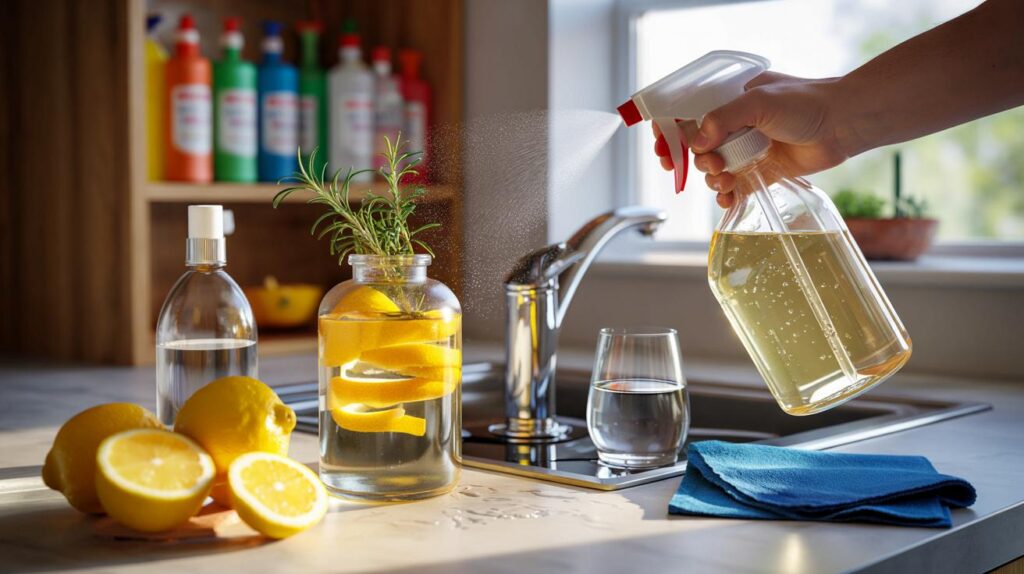
Cupboards stuffed with bottles, prices creeping up, and a lingering chemical tang. A quieter, thriftier fix is bubbling back.
A humble mix of white vinegar, citrus and water is racing through TikTok kitchens and community forums alike. It owes more to old habit than hype. People are testing it on glass, taps, sinks and hobs, then counting the empty plastic bottles they no longer buy. The draw is simple: three ingredients, under an hour of work, and a house that smells like fresh peel instead of solvent.
The old-new trick spreading through British kitchens
Grandparents kept jars of citrus peel under the sink. They topped them with vinegar and waited. Weeks later, the liquid turned bright and fragrant. Today’s version follows the same idea, with an optional shortcut for those who want results now. It aims at the everyday jobs that swallow money: degreasing, limescale, glass, and general spray-and-wipe cleaning.
Three ingredients. Eight jobs. Under 50p per litre when you use leftover peel. No dyes. No mystery perfumes.
Three ingredients, one bottle
- Peel from 3 unwaxed lemons, or 15 drops organic lemon essential oil
- 500 ml white vinegar at 8% acidity (8° on the label)
- 500 ml filtered water
You also need a clean 750 ml glass jar with a lid, a fine strainer, and a 1 litre glass spray bottle. Avoid metal lids, which can corrode when they touch vinegar.
Two ways to make it
The slow infusion
The quick mix
Tip to try: slip a sprig of fresh rosemary into the infusion jar for a gentle herbal note and an extra nudge against kitchen odours.
What this single bottle can replace
| Product replaced | How to use | Notes |
|---|---|---|
| All-purpose spray | Spritz, wait 30 seconds, wipe with a microfibre cloth | Avoid unfinished wood and natural stone |
| Degreaser | Apply to hobs, tiles and cooker hoods; wipe in straight strokes | For baked-on grease, leave 2 minutes |
| Glass cleaner | Mist lightly, polish with a dry cloth or scrunched newspaper | Work fast to prevent streaks |
| Limescale remover | Soak taps and shower heads with a damp vinegar cloth | Rinse well; not for stone or enamel with micro-cracks |
| Fridge spray | Spray, wipe, leave doors open 5 minutes | Food-safe surfaces only after thorough wipe-down |
| Stainless steel polish | Spritz on a cloth, not the surface, then buff | Test a hidden spot to confirm finish compatibility |
| Bathroom cleaner | Use on tiles, taps and screens; leave 1 minute | Rinse glass screens to avoid etching |
| Bin deodoriser | Spray after each empty; air-dry | Citrus cuts lingering odours |
Why it works
Vinegar brings acidity that breaks down limescale and cuts through soap film. Lemon peel contributes natural solvents found in the rind. The essential oil option concentrates the same compounds for a speedier result. Water reduces strength for everyday use and lowers the risk of damage on sensitive finishes.
The maceration step does more than add scent. The acid pulls citrus compounds into the liquid and tempers vinegar’s sharp odour. That is why the infusion often smells softer and cleans with fewer streaks, especially on glass.
Shake before every job. Citrus oil and water separate naturally. Ten seconds of shaking restores the mix.
Expert tweaks that lift performance
- Use unwaxed, organic lemons when you can. Waxes and pesticide residues live on peel.
- Stick to 8% vinegar for stronger degreasing. Lower acidity cleans more slowly.
- Store the spray in glass, out of direct sunlight. It keeps for up to six months.
- Label the bottle with the date and the surfaces to avoid. Everyone in the house stays aligned.
- For shower screens with heavy build-up, spray, press on a paper towel for contact, and wait five minutes.
Where not to use it
Skip marble, granite, limestone and any natural stone. Acid can etch and dull these surfaces. Steer clear of waxed or unfinished wood. Avoid cast iron, aluminium and some rubber seals. Never mix with bleach or products that contain bleach. That pairing releases chlorine gas.
The money angle people care about
Households often keep at least eight separate bottles for routine jobs. Tally a glass cleaner, a degreaser, a bathroom spray, a limescale remover, an all-purpose spray, a stainless steel polish, a fridge cleaner and a bin deodoriser. Average supermarket prices put that basket near £15–£22 every couple of months, depending on brand and size. Over a year, the total often sits north of £200 for busy households.
Homemade cost per litre: peel infusion about 30–50p; quick mix with essential oil about 80p–£1.10, depending on oil price.
Here is a rough breakdown. White vinegar often costs 80p–£1.20 per litre. Water is negligible. Lemon peel comes from fruit you were using anyway. If you take the shortcut, a 10 ml bottle of lemon essential oil usually holds 200–250 drops and costs £4–£7. Fifteen drops per litre adds roughly 30–50p per batch. Many households report buying far fewer specialist products once they keep this spray on hand.
How to use it for best results
Spray generous coverage on the surface. Wait 30 seconds to let the acid and citrus work. Wipe with a clean microfibre cloth. For glass, less is more. Mist lightly and polish dry. For greasy splashbacks, give it two minutes before you wipe. For taps, wrap a soaked cloth around the fitting while you clean elsewhere.
Odour matters as much as shine when you step back. The citrus cuts vinegar’s sharp edge and leaves a kitchen that smells like fresh peel. The scent fades in an hour, which suits people who dislike synthetic perfumes that persist.
Safety and practical notes
- Keep away from children and pets. Do not ingest.
- Essential oils can irritate skin. Wear gloves if your hands are sensitive.
- Cat owners often avoid citrus oils. Some cats dislike or react to them.
- Patch test on an inconspicuous area before tackling a large surface.
- If you spill on stone, rinse with plenty of water at once.
Beyond the spray: extra uses and smart add-ons
Use plain white vinegar, not the citrus mix, to descale kettles and coffee machines. Rinse twice. For drains with light odours, trickle the citrus spray around the plughole, then flush with hot water. For stubborn limescale around taps, a paste of bicarbonate of soda and a few sprays can help, but do not seal it in a closed container since it releases gas.
Seasonal tweaks keep it interesting. In winter, swap lemon for orange peel to use what you have. In summer, add a thyme sprig for a gentle kitchen-garden scent. If you batch-cook the infusion, freeze spare peel and make a new jar when you defrost the next lemon.
What this shift means for bins and budgets
Every bottle you skip saves plastic and freight. It also cuts indoor chemical load and the perfume haze that hangs in small flats. People who switch often report buying bulk vinegar in glass or large refill containers and decanting as needed. The habit reduces last-minute dashes to the cleaning aisle and trims weekly spend without much effort.
If you want a simple test, run a two-week trial. Keep your current products in a cupboard and reach for the citrus spray first. Track what you still miss. Most homes find two or three specialised products remain useful, such as a disinfectant for loo seats or a wood polish for a favourite table. The rest fit neatly into one bottle that you mix yourself with three familiar ingredients.



Tried the slow lemon peel infusion and it actually works. Windows came up streak-free and the cooker hood gunk shifted after 2 mins. I’ve binned three half-empty sprays already. The rosemary tip is a nice touch, house smells like a garden not a solvent. Definitley keeping a jar under the sink.
Is 8% vinegar safe around rubber seals and anodised aluminium? My washer door seal went cloudy once—was that the acid or me scrubbing like a maniac? Don’t want to wreck gaskets.