
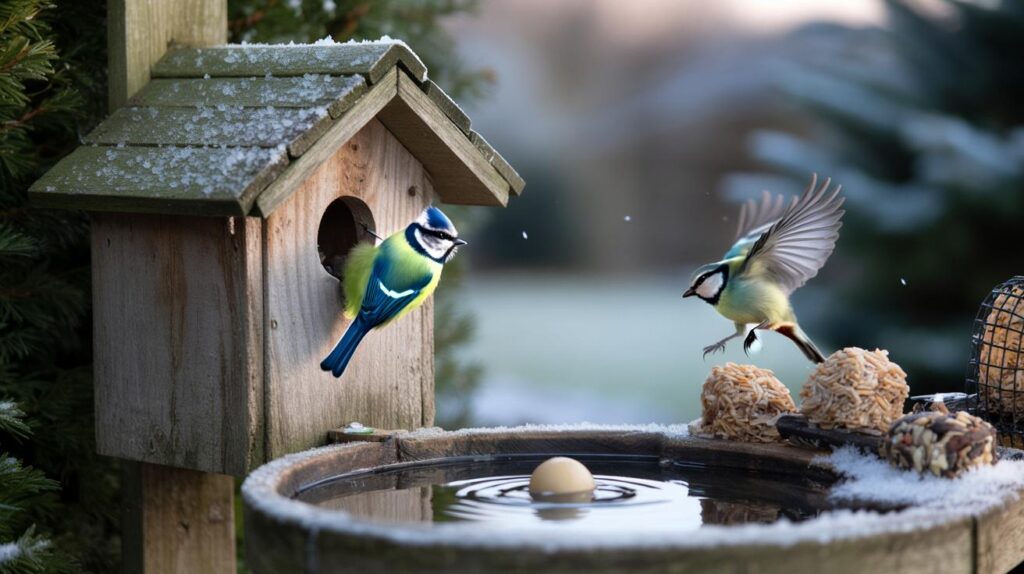
A bitter snap is closing in, and small birds are burning precious energy. Your back garden could tip the balance.
As temperatures fall, Britain’s tits face long nights, empty hedgerows, and hungry predators. A few low-cost tweaks in your garden can keep them alive until spring. One box. One feeder. One water dish. That is the difference between a cold death and a dawn chorus.
Why garden tits struggle when the temperature drops
Blue tits and great tits rarely migrate. They tough out winter near our homes and parks. Their small bodies lose heat fast. They spend each daylight hour hunting calories to survive the night. When frost locks away insects, they run out of options.
- Cold drains energy. A blue tit weighs about as much as a £1 coin and must stoke its inner furnace non-stop.
- Safe cavities are scarce. Old trees and natural holes vanish with development and tidier gardens.
- Protein dips. Insects hide or die back, leaving little high-quality food in hedges and lawns.
On the coldest nights, a small tit may burn through a large share of its body reserves. One sheltered roost can be the margin of survival.
The one tweak that saves lives
A weather-tight nest box doubles as a life-saving night roost. It shields birds from wind, rain, and prowling cats. Put one up this week, and birds can find it within days.
Choose or build a safe nest box
- Use real wood. Untreated, robust timber insulates and breathes better than metal or plastic.
- Pick the right hole size. 28 mm suits blue tits; 32 mm suits great tits and keeps larger rivals out.
- Keep it dry. A sloped roof with a small front overhang prevents rain blowback.
- Seal smart. A wipe of natural oil such as linseed on the exterior helps shed water. Avoid toxic paints.
- Plan for cleaning. A hinged or removable roof lets you empty the box at the end of the breeding season.
| Species | Entrance hole | Suggested height | Notes |
|---|---|---|---|
| Blue tit | 28 mm | 2–4 metres | Small hole reduces intrusion by larger birds |
| Great tit | 32 mm | 2–4 metres | Sturdier box, similar footprint and depth |
Where and how to mount it
- Go higher than a human arm. Aim for at least 2 metres to deter cats and foxes.
- Face south or south-east. Reduce exposure to prevailing wind and rain.
- Tilt very slightly forward. This helps water run off and keeps the interior dry.
- Choose a quiet spot. Avoid busy paths, security lights, and slamming doors.
- Fix without harming trees. Use straps or aluminium nails that allow growth.
Set a 28–32 mm entrance at around 2 metres, faced south-east, and you have built a winter refuge in under five minutes.
Fuel for freezing nights
Food is the second lifeline. High-energy offerings help small birds top up fat reserves before dusk. Place feeders within quick flight of cover, but not in a hedge itself where cats can lurk.
What to offer
- Sunflower hearts. Easy to shell and rich in oil, ideal for rapid energy gain.
- Suet or fat balls. Dense calories for the evening rush. Use balls without plastic netting.
- Unsalted peanuts. Serve in a mesh feeder to prevent choking and to control portion size.
- Dried mealworms. Soak briefly to soften on very cold, dry days.
- Apples and berries. Cut fruit pieces onto a tray; secure halves on a spike if wind is strong.
What to avoid
- Salty or sugary human foods such as crisps, biscuits, and bread.
- Mouldy leftovers that spread disease.
- Peanuts offered loose during the breeding season, when chicks can choke on whole nuts.
Clean feeders every week with hot, soapy water or a mild disinfectant, and rinse well. Hygiene cuts disease transmission between birds.
Water still matters when it freezes
Birds cannot get by on snow alone. A shallow water dish provides drinking and preening water that keeps feathers insulating properly. In a freeze, moving water and regular refills make all the difference.
Keep a drink on tap
- Use a broad, shallow dish with gentle sides to reduce the risk of soaking.
- Float a small ball to keep a patch of water ice-free in light frost.
- Top up with slightly warm water on sub-zero mornings. Never add antifreeze or salt.
- Place the dish near cover but with clear views so birds can spot predators.
Your garden wins too
Help given in January pays back in May. A single tit pair can remove hundreds of caterpillars daily when feeding chicks, protecting fruit trees and ornamentals without chemicals. By offering shelter and food now, you recruit a home-grown pest control team for spring.
Quick kit checklist
- Nest box with 28–32 mm entrance.
- Sunflower hearts and suet balls without mesh.
- Mesh peanut feeder and a sturdy seed feeder.
- Shallow water dish and a tennis or ping-pong ball.
- Brush, bucket, and mild disinfectant for weekly cleans.
- Budget guide: £0–£25. A box can be made from scrap timber; a bag of seed and suet completes the setup.
Small layout changes that prevent danger
Keep feeders 1–2 metres from dense cover to deny ambush points to cats. Fit a baffle on poles if neighbourhood cats visit. Add bird-safe window stickers near feeders to reduce collisions. Move any feeder that gathers droppings beneath perches; damp ground spreads parasites.
Space out feeding stations to cut squabbles. Several small feeders work better than one huge magnet. Refresh food in small amounts daily so nothing goes rancid. In severe weather, put out an extra afternoon portion; birds pack in fat before dark.
Timing, care, and the law
Put up boxes any time of year; winter boxes serve as roosts and are ready for spring nesting. Clean out old nests from August onwards, once you are sure no birds are using the box. Wear gloves and dispose of old material with household waste. In the UK, wild birds and active nests are protected by law. Do not open a box while it is in use.
How your five-minute setup helps a real bird
Picture a blue tit at 4 pm in sleet. It has a few minutes left to find fat before night. Your feeder offers sunflower hearts, easy and fast to eat. It grabs a dozen, then slips into the dry box you hung at 2 metres, out of the wind. The bird saves precious heat behind a wooden wall rather than on an exposed twig. At dawn, it emerges with enough energy to sing and forage again.
One garden, one box, one feeder, one dish of water. Multiply that by a street, and you create a safe winter corridor for wildlife.
Extra ideas for keen helpers
Add a second box on a different aspect to reduce turf wars. Avoid placing two boxes for the same species side by side; space by at least five metres. Try a clear roof over feeders to keep seed dry. Rotate feeder positions monthly to keep ground clean. If you have only a balcony, a wall-mounted box and a small tray feeder still draw in birds.
If you want to go further, log your garden sightings. A simple tally of visits during cold snaps helps track local survival. Share notes with neighbours and coordinate feeding breaks when you are away. A street that feeds birds consistently helps them build reliable routines and waste less energy hunting for the next safe stop.



Brilliant guide—put up a 28 mm box facing SE at ~2 metres this mornng; within hours a blue tit peeked in. Sunflower hearts vanished by dusk. Quick Q: is raw linseed oil safe on the exterior if it’s “boiled” linseed from the DIY shop? I’ve heard additives can be toxic. Thanks!