
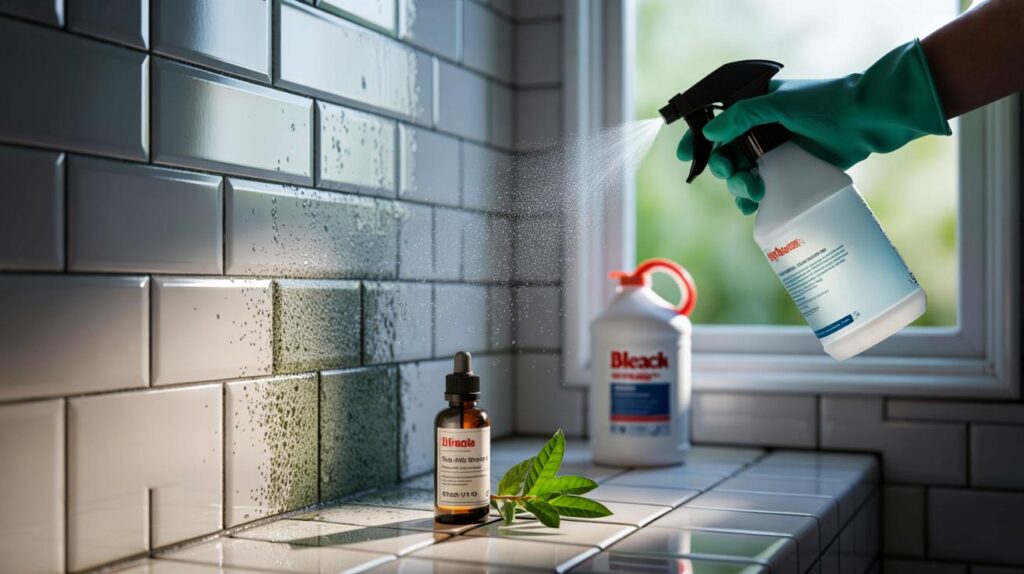
Across Britain, a simple bottle from the chemist is reshaping bathroom routines, as households chase a calmer, cleaner wash space.
A wave of home testers now claims that tea tree essential oil, long linked to antifungal uses, can cut bathroom mould fast. Reports point to reductions of up to 95% within a day when used correctly, raising a provocative question for many readers: keep the bleach, or switch to a natural spray?
The kitchen-cupboard fix that crossed into the headlines
Tea tree (Melaleuca alternifolia) grows in Australia, where traditional use centred on its antimicrobial punch. British households picked it up decades ago, often as a discreet remedy for minor skin care. In the last few months, it has broken out of the aromatherapy niche and into the bathroom, thanks to viral before-and-after photos and a clutch of enthusiastic cleaning communities.
The promise is stark: a simple water-and-oil mix sprayed on grout, silicone and tiles, left to work, then wiped away. The target? Those black and green dots that cluster in the damp corners of showers, around window frames and across sealant lines.
Used in the right ratio and left long enough on the surface, a tea tree spray can reduce visible mould by up to 95% in 24 hours.
Why tea tree oil works on bathroom mould
Scientists have studied key compounds in tea tree oil, particularly terpinen-4-ol, for antifungal activity. Bathroom moulds often include species such as Cladosporium and Aspergillus, which thrive in humidity and poor ventilation. Tea tree’s volatile components penetrate fungal biofilms and disrupt cell membranes, which weakens growth and helps detach staining from the surface.
Results vary by surface. Smooth tiles respond quickly. Rough grout and silicone hold spores more deeply, so contact time matters. Heavier patches may need repeated applications across several days.
What you need to try it today
- 5 ml tea tree essential oil (100% pure)
- 250 ml warm tap water
- One clean spray bottle, ideally glass or food-grade plastic
- Optional: 2–3 drops lemon essential oil for a fresher scent
- Gloves and ventilation for comfort and safety
Step-by-step method that readers are using
Pour 250 ml warm water into the bottle. Add 5 ml tea tree oil. Close tightly, then shake hard for 30 seconds to disperse the oil. Spray generously over stained grout, silicone and tile edges. Leave for at least two hours. For stubborn areas, leave overnight. Wipe with a damp microfibre cloth. Do not rinse if you want a light residue that keeps working on the surface.
The sweet spot: 5 ml oil to 250 ml water, plus a minimum two-hour contact time. Shake before each spray.
How the 95% claim stacks up
Householders report dramatic improvements after the first day, especially on grout lines and silicone seams. Small-scale tests shared by cleaning groups show marked reductions in visible mould coverage after a single treatment and more uniform whitening after a second round. Laboratory-grade confirmation for every bathroom scenario does not exist, but the trend is consistent: good contact time equals visible gains.
Where it works best—and where it struggles
- Best on: glazed tiles, ceramic grout, silicone sealant, shower curtains and rigid plastic trims.
- Mixed on: porous stone, aged grout that has cracked or eroded, paint with flaking edges.
- Weak on: mould embedded in plasterboard or behind damp wall linings; those cases need repair, not just cleaning.
Safety, risks and what to avoid
Essential oils are potent. Keep away from eyes and children. Ventilate during and after spraying. Patch-test a discreet spot first, especially on natural stone. Never mix tea tree oil solutions with bleach or ammonia. The combination can generate irritating fumes and reduce performance.
People with asthma or sensitive skin may find strong odours uncomfortable. Use gloves. If you keep cats or small pets, prevent access while surfaces are wet, and wipe down thoroughly before animals re-enter the room.
Never mix with bleach. If you used bleach earlier, rinse and dry thoroughly before applying a tea tree solution.
Results timeline and maintenance plan
| Action | Time | What people report | Notes |
|---|---|---|---|
| First spray, 5 ml in 250 ml water | 2–24 hours | Up to 95% drop in visible mould on tiles and grout | Heavier staining may need a second round |
| Second spray on stubborn patches | Next day | Further lightening of dark spots; odour reduction | Leave overnight for silicone seams |
| Weekly prevention spray | 5 minutes | Mould stays minimal; easier routine cleaning | Shake bottle each time |
Bleach versus tea tree: what readers weigh up
Bleach lifts colour from mould rapidly, which looks impressive but can leave living spores in micro-pores. Tea tree works more slowly but keeps a residual effect on the surface for a short period. Odour is the other battleground: bleach can sting; tea tree smells resinous and camphorous, which some love and others do not. Costs are similar per batch, often well under £1.
Tips from professional practice
Ventilation and moisture control
Run an extractor fan during showers and for 20 minutes after. Open a window when possible. Dry squeegee the glass and tiles to strip off standing water. These small habits starve mould of moisture and reduce how often you need treatment.
Seal and repair
If silicone has gaps, mould will reappear. Replace degraded sealant, then maintain a weekly light spray. Old, crumbling grout may need repointing. Cleaning alone cannot fix water ingress behind tiles.
When to call a specialist
If you see widespread spreading patches, soft wallboards or a persistent musty odour beyond the bathroom, seek an assessment. Structural damp, roof leaks or failed plumbing sit beyond a spray bottle’s reach.
Frequently asked questions readers are asking
Can I add soap or vinegar?
A small drop of mild washing-up liquid can help dispersion, but do not add vinegar to the same bottle. Vinegar and tea tree compete for surface time and can reduce the oil’s contact with the mould.
Will it damage stone?
Natural stone can darken with oils. Patch-test and consider a stone-safe cleaner instead. Sealed porcelain and ceramics are generally fine.
How long does a batch last?
Make small batches and use within a month. Shake before each use, as oil and water separate naturally.
Extra context to help you decide
Think about exposure, not just results. A tea tree mix avoids chlorine gas and reduces splashes on metals and fabrics. For households with sensitive lungs, that can tilt the decision. For quick rental turnarounds, bleach still wins on speed. Some readers alternate: tea tree for weekly prevention, bleach for rare heavy resets with full ventilation.
If you enjoy numbers, track your own results. Photograph a 10 cm by 10 cm patch before treatment. Repeat the same shot after 24 hours, then after 72 hours. Count grid squares covered by mould to estimate the percentage drop. This simple method gives real feedback for your surfaces and climate, which vary widely between homes.



95% in 24 hours sounds huge. Is there any peer-reviewed data on tea tree oil vs Cladosporium/Aspergillus on grout, or is this mainly anecdotal from cleaning groups?